






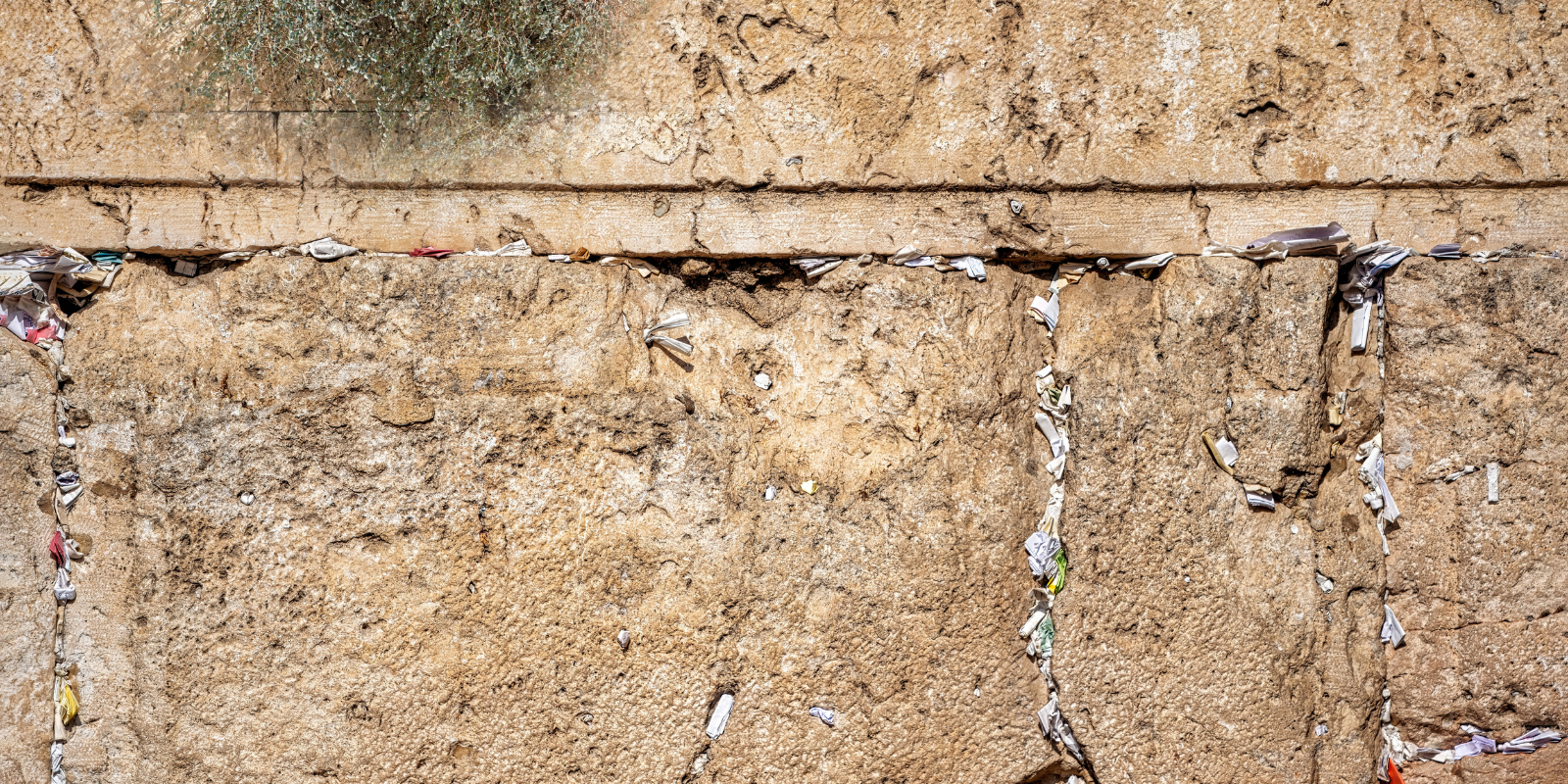
Last Sunday, a team of workers at the Western Wall put on gloves, took up disposable wooden tools, and began emptying the cracks between the stones. Rabbi Shmuel Rabinowitz, the rabbi of the Western Wall and the holy sites, stood with them and watched the work. It is done twice a year, before Passover and before Rosh Hashanah, and it is done the same way each time. The notes are gathered without being read. They are collected into sacks and carried to the Mount of Olives for burial in a geniza, a repository for sacred writings that can no longer be used, since paper bearing the name of God may not be thrown away.
The Western Wall Heritage Foundation reported that tens of thousands of notes were sent to the Wall over the past year for placement between its stones, from a hundred and forty countries. Some came from world leaders. Some came from soldiers and from tourists who wrote them standing at the Wall itself. And some, the Foundation said, were sent from countries hostile to Israel — from Iran, from Yemen, from Iraq, from Lebanon, from Pakistan, from Sudan. In previous years the Foundation has said that many of those notes asked for peace.
Consider what that required. Somewhere in Tehran, someone wrote a prayer on a piece of paper and arranged for it to be carried across a closed border to a wall in Jerusalem, because that is where they believed the prayer should go.
Rosh Hashanah is unique among the Jewish holidays because it does not commemorate something that happened to the Jewish people. Passover has the Exodus. Shavuot has Sinai. Sukkot has the wilderness. Rosh Hashanah has the creation of the world and the creation of the human being, and its subject is therefore not the Jewish people but humanity. The Sages state it clearly: on Rosh Hashanah, all who have come into the world pass before God like sheep. The liturgy repeats the point after each set of shofar blasts, when the congregation says that today is the birth of the world and today all the creatures of the world stand in judgment.
That claim shapes the prayers themselves.
On Rosh Hashanah and Yom Kippur, a number of paragraphs are inserted into the third blessing of the Amidah, the standing prayer at the center of every Jewish service. The first three each begin with the word uvechen, “and so.” The first of them asks God to place awe upon all His works and reverence upon all He has created, so that all His works will revere Him, and all His creatures bow before Him, and all of them be bound together into one band to do His will with a whole heart. The word all appears six times in a handful of lines. Nothing in the paragraph is addressed to the Jewish people.
Only after that does the prayer turn homeward. The second uvechen asks God to give honor to His people, and hope to those who seek Him, and joy to His land and gladness to His city, and to raise up the line of David. The third asks that arrogant dominion be swept from the earth, and the additions close by asking that God alone reign over all His works on Mount Zion, the dwelling place of His glory, and in Jerusalem, His holy city.
Rabbi Tuly Weisz has argued in Universal Zionism that the return of the Jewish people to their land was never meant to be a Jewish story that the nations of the world observe from the gallery. The prophets describe the nations as participants in it. Zechariah’s image is of ten men from every language taking hold of the corner of a Jewish garment and saying, we will go with you, for we have heard that God is with you.
The first uvechen asks for the same arrangement in a single phrase. All creatures are to be bound together into agudah achat, one band. It asks that all the world turn toward the same God, the God of Israel, together.
And the prayer knows where that turning points. The next lines ask for Israel restored and Jerusalem rebuilt, and the additions end with the hope that God will reign alone over all His works on Mount Zion, in Jerusalem, His holy city. Isaiah saw the same arrangement:
The Musaf service on Rosh Hashanah makes the point again. In Malchuyot, the section in which the congregation proclaims God’s kingship, ten verses are gathered from across Scripture, and the first drawn from Psalms is this one:
The verse immediately before it, which the liturgy does not recite but which any reader can see, says that all the ends of the earth will remember and turn back to the Lord, and all the families of the nations will bow before Him. Remembering and turning are the two verbs of this season. The psalm gives both of them to the nations.
We are still waiting for the complete fulfillment of these verses and prayers. But those notes at the wall, sent by people from all over the world, are a piece of the fulfillment. People who will not keep Rosh Hashanah, who have no obligation to Jerusalem and in some cases live under governments at war with it, took the trouble to send a prayer to a particular wall in a particular city, because they understood that this is where such things are addressed.
When the sacks were full, Rabbi Rabinowitz offered a prayer over them. He prayed for the unity of the Jewish people, and he prayed that the prayers contained in the notes be accepted. He stood at the wall, four days before the day on which all who have come into the world pass before God, and asked that their prayers be answered.
When the repetition of the Musaf service on Rosh Hashanah is nearly finished, the congregation asks to be brought up to Jerusalem in joy, and then quotes Isaiah:
The last words of the day’s central prayer describe the Temple as a house of prayer belonging to all peoples.
Which is where the notes are. Tens of thousands of them, from a hundred and forty countries, folded into the cracks of the last standing wall of a house that Isaiah said would be called by that name. The people who sent them did not need the verse explained to them. They had already worked out the address.
When the shofar sounds on Rosh Hashanah morning in Jewish congregations across the globe, the prayer will not be for the Jewish people alone. It will be for all of humanity. For peace. For an end to evil and terror. For the nations to be joined together in friendship, each of them recognizing the Creator of the world, with Jerusalem as the place they face.
That is Universal Zionism.