






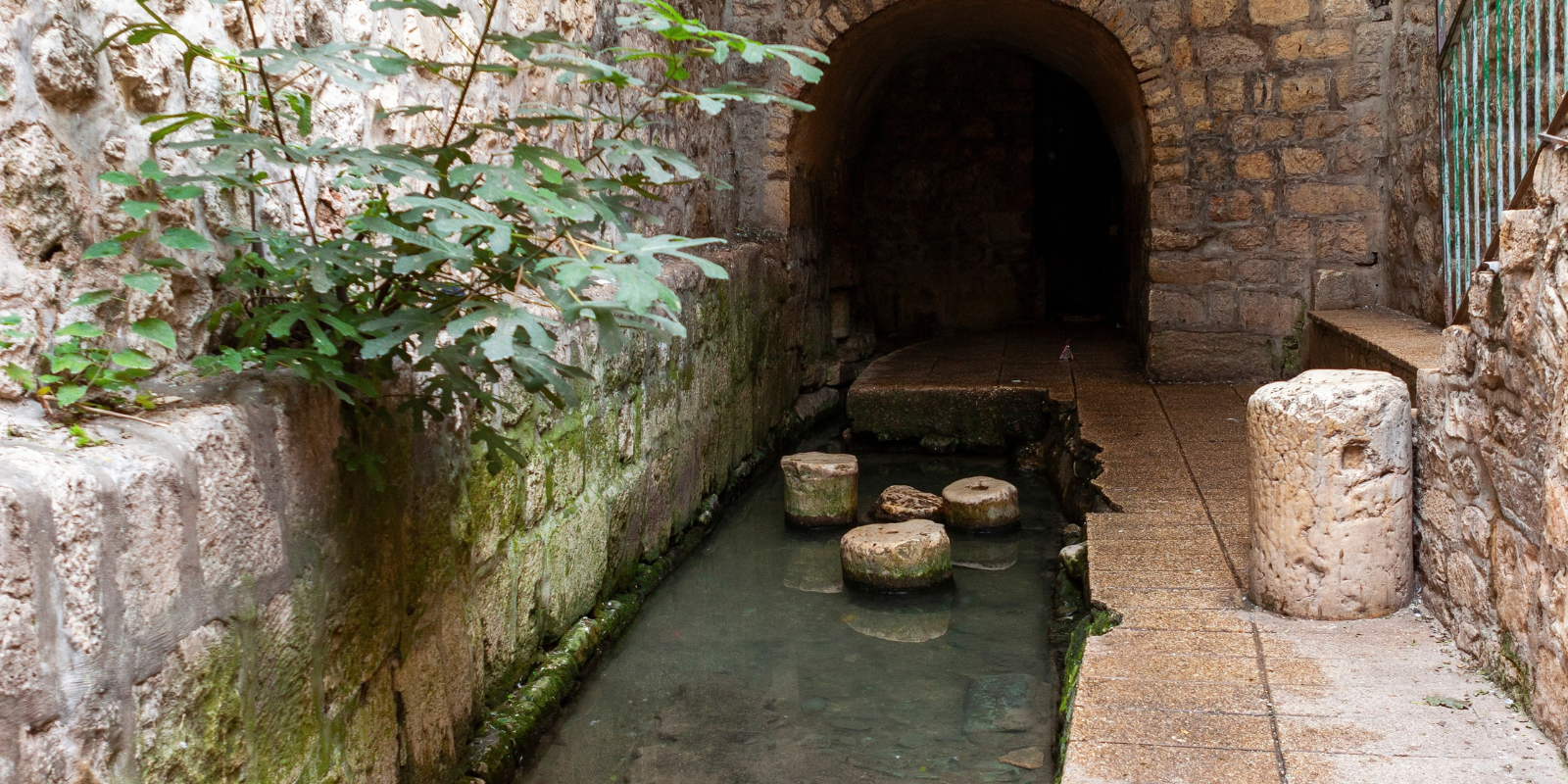
On the nights of Sukkot, the Temple courtyard in Jerusalem blazed with light. Golden candelabras, each fifty cubits high, stood in the Women’s Courtyard, and the Sages report that there was not a courtyard in all of Jerusalem that was not lit up by the glow. Pious men danced with flaming torches while the Levites stood on the fifteen steps leading up from the courtyard, playing harps, lyres, cymbals and trumpets.
This was Simchat Beit HaShoevah, the Rejoicing of the Water-Drawing, a celebration held in honor of the water poured on the altar each day of Sukkot. Its spirit is reflected in the words of the prophet Isaiah:
The Sages declared that anyone who never saw this celebration had never seen joy in his life.
Thousands of people packed the courtyard. And into this scene walked Hillel the Elder, the greatest Torah scholar of his generation. He looked out at the crowd and announced: “If I am here, everyone is here.” He then added, “And if I am not here, who is here?”
At first glance, it sounds like he was saying: “The star has arrived. Everyone who matters is now present, so the party can begin.”
The problem is that Hillel was the least likely man to say such a thing. The Talmud tells of a man who bet a small fortune, that he could make Hillel lose his temper. He came to Hillel’s door on a Friday afternoon, just as Hillel was washing for Shabbat, and pestered him with ridiculous questions, yet each time Hillel came out and answered him patiently. The Sages held up Hillel as the model of humility for all time: “A person should always be humble like Hillel.”
So what was this gentle, patient sage doing, standing before thousands of worshippers and declaring that his presence was what counted?
Rabbi Ephraim Mirvis, Chief Rabbi of the United Kingdom, points out that the Sages had something to say about crowds long before Hillel entered that courtyard. The Talmud rules that one who sees a gathering of six hundred thousand Jews recites a special blessing: “Blessed are You, Lord our God, King of the universe, Chacham HaRazim,” which means “the One who knows all secrets.” The Sages explain the choice of words: no two people in such a crowd think alike, and no two faces look alike.
This is a surprising blessing. A sight like that seems to demand praise for God’s power, or for the size and strength of the nation. Instead the blessing ignores the crowd entirely. It praises God for knowing the private inner world of each separate person standing in it.
Moses understood this about God, and about the people he led. As he prepared to hand over leadership, he prayed: “Let the Lord, the God of the spirits of all flesh, appoint a man over the community” (Numbers 27:16). Rashi explains that Moses chose this unusual title deliberately. He was saying to God that the mind of every person is revealed to You, and no two are alike, so appoint a leader who can deal with each one according to his own nature. To Moses, Israel was never a mass. It was hundreds of thousands of individuals, each one known to God by name.
Now return to Hillel in the courtyard. Rabbi Mirvis explains that Hillel was not speaking about himself at all. He was speaking for every person there. Somewhere in Jerusalem that evening, someone had surely looked out the window at the crowds streaming toward the Temple and thought, “Why go tonight? There are thousands of people there. Nobody will notice if I stay home.” Hillel’s declaration was the answer to that person. “If I am here, everyone is here.” Each individual who shows up is the crowd. And “if I am not here, who is here?” If every single person reasoned that his own presence made no difference, the courtyard would stand empty and the greatest celebration of the Jewish year would never take place.
Hillel’s words in the courtyard match his famous teaching: “If I am not for myself, who will be for me? And if I am only for myself, what am I?” (Pirkei Avot 1:14). The first half insists that no one can take my place. The second half insists that my place only has meaning as part of something larger. The water-drawing celebration held both truths at once. Thousands danced together as one people, and each of them mattered because each of them came.
The same is true of families, communities and nations. It is easy to assume that the synagogue will fill without us, that the volunteers will be found without us, that the good cause will succeed without us. Hillel stood in the brightest courtyard in the world and told his people otherwise. This Sukkot, as we celebrate together, each of us should take his words personally. We all matter. If I am here, everyone is here.