








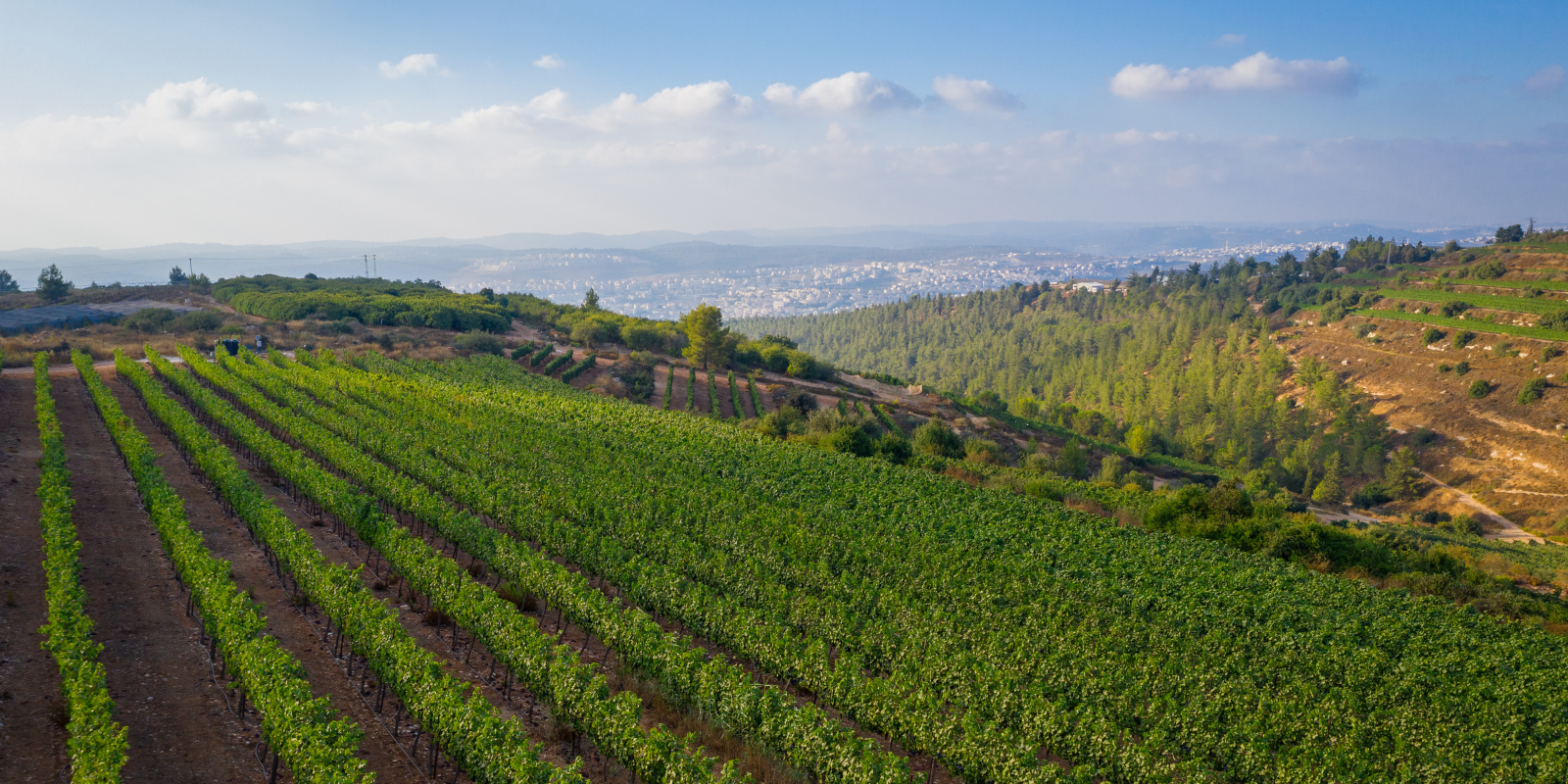
In early September, 2026, eleven European countries and Canada issued a joint declaration announcing that they would impose national restrictions on trade with Jewish communities in Judea and Samaria. The signatories were France, the United Kingdom, Denmark, Spain, Finland, Ireland, Iceland, Norway, Poland, Portugal and Sweden. They wrote that they “firmly oppose any action resulting in the annexation of Palestinian land.” Spain, the Netherlands, Belgium and Ireland had already banned these goods earlier in the year. Where the goods are still allowed in, European law requires them to carry a label stating where they come from. France’s foreign minister, Jean-Noël Barrot, now wants the ban extended across the entire European Union. He compared products from Judea and Samaria to goods smuggled out of Russian-occupied Ukraine.
Strip away the diplomatic language and the accusation is an old one. A Jewish farmer growing grapes in the hills of Samaria is not a farmer at all. He is a thief, and whatever he sells is stolen property.
Israel has answered this charge many times. Our ambassadors bring maps and history. Our archaeologists dig up coins and seals stamped with Hebrew names. Our lawyers file briefs going back to the Mandate. Some of these answers are excellent. None of them has ever changed Europe’s mind.
So what answer does the Bible give? And who is it meant to persuade?
This Shabbat, synagogues around the world will read the Torah portion of Bereishit (Genesis). It opens with a sentence Jews and Christians have treasured for thousands of years:
Rashi, the great medieval commentator, begins his commentary on the Bible with a question that seems almost impertinent. The Five Books of Moses are a book of commandments for Israel. Why don’t they begin with the first commandment given to the nation, “This month shall be for you the beginning of months” (Exodus 12:2)? Why open with the creation of the world?
Rashi answers by citing Rabbi Yitzchak, who points to a verse in Psalms:
He then explains what that means. If the nations of the world ever say to Israel, “You are robbers, because you seized the lands of the seven nations,” Israel can reply that the whole earth belongs to God. He created it, and He gives it to whomever He sees fit. By His will He gave it to them, and by His will He took it from them and gave it to us.
According to Rashi, the Bible opens with the answer to a boycott.
Rashi’s answer comes with a problem, though. It is entirely theological. Tell a Brussels diplomat that the land is Israel’s because God created the world and gave it to the Jews, and he will hear a sermon, not an argument. Why would the Bible stake Israel’s defense on a premise the accusers do not share?
Perhaps because Rashi was not writing only for a world of accusers. The answer is addressed to the nations, so it assumes nations who are able to hear it. And the opening verse of Genesis was never meant to stay a private Jewish possession. Today “In the beginning God created the heavens and the earth” is read in hundreds of languages, on every continent. Much of that translation work was done by Christians who took the Hebrew Bible to the ends of the earth.
That is the heart of what Rabbi Tuly Weisz calls Universal Zionism: the return of the Jewish people to the Land of Israel is a story the nations are invited to join. The prophet Zechariah saw it coming: “In those days ten men from all the languages of the nations will take hold of the garment of a Jew, saying, ‘Let us go with you, for we have heard that God is with you'” (Zechariah 8:23). The nations come to Zion, and they come with Israel.
In his book Universal Zionism, Rabbi Weisz describes sitting in his bomb shelter in the early days of the war against Hamas, calming his children through the sirens and fighting off a serious doubt. Pastors he had counted on for years were going quiet. The alliance he had spent more than a decade building seemed to be falling apart. What happened next surprised him. Hundreds of pastors organized to stand with Israel on Judea and Samaria, the most contested ground of all. They read the first verse of Genesis, believed it, and reached the same conclusion Rashi did.
That is what makes Rashi’s answer an answer at all. To a secular diplomat, “the earth belongs to God” settles nothing. To hundreds of millions of people who believe the Bible, it settles everything. Rashi gave Israel the first premise. The nations who accept that premise have become our partners in defending it.
Look again at the verse Rashi relies on. “He has declared to His people the power of His works.” God told the story of creation to Israel first, and gave Israel the job of telling it. For most of history, the Jewish people told it almost alone, to a world that answered with expulsions and burned books. Today, millions of Christians tell it with us. The account of creation, read by the Jewish people this Shabbat, has become the foundation of the most important friendship the Jewish state has.
None of this means the European ban will be lifted next month. The declaration will stand, the labels will stay on the bottles, and the farmers of Judea might have to find new markets. But the boycotters have misunderstood one thing. The label they require, the one that says a product comes from Judea, is meant as a warning. To anyone who has read the first chapter of the Bible, it reads as an address.