








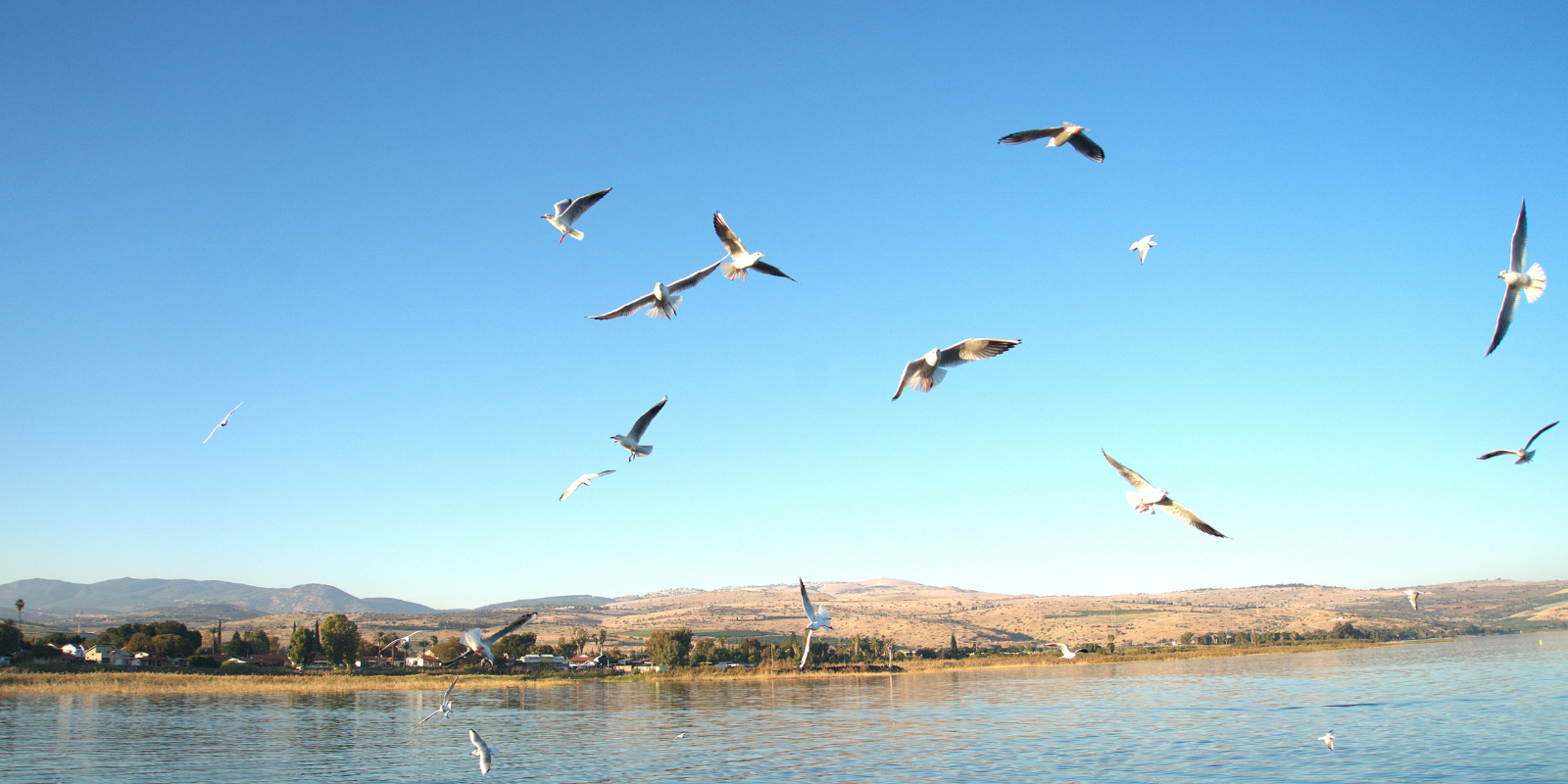
We have had a bit of a bird problem recently. Between the bird that has been relentlessly trying to nest in the space between the outward-facing shades on our window, and the bird that somehow got itself stuck in our enclosed patio, we are feeling a bit cooped up, ready to fly the nest, other bird joke. But on top of finding creative ways to deter these pesky pigeons, we’ve also stumbled into an obscure commandment from the Torah, specifically from the end of Deuteronomy, which we just read last week: sending away the mother bird before taking the eggs.
That’s it. That’s the whole commandment. If you happen upon a nest and want the eggs or the chicks, you first have to shoo the mother away. You cannot take her and her babies together. Rabbis have wrestled with this one for centuries. Why does the Torah care so much about a bird’s nest? And why, of all the 613 commandments, does this tiny, easy-to-miss law get the exact same reward as one of the Ten Commandments themselves: honoring your father and mother?
Here’s a thought I recently read that reframed the whole thing for me. Think about what it actually takes to catch a mother bird. Under normal circumstances, you can’t. She has wings. The second she senses danger, she’s gone. A bird’s entire survival strategy is built on the ability to flee. Except when she’s sitting on her nest. Then something in her overrides the instinct to save herself. She stays, even as a predator, or a person, approaches. Her devotion to her young is stronger than her drive to protect herself. And that devotion is exactly what makes her catchable.
So when the Torah says “you shall not take the mother together with her young,” it isn’t just handing down an animal welfare rule. It’s naming something almost unsettling: we could exploit a mother’s love as the very trap that destroys her. Her greatest virtue could become the mechanism of her undoing. The Torah says: not on My watch. Send her away first. Do not turn her devotion against her. Once you see it that way, the connection to honoring our own parents comes into focus. A human mother, and a father too, will absorb an extraordinary amount before their love for their child runs out. Disappointment, ingratitude, being taken for granted, being needed only when something is wanted. Parents keep showing up anyway, because their love isn’t conditional on what they get back.
Which means that love, too, can quietly be exploited. A child can learn that a parent will always be there, always forgive, always give, and can start treating that steadiness as something to draw on rather than something to honor.
Kibbud av va’em, honoring your father and mother, is the Torah’s answer to that temptation. It’s not only “say thank you for the gift of life.” It’s “notice the sacrifice being made for you every single day, and do not take advantage of it.”
That, I think, is why these two mitzvot alone are promised long life. Both of them ask us to look straight at parental self-sacrifice, in a bird or in a human being, and respond with restraint and honor rather than entitlement. A world that protects that kind of love is a world worth living long in. So the next time a bird refuses to budge from her spot on our patio, I’ll try to remember she’s not just being stubborn. She’s being a mother. And I might just give her the extra minute to fly off with dignity before I deal with the mess she left behind