




Before his soldiers crossed into Gaza, Major Moshe Leiter gave them a warning. “You are going to enter battle and lose your sense of direction… you will lose your ability to navigate.” A seasoned veteran of Israel’s special forces, Moshe gave his men three questions to repeat, over and over: “Where am I? Where are my friends? And where is the enemy?”
Moshe, a father of six, fell in battle in Beit Hanoun, Gaza, on November 10, 2023. He was 39 years old.
This month, his father, Yechiel Leiter, Israel’s ambassador to the United States, gave a speech about his son’s three questions to thousands of Chabad emissaries at their annual conference. These emissaries are rabbis whom the Chabad movement sends to build Jewish communities around the world. Yechiel Leiter spoke as a father struck twice. In September, a terrorist rammed his car into a checkpoint near Modi’in and critically wounded Moshe’s younger brother, Neriya.
I keep thinking about Moshe Leiter and his three questions. Moshe gave his life for the people of Israel and for the God of Israel. His three questions are critical advice for soldiers heading into battle. But it struck me that they are critical not only for IDF soldiers in Gaza, but for all of us. For whether we realize it or not, each of us is a soldier in a war for our survival.
The jihadists could not be clearer about their intentions. Hamas spells them out in its own slogan: “On Saturdays, we will murder the Jews. On Sundays, we will murder the Christians.” Yet on November 3, American voters sent politicians to the Senate and the House who support the very terrorists who want to murder Jews and Christians!
How do so many decent people miss an enemy who announces his plans out loud? The answer lies in Moshe’s three questions, and in their order.
Moshe’s first question is the oldest question in the Bible. After Adam and Eve eat from the forbidden tree, they hide in the garden, and God calls out to Adam: “Where are you?” (Genesis 3:9).
God knew exactly where Adam was hiding. He asked the question for Adam’s sake. Adam needed to stop hiding, face what he did and understand where he stood.
God asks each of us the same question today. He knows where we stand in history. The question is whether we know it ourselves.
At the very end of the Book of Isaiah, the prophet shares a prophecy that describes the extraordinary miracles of our own generation:
Isaiah 66:8
Nations are born slowly, over centuries of war and struggle. Israel was born in a single day. On May 14, 1948, David Ben-Gurion stood in a museum hall in Tel Aviv and declared the rebirth of the Jewish state. In one afternoon, a people scattered for two thousand years became a nation again in its own land.
But Isaiah also warns that this birth comes with pain: “Yet Tzion travailed.” Based on Isaiah’s image of a mother in labor, the Sages call the suffering of the end times chevlei Mashiach, “the birth pangs of the Messiah” (Sanhedrin 98b). Like a mother in labor, Israel must suffer before the redemption is born. Israel has felt those birth pangs from the day of its founding, in every war and every terror attack, from the War of Independence to October 7 and the war against Iran today.
That is where we stand: in the birth pangs of the redemption. Each of us must ask whether we understand it, and whether we are standing where God wants us, in the Land of Israel or at her side.
Moshe’s second question is “Where are my friends?” On the battlefield, a soldier who loses his bearings can no longer tell which of the men around him are on his side. The same thing is happening today to many who claim to love Israel.
Look at the confusion on the American Right. Tucker Carlson and Vice President JD Vance fight the woke Left, defend faith and family, and speak the language of America’s believers. Vance even condemns antisemitism when he speaks to Jewish audiences.
But at the same time, Carlson tells his audience that Israel is “the most violent country in the world by far per capita,” and he says of Christians who stand with Israel, “I dislike them more than anybody.” And Vance refuses to cut ties with him: “Tucker is a friend of mine… I’m not going to play the game where I throw friends under the bus.”
Vance has a rule for friendship: never throw a friend under the bus. But God has a different rule:
For nearly four thousand years, God’s promise to Abraham has set the standard for every man and every nation. Those who bless Israel are blessed, and those who curse Israel are cursed. Speeches at Jewish conferences do not make a man Israel’s friend, and neither does a shared enemy on the Left. What counts is where he stands when Israel’s enemies attack her. By that standard, JD Vance has chosen his side. A man who embraces Israel’s most popular slanderer as a friend is no friend of Israel.
It has never been harder to tell who our friends are. Men who share our values on nearly every other issue now stand beside those who curse Israel. But in war, we cannot afford confusion. A soldier who mistakes an enemy for a friend does not survive the battle, and neither will we. Our lives depend on knowing exactly who stands with us.
Moshe’s third question is “Where is the enemy?” In his speech to the Chabad emissaries, Moshe’s father, Yechiel Leiter, warned that it is harder than ever to identify the enemy. He told them: “The epidemic of our generation is that we have forgotten how to identify the enemy. The enemy is out there, and it changes its shape.”
Abdul El-Sayed, Michigan’s new senator, shows how well this enemy disguises itself. After the terror attack on Temple Israel, a synagogue in West Bloomfield, Michigan, El-Sayed explained it away: “hurt people hurt people.” On the campaign trail, he called American aid to Israel money for “apartheid, or genocide, or war.” Yet he also mailed flyers to Jewish homes across Michigan, promising to fight antisemitism.
And thousands of foolish Jews in Michigan believed him. According to an exit poll of Jewish early voters, a majority voted for El-Sayed. Jews helped send a terror apologist who seeks the destruction of Israel to the United States Senate. That is how confused we have become about who our enemies are.
When Moshe began basic training, he came home for Shabbat after 36 hours in the desert, gaunt and hollow-eyed. He marched some fifty miles with over a hundred pounds on his back. His father asked how his knees did not buckle, and Moshe answered: “I have a trick… I add weight… I add the hopes, prayers, and dreams of my grandparents to the weight. I put them on my shoulders, and then I can carry any burden on my back.”
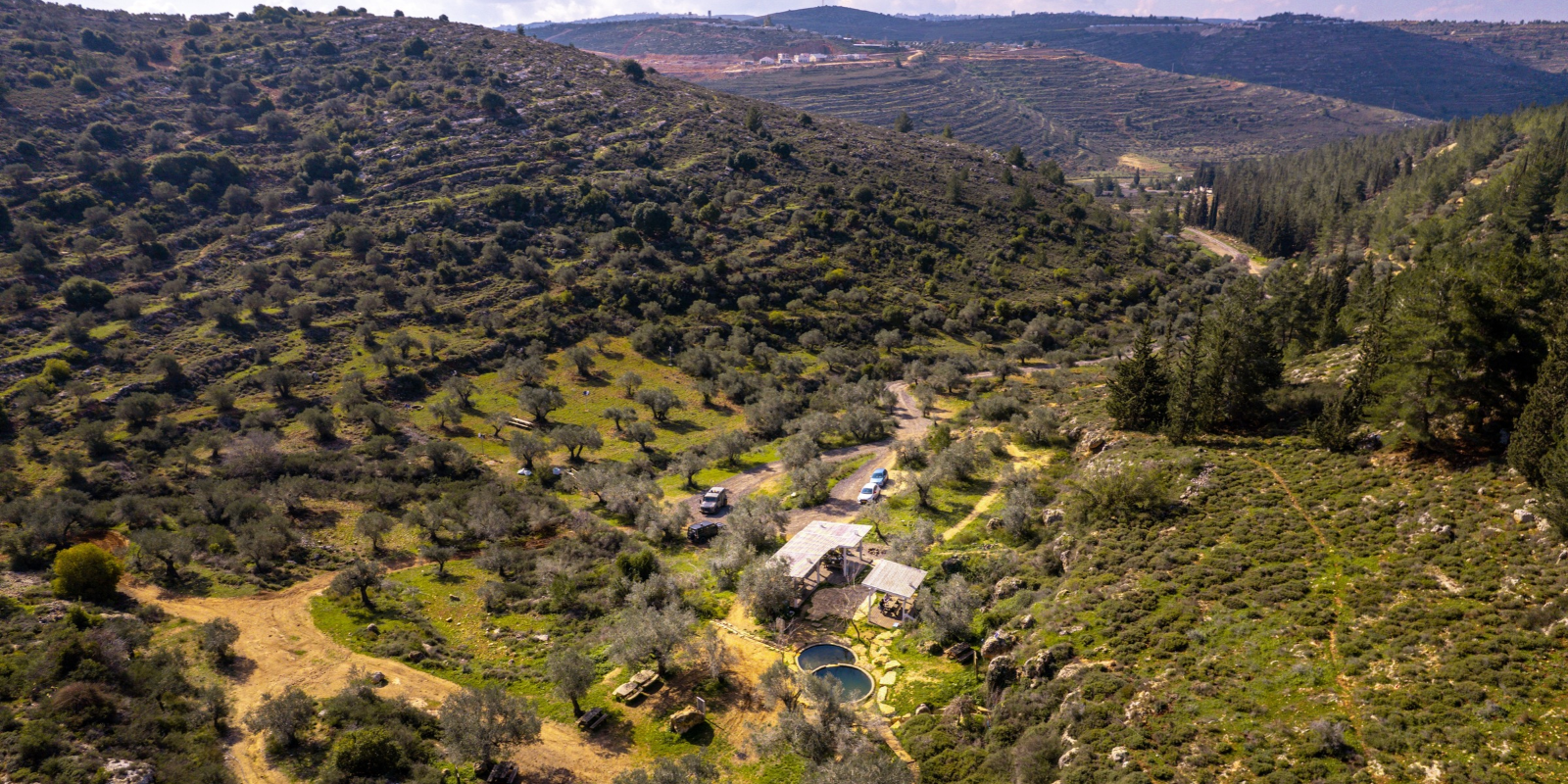
What does this war demand of us? Start with the battle right in front of us. In September, Britain, France and Canada announced bans on products from the Jewish communities of Judea and Samaria. In the Netherlands, a tourist who brings home a bottle of wine from Samaria now breaks the law. Europe is waging economic war to destroy the Jewish businesses of Judea and Samaria, and it is using the Nazi playbook. On April 1, 1933, Hitler’s Storm Troopers stood outside Jewish shops across Germany with signs that said, “Germans! Defend yourselves! Don’t buy from Jews!” Ninety-three years later, Europeans are shamefully copying Nazi tactics in their effort to drive Jews out of the Holy Land.
We can stand up and fight this boycott. Buy wine, olive oil and honey straight from the Jewish farmers of Judea and Samaria. Every purchase keeps a Jewish family in Judea and Samaria in business and strikes a blow against Europe’s evil boycott. In this war, we are soldiers too. If we stand together, we can defeat this boycott.
Moshe Leiter could bear any weight because he never lost his bearings. He knew where he stood, who his friends were and who his enemy was. In his speech, his father urged us all to follow Moshe’s example: “Add a little more to the burden on your shoulders.”
That call is for every one of us. We must know where we stand in history, who our friends are and who our enemy is. And then, like Moshe, we must add a little more weight to our own shoulders and fight.
Europe’s boycott will fail only if we answer it with a buycott. Stock your kitchen with wine, olive oil and honey from Judea and Samaria, ask your synagogue or church to order by the case, and give them as Chanukah and Christmas gifts this year. Shop products from Judea and Samaria here.