







Moses sent for them, and they would not come.
Dathan and Abiram had thrown in with Korah’s rebellion, and when Moses called them to face him they sent their answer back by messenger, the way you refuse a man you have stopped fearing. We will not come up. And then, so the insult could not be missed: “Is it a small thing that you have brought us up out of a land flowing with milk and honey, to kill us in the wilderness?” (Numbers 16:13).
They are describing Egypt.
They take the phrase God spoke to Moses at the burning bush, the phrase that names the entire promise, and they hang it on the house of bondage. It is a stunning piece of contempt. But it also tells you exactly what Dathan and Abiram thought the words meant, because Egypt did have one thing in overwhelming supply. Egypt had food. Grain in quantities that fed the whole region in a famine, stacked in storehouses until Joseph stopped counting it. If “flowing with milk and honey” means a full stomach, then Egypt qualified, and the two rebels had a point.
Fifteen times the Torah calls the land of Israel “a land flowing with milk and honey.” It is there at the burning bush and still there in Moses’ last warnings forty years later. Three of those appearances fall in the Torah portion of Ki Tavo alone: in the farmer’s declaration over his first fruits, in the confession he makes over his tithes, and in the command to write the Torah on stones at Mount Ebal the moment the nation crosses the Jordan.
So what is actually being promised?
The obvious reading is the literal one, and the rabbis give it a picture. Rami bar Yechezkel, a Babylonian sage visiting the Land of Israel, came to Bnei Brak and saw goats grazing under fig trees. Honey ran down from the overripe figs, milk dripped from the goats, and the two mingled on the ground. This, he said, is the milk and honey of the Land of Israel (Ketubot 111b). Rashi describes it the same way, goats so fattened on ripe fruit that the honey streams off the trees and the milk off the animals. On this reading the phrase is a photograph, and zavat, flowing, means what it sounds like.
One page later, the Talmud says something else entirely.
There the phrase is not a photograph at all. It is a comparison. A land flowing with milk and honey means a land whose fruit is as rich as milk and as sweet as honey (Ketubot 112a). Milk and honey are not two of the land’s products, they are the two words you reach for when you bite into something grown there and try to describe what it tastes like.
The Sages take it further, explaining a verse in our Torah portion. When the farmer finishes distributing his tithes he turns to God and asks Him:
What is he asking for when he requests a land flowing with milk and honey? “That You may give a good taste to the produce” (Ma’aser Sheni 5:13).
Not more fruit. Better fruit.
When we moved to Israel, the thing that surprised us was the absence. The fruit in Israel is seasonal. You cannot buy whatever you want whenever you want it here. Grapes show up and then they are gone. Persimmons arrive for a few weeks. Figs have a season, and when it ends there are no figs, and no amount of wanting them changes that.
What you get in exchange is fruit that was picked ripe, a short drive from where you are standing, and it tastes like nothing we ate before. Fruit that is available in every month has been bred to survive a journey. Fruit that is only available in one month has never had to do anything but taste good. And taste good it does!
The Torah knew what it was praising. And the word it chose for the sweetness makes the point sharper once you know what it means.
It is not bee honey. Rashi proves this from an unlikely place: Leviticus forbids putting leaven or honey on the altar, then says both may still be brought to the Temple. When does anyone bring leaven and honey to the Temple? The leaven must be the two loaves of Shavuot, Rashi answers, and the honey must be the first fruits (Leviticus 2:11). Honey brought as first fruits is fruit. Elsewhere Rashi identifies it as the syrup of dates and figs (Exodus 13:5).
Which means both halves of the phrase name a flavor rather than a commodity. Not the wheat that fills you but the richness on your tongue. Not the grain in the silo but the sweetness of a date that ripened in the sun.
And that raises another question. Of everything the Creator of the universe might promise a nation of former slaves, taste is a strange choice. He does not say I am bringing you to a land where you will be safe. He does not say a land large enough for all of you, or fortified, or rich in ore. He says the food there is delicious. Why?
Flavor is not a necessity. A man can be nourished without pleasure; sweetness adds nothing to survival. Which is exactly the point. Bread is what God owes a world He created. Taste is what He throws in on top, and the Torah picks that, the unnecessary part, as the phrase to define the land by. The promise is not that you will be fed. It is that you will be delighted.
Now watch what Ki Tavo asks the farmer to do with it.
He walks through his field early in the season and finds the first fig beginning to ripen, the first pomegranate starting to turn, and he ties a red string around it to mark it. That fruit is now bikkurim. It is the one he has been waiting all year to eat, and he will not eat it. He carries it up to Jerusalem, hands it to the priest, and says out loud:
The first taste goes back to the One who invented taste.
Dathan and Abiram never understood this, and it is why they could look at Egypt and see the promise fulfilled. Egypt fed them. Egypt kept them alive on bread and fish and cucumbers and onions, the food they would later remember by name in the wilderness. A full stomach was all they were ever asking for, so a full stomach was all they could see, and the phrase that named the sweetness of God’s gift became, in their mouths, a receipt for rations.
For nineteen centuries the land was famous for the opposite of everything this phrase promised. Mark Twain came through in 1867 and wrote it off as desolation, hills bare, valleys empty, a country nobody would want. Both halves of the promise were missing at once. There was no honey running off the figs because there were hardly any figs, and there was nothing growing on those hillsides rich as milk or sweet as anything at all. The phrase sat in the text and matched nothing on the ground.
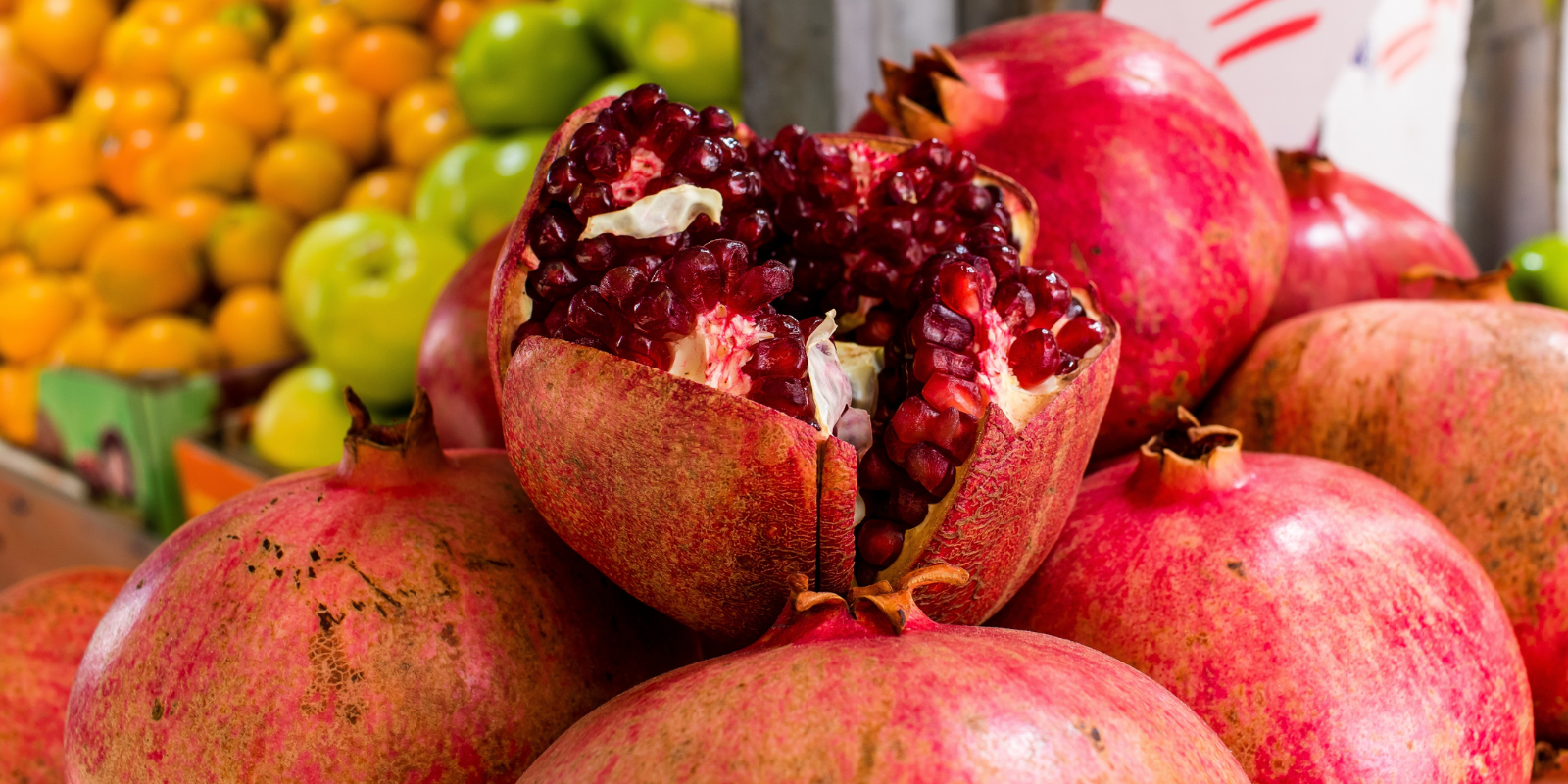
But go to a shuk in Jerusalem today. Dates from the Jordan Valley stacked in crates, figs from the Galilee, pomegranates splitting their own skins on the table, more of it than the country can eat. That is the first half back, the overflow Rami bar Yechezkel walked all the way from Babylonia to see. Then taste one, and you have the second half, which is the one the Torah was really promising. Not adequate fruit. Fruit as rich as milk and as sweet as honey.
The farmer in Ki Tavo was not predicting any of this. He was holding it. His basket was picked that season from ground he had worked, and when he said “He brought us to this place” he was testifying to what was already in his hands.
The land Twain wrote off is producing again, and the sentence he could not have written is on the table in every shuk in the country. What we do not have is the rest of the scene. No basket carried up to Jerusalem, no priest to hand it to, no place to bring the first fig.
So we say it where we are, over fruit as rich as milk and as sweet as honey, and wait for the day the farmer’s whole sentence can be spoken again in the place it was meant to be said.
Click here to purchase our original art piece “A Land of Milk and Honey.”