








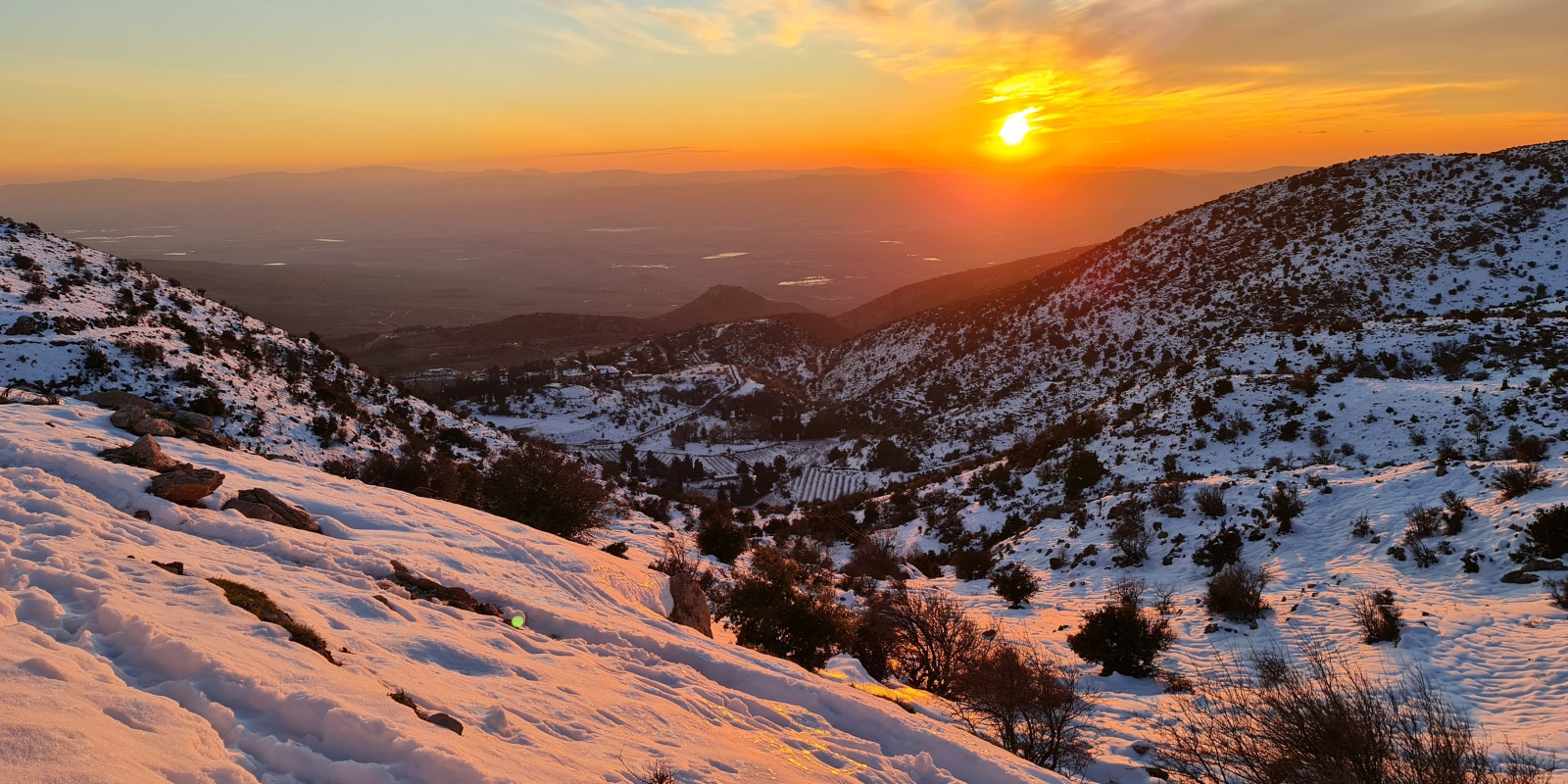
On the night of October 27, 2026, at a high camp 6,000 meters up the side of Ama Dablam in Nepal, the climbers around Tzachi Miara prepared for the final push. Above them rose one of the most beautiful peaks in the Himalayas, a tooth of rock and ice that tops out at 6,812 meters (22,349 feet). For Miara, an Israeli who fell in love with mountaineering in Nepal in 2019, that summit was the point of everything. He spent two years training for this one climb. “My life completely revolved around this goal,” he wrote afterward.
That night, a 25-year-old Dutch climber at the camp collapsed from altitude sickness and lost consciousness. The others continued up. Miara stayed, along with two other climbers, Xenia Santha and Paul Clarke. The three of them worked through the night to keep the young man stable. They tracked down his Sherpa guide, asleep in another tent, and sent him to a lower camp for a tank of oxygen. That tank saved his life. In the morning, a rescue team evacuated him to a hospital in Kathmandu.
With the young man in safe hands, Santha and Clarke invited Miara to continue the ascent with them. But the night had taken its toll. A late start meant worse weather, and he was spent. The decision he made in the dark cost him the summit. He turned down the offer and started back down the mountain, bound for home.
Back in Israel, he described the trip in words that do not belong to a failed expedition: “I am returning home with a full heart, happy and full of pride.”
A full heart? He came home without the one thing he spent two years chasing. How does a man fly home empty-handed and call his heart full?
The verse never says why God appeared. The Sages fill in the gap. The previous chapter ends with Abraham’s circumcision at the age of ninety-nine, and they teach that God came to him on the third day after, the most painful day of the recovery, to visit and ask after him. From this scene the Sages learn an entire commandment. Walk in the ways of the Holy One, they instruct: “Just as He visits the sick… so too should you visit the sick”.
So Abraham, old and in pain, sits at his tent while the Creator of the universe pays him a personal visit. No human being ever received a higher honor. Then he looks up, sees three dusty travelers, and runs. He leaves God at the entrance of the tent to greet strangers.
Rashi reads Abraham’s next words, “please do not go on past your servant” (Genesis 18:3), as addressed to God Himself. Abraham asks the Almighty to wait while he runs to bring in the wayfarers. The Sages draw the conclusion without blinking: “Hospitality toward guests is greater than receiving the Divine Presence”.
We tend to assume that the summit of a spiritual life is the moment of closest contact with God. Abraham walks away from that moment, and the Bible holds him up as the model for it.
Moses learns the same lesson on a real mountain. The first time he descends Sinai, the Bible records his route with odd precision:
Why does the verse need to tell us where he went? Rashi explains that Moses “did not turn to his own affairs, but from the mountain to the people.” He did not stop at home or rest. The summit sent him straight back to the camp below.
The second time, God sends him down Himself. After forty days at the top of Sinai, higher than any human being will ever climb, Moses hears:
The Sages hear a sharper message in the command. “Go down from your greatness,” God tells him. “Did I give you greatness for any reason other than for Israel?”
Moses’ greatness never belonged to Moses alone. The mountain existed for the people at its base.
That brings us back to Miara’s “full heart.” The Bible’s word for a whole heart is shalem, the word Solomon uses when he blesses the nation at the dedication of the Temple:
Shalem does not mean full the way a stuffed suitcase is full. It means whole, complete, lacking nothing, and it shares its root with shalom, peace. A heart becomes shalem when nothing essential is missing from it. Abraham and Moses show what that missing piece usually is. A summit reached while someone lies dying in a tent below leaves a hole that no view can fill.
Miara grasped this in the dark at 6,000 meters, perhaps without ever thinking of Abraham. “This is so much more important to me than any summit,” he said. He did not sound like a man counting his losses.
A nation whose father left the Divine Presence waiting at the tent door to feed three strangers, and whose greatest prophet heard God tell him to go down from his greatness for the sake of the people, produces people who know when to turn around. Israel lives this way at its best. When an earthquake flattened Kathmandu in 2015, the Jewish state flew a field hospital and hundreds of doctors and soldiers to the same country where Miara made his own descent.
Ama Dablam is still there. Miara says he plans to go back next year and finish the climb. Maybe he will stand on top, and the view will be everything he imagined. But the highest point of that expedition will remain a night spent at 6,000 meters beside a stranger. The mountain could wait. The young man from Holland could not.