






Eliya Cohen had already bought Ziv Abud an engagement ring. After years together, he was planning to ask her to marry him in the fall of 2023. But on October 7, 2023, before he ever had the chance, everything changed.
That morning, Eliya and Ziv were at the Nova music festival together with Ziv’s nephew, Amit Ben Avida, and Amit’s girlfriend, Karin Schwarzman. When the Hamas terrorist attack began, they fled to a roadside bomb shelter near Kibbutz Re’im, a place that would later become known as the “shelter of death.” Terrorists threw grenades inside. Aner Shapira, another young man sheltering there, repeatedly threw them back out. Eventually, the terrorists opened fire on the people seeking refuge inside. Sixteen people in the shelter were murdered, including Amit and Karin. Ziv survived, hidden beneath the bodies of the dead. Eliya was dragged away to Gaza.
For the next 505 days, Eliya lived in Hamas captivity, cut off from his family, from Ziv, and from nearly everything that had made up his life before October 7. And yet there in the depths of hell, was one connection he did not lose. Every morning in captivity, Eliya put on tefillin. Or rather, he imagined that he did.
Tefillin are one of Judaism’s most physical commandments. They consist of small black leather boxes containing passages from the Torah, which Jewish men place on the arm and head during weekday morning prayers. Long leather straps secure them in place and are wrapped around the arm and hand. The command comes directly from the Bible:
The Hebrew word ukshartam, “you shall bind them,” comes from the same root as kesher, a knot, a tie, or a connection. That language feels particularly striking in Eliya’s story. He had no tefillin in Gaza. He had no prayer book, no synagogue, and no normal morning. He was underground, starving, isolated from the people he loved, and for part of his captivity physically chained together with other hostages.
But each morning, Eliya would stand in his corner and go through the motions of putting on tefillin. He imagined placing the box on his arm. He imagined wrapping the straps. He recited the prayers he remembered. Then he spoke to God. “Good morning, Abba,” he would begin, addressing God using the hebrew word for father. He thanked God for another day of life. He prayed for his family. And he prayed for Ziv. “If Ziv is alive,” he would say, “I want her to know I love her and she should be strong.”
Eliya was a bound man, but every morning, he chose to whom he would truly be bound. His captors could control where his body went. They could put chains around him. They could humiliate him, strip him of his dignity, take away every religious object he owned. But they could never sever his kesher. The connection remained, to God, to his family, to Ziv, and eventually to the other Jews sitting beside him underground.
At first, Eliya prayed alone. Then one of the other hostages asked if he could join him. “Teach me how to say it,” he told Eliya. Soon all four men were standing together each morning. They imagined putting on the tefillin they did not have, and they prayed together. Eliya would say the Shema aloud, and the others would respond. What began as one man’s private act of connection became a shared source of strength.
There is another detail about tefillin that makes Eliya’s story even more extraordinary. When wrapping the tefillin strap around the finger,it is customary recite words from the prophet Hosea: “I will betroth you to Me forever.” The passage continues, “And I will betroth you to Me with righteousness and justice, with kindness and mercy. And I will betroth you to Me in faithfulness.”
The imagery is unmistakably marital. The strap wrapped around the finger evokes a wedding ring, transforming the act of putting on tefillin into a daily reminder of covenant and relationship. Tefillin are not only about remembering God’s commandments. They are about binding ourselves to Him. And for 505 days, Eliya imagined that bond around his arm and hand while wondering whether the woman he had intended to place a very different ring upon was still alive.
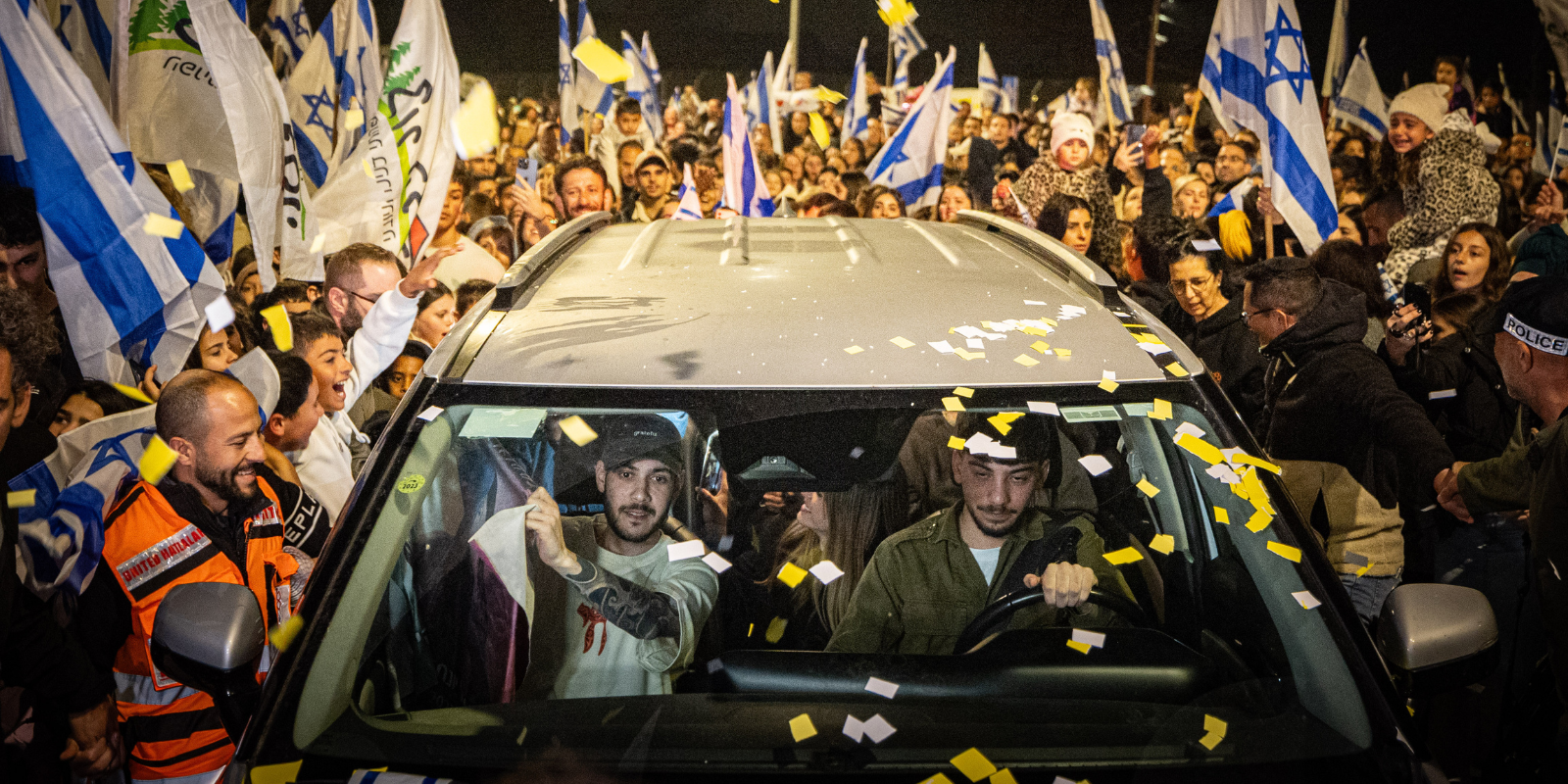
She was. Eliya returned to Israel in February 2025. Ziv was waiting for him. And this week, nearly three years after the morning that tore their lives apart, Eliya Cohen finally placed a ring on Ziv Aboud’s finger.
Even the chuppah, the wedding canopy, carried the story of everything they had survived. Eliya and Ziv stood beneath a tallit that had belonged to Amit, Ziv’s nephew, who entered the shelter with them on October 7 and never came out. A tallit is itself a garment of wrapping. A Jew wraps himself in it during prayer. At Eliya and Ziv’s wedding, Amit’s tallit became the covering beneath which they began their marriage. His absence was not erased. Somehow, it was carried with them into the life they were building.
Then Eliya’s friends gathered around him and began to say the Shema. These were the same words Eliya had recited underground in Gaza, standing beside other starving hostages and imagining tefillin wrapped around his arm. Now he stood beneath a chuppah, surrounded by friends, with Ziv beside him.
There are many kinds of bonds in this world. Some are forced upon us. Others we choose. For 505 days, Eliya knew what it meant to have his freedom taken from him. Other people decided where he would sit, what he would eat, whether he would see daylight, and when the chains around his body would come off. But every morning, he remembered another kind of binding: “You shall bind them as a sign upon your hand.”
His captors could bind his body. They could not decide what his heart and soul would remain bound to. And perhaps that is what makes the image of Eliya placing a ring on Ziv’s finger so powerful. After everything that had been tied around him against his will, Eliya finally stood beneath a chuppah and chose, freely and joyfully, what he wanted to be bound to for the rest of his life: to Ziv, to God, and to the sacred life they would now build together.