








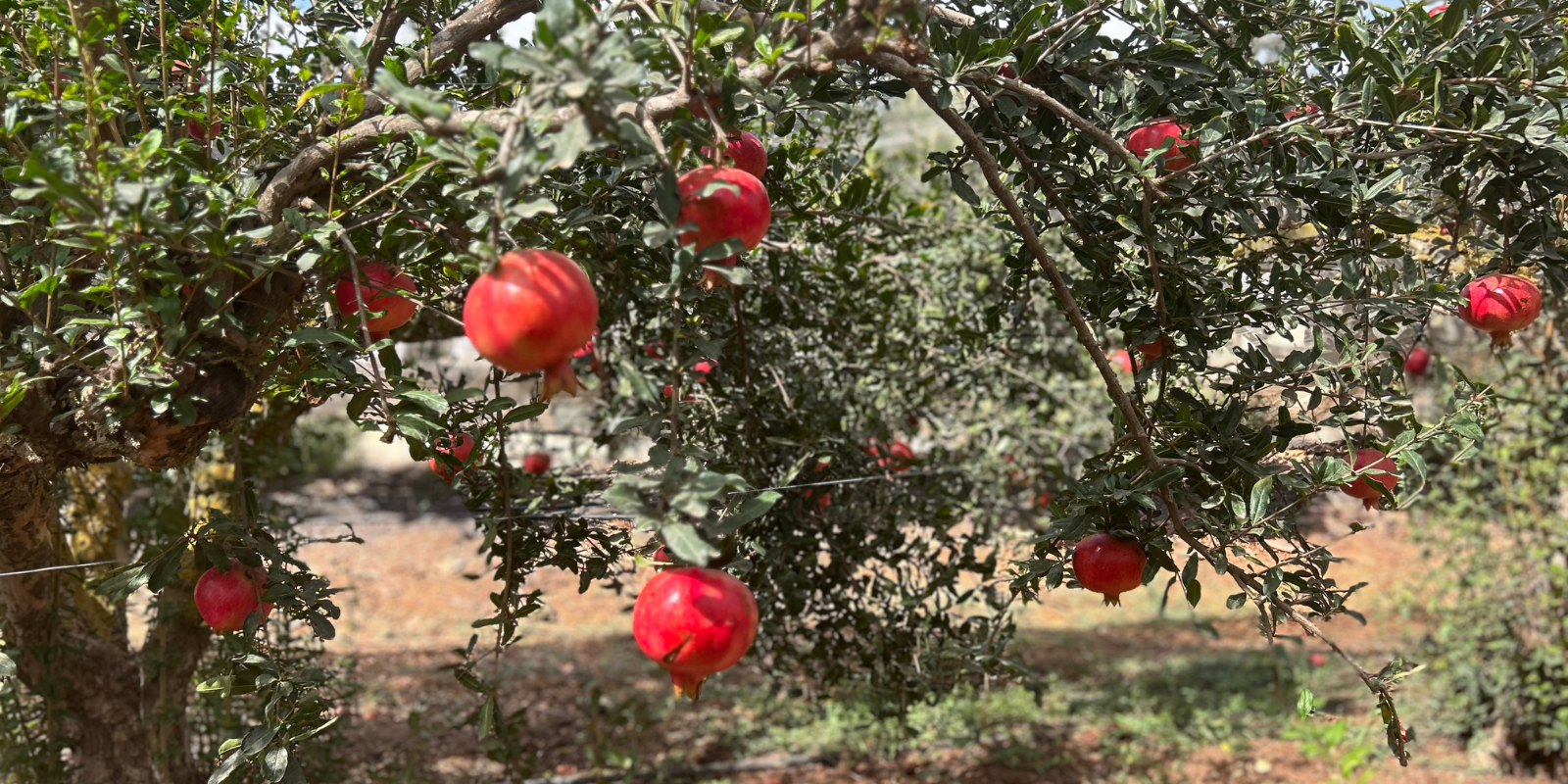
There are very few things more satisfying than sitting with your family in a pomegranate orchard on a sunny day in September, eating pomegranate seeds freshly picked from the tree. Juice runs down little chins, fingers get sticky, and the sweetness hangs in the air. It is Sukkot, the Festival of Booths, and earlier this week, my family was doing one of our favorite holiday traditions: picking fresh fruit and vegetables at Moshav Gimzo in central Israel. Every year, this sweet little farm seems to add to the variety of vegetation you can pick, and eat. This year, in addition to clementines, avocados, pomegranates, lettuce, mint, basil, carrots, and kohlrabi, we were also able to pick sunflowers! While we were out in the pomegranate orchards, I was of course daydreaming about my next Daily Inspiration article, and something occurred to me. Food plays an enormous role throughout the Torah. But when I thought back through the Five Books, so many of the narratives that include food are not really about abundance. In fact, quite the opposite.
Adam is told that he will eat bread by the sweat of his brow. Abraham leaves the Land because of famine. Jacob’s family eventually descends to Egypt because there is no food. In the wilderness, the Israelites depend on manna and repeatedly worry about what they will eat. In Leviticus, grain, oil, and animals become part of the sacrificial service. Again and again, food appears in the context of need, dependence, uncertainty, or offering.
And then, in Deuteronomy, the language changes.
For the first time, Moses gathers seven specific crops together to describe the abundance of the Land itself:
Why, after so many stories in which food is scarce, uncertain, or given back to God, does Moses suddenly describe abundance with such specificity?
Food is one of the most basic forms of security. Before people can think about wealth, culture, conquest or long-term plans, they need to know that there will be enough to eat. Evidently, what we will consume can become all-consuming.
By the time Moses speaks in Deuteronomy, the Israelites are standing at the edge of a completely different kind of life. They are about to stop wandering. They will no longer wake up and collect manna from the ground. They will plant fields, tend vineyards, harvest grain, and store food. Their sense of security will now come, at least in part, from what they can grow themselves.
And perhaps that is why the promise is so concrete. God does not simply tell them that the Land will provide. There will be wheat. Barley. Grapes. Figs. Pomegranates. Olives. Dates. After generations in which the source of food had so often been uncertain, the Torah names what will actually be on their tables and in their bellies.
And yet, security creates a different spiritual challenge.
When food is scarce, dependence on God is difficult to ignore. In the wilderness, there was no separating breakfast from the One who provided it. The manna appeared each morning. The Israelites knew exactly where their food came from.
Abundance however can make that connection less clear. Once the fields belong to you, the trees grow on your property, the grain is stored away, and you know there will be food tomorrow, it becomes easier to see your security as something you created entirely on your own. The absence of scarcity can also mean the absence of the daily reminders that once made God’s provision so clear.
That is why, only a few verses after naming the produce of the Land, Moses warns the people not to become overconfident and say:
The Israelites are supposed to work the land. They are supposed to plant, harvest, build, and create security for their families. Moses does not diminish that work. He reminds them that having enough does not make them self-sufficient.
The crops are not decorative details. They are part of the relationship between people, land, work, and, most importantly, God. And after all of that abundance, and all of those warnings about what abundance can do to us, we are given something even better: a way to respond to it.
Part of what made our fruit picking so delicious was blessing our food afterward, right there in the orchards. Juicy and muddy, we thanked God for what we had just eaten. We picked the fruit ourselves. We carried it home. We enjoyed every last sticky bite. And we remembered Who made it possible.