







In the summer of 701 BCE, the armies of Sennacherib king of Assyria swept through the kingdom of Judah. The Assyrian king later boasted in his royal annals that he had captured forty-six walled cities and shut up Hezekiah, king of Judah, in Jerusalem “like a bird in a cage.” Everything outside the capital was gone. Lachish, the second city of the kingdom, was reduced to rubble and its survivors marched into exile, a scene the Assyrians were so proud of that they carved it across the walls of Sennacherib’s palace at Nineveh.
Isaiah son of Amoz lived through all of it. He prophesied in Jerusalem “in the days of Uzziah, Jotham, Ahaz and Hezekiah, kings of Judah” (Isaiah 1:1), half a century in which Judah watched the northern kingdom of Israel destroyed by Assyria and then nearly went the same way. When he opens his book by describing a land where “your country is desolate, your cities are burned with fire; strangers devour your soil before your eyes,” and a Jerusalem “left like a booth in a vineyard, like a hut in a cucumber field, like a besieged city” (Isaiah 1:7-8), he is not composing poetry. He is describing what he can see from the walls.
This is the chapter we read on the Shabbat before Tisha b’Av, the day on which we commemorate the destruction of both Temples. Isaiah’s opening word, chazon, “the vision,” gives the day its name: Shabbat Chazon. It is the last of the three haftarot (reading from the Prophets) of rebuke read during the three weeks that we mourn for Jerusalem and the Temple.
Having described the ruin of their land, Isaiah turns to the cause of it, and names the city he thinks they have become:
He is standing in Jerusalem, the city of the Temple, addressing the officials of the house of David, and he calls them Sodomites. Sodom and Gomorrah were so evil God couldn’t even find ten righteous people in the city whose merit could save them. Why the comparison? Surely that must have been an overstatement!
To answer the question we have to go back to Genesis. God is about to destroy the city of Sodom, and He pauses to consider whether to tell Abraham. “Shall I hide from Abraham what I am about to do…?” What follows is one of the few passages in the Torah where we are given God’s own reasoning: “Abraham is to become a great and populous nation, and all the nations of the earth are to be blessed through him. For I have known him, so that he may instruct his children and his household after him to keep the way of the Lord, to do what is right and just, so that the Lord may bring upon Abraham what He has promised him” (Genesis 18:18-19).
On the eve of Sodom’s annihilation, God defines the entire purpose of the Jewish people. Not the land, not the covenant of circumcision, not the Temple. Tzedakah u’mishpat, righteousness and justice. That is the reason Abraham was chosen, and the condition on which everything promised to him depends.
And it is said precisely here, with Sodom in the frame, because Abraham and Sodom are being set side by side as the two available models of civilization.
Sodom was not destroyed for atheism. The prophet Ezekiel spells out its crime with unnerving specificity:
Sodom was prosperous and comfortable. It had a legal system. It simply built that system to keep the vulnerable out, perfecting the art of turning wealth into cruelty and calling it order.
Abraham’s household is defined as the opposite, and Abraham proves it in the very next scene. Told that the city will be destroyed, he does not congratulate himself on being spared. He argues with God on behalf of the worst people on earth: “Shall the Judge of all the earth not do justice?” (Genesis 18:25). He bargains God down from fifty righteous men to ten. He is a one-man demonstration of what tzedakah u’mishpat looks like.
So what do these two words actually demand?
Rabbi Jonathan Sacks noted that mishpat is one of the Bible’s words for strict legal justice, the rule applied without deviation. Law is blind, and blindness is the point: rich and poor, powerful and powerless, native and stranger stand identically before it, because equality before the law is what equality before God looks like once it is translated into human institutions. The Torah therefore insists that judgment is not a human invention at all. “Do not be intimidated by any man, for judgment belongs to God” (Deuteronomy 1:17). Since it belongs to God, no judge is authorized to bend it, whether out of fear, out of greed, or out of affection.
Tzedakah, however, resists translation altogether, carrying justice, charity, righteousness, integrity, fairness and innocence all at once, and reaching well past anything a court can enforce. According to Rabbi Sacks, tzedakah means justice mixed with compassion.
Judaism commands love, of God, of neighbor, of the stranger, but love on its own will always tilt the scales toward the people we happen to love, and so, as Rabbi Sacks put it, “without justice, love corrupts.” Law with no mercy in it turns cruel, and mercy with no law behind it turns into favoritism. The two words God gives Abraham are meant to be held together, and a society that holds them together is the one thing standing between civilization and Sodom.
Now go back to Isaiah’s Jerusalem.
“How has the faithful city become a harlot! She was filled with justice, righteousness lodged in her, and now murderers… Your officials are rebels and cronies of thieves, every one avid for bribes and chasing after payoffs; they do not judge the case of the orphan, and the widow’s cause never reaches them” (Isaiah 1:21-23). Judges for sale, and the two people in the Bible with no one to advocate for them shut out of the courthouse. And what does God want instead of the rivers of sacrificial blood filling the Temple courtyard, the festivals He says He cannot bear?
That is the charge. Jerusalem kept the sacrifices, observed Shabbat and the holidays but abandoned the mandate. Which means Jerusalem had become like Sodom, the specific society Abraham was created to be the answer to. A nation whose founding purpose is tzedakah u’mishpat and which practices the opposite has not merely sinned. It has changed sides.
There is one word of mercy buried in the passage, and it is easy to miss. Abraham asked for ten righteous men in Sodom and they were not found. Isaiah says God “left us a small remnant” (Isaiah 1:9), a sarid, and that is the only reason Jerusalem is still standing. The city survived Sennacherib on the strength of the handful of people Sodom never had.
The vision does not end in ruins. It ends with Abraham’s two words handed back to his children as the terms of their return: Tzion b’mishpat tipadeh, v’shaveha b’tzedakah. “Zion shall be redeemed with justice, and those who return to her with righteousness” (Isaiah 1:27). The road out of Tisha b’Av runs through the same ground Abraham was standing on when he argued for Sodom.
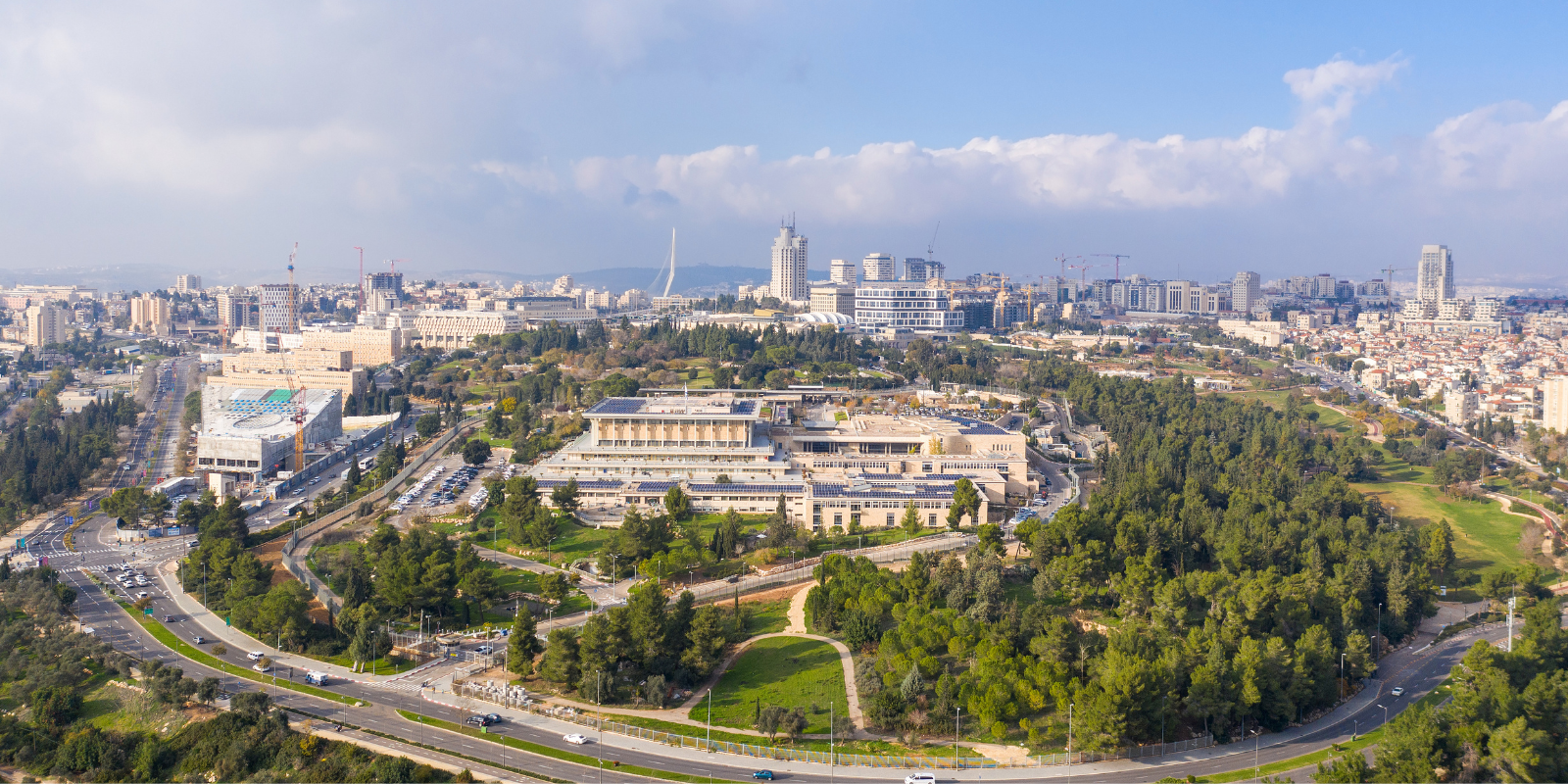
We are the generation that got Jerusalem back. Sennacherib’s palace reliefs sit in a museum in London while the descendants of the people he caged run a sovereign state, an army, courts and a treasury. That is exactly the condition in which Isaiah’s warning applies, because only a people with power can be indicted for what it does with power. Sodom was rich and safe and comfortable, and it was destroyed for what it did with those advantages. The Temple will be rebuilt on the terms for which Abraham was chosen: Righteousness and justice.