






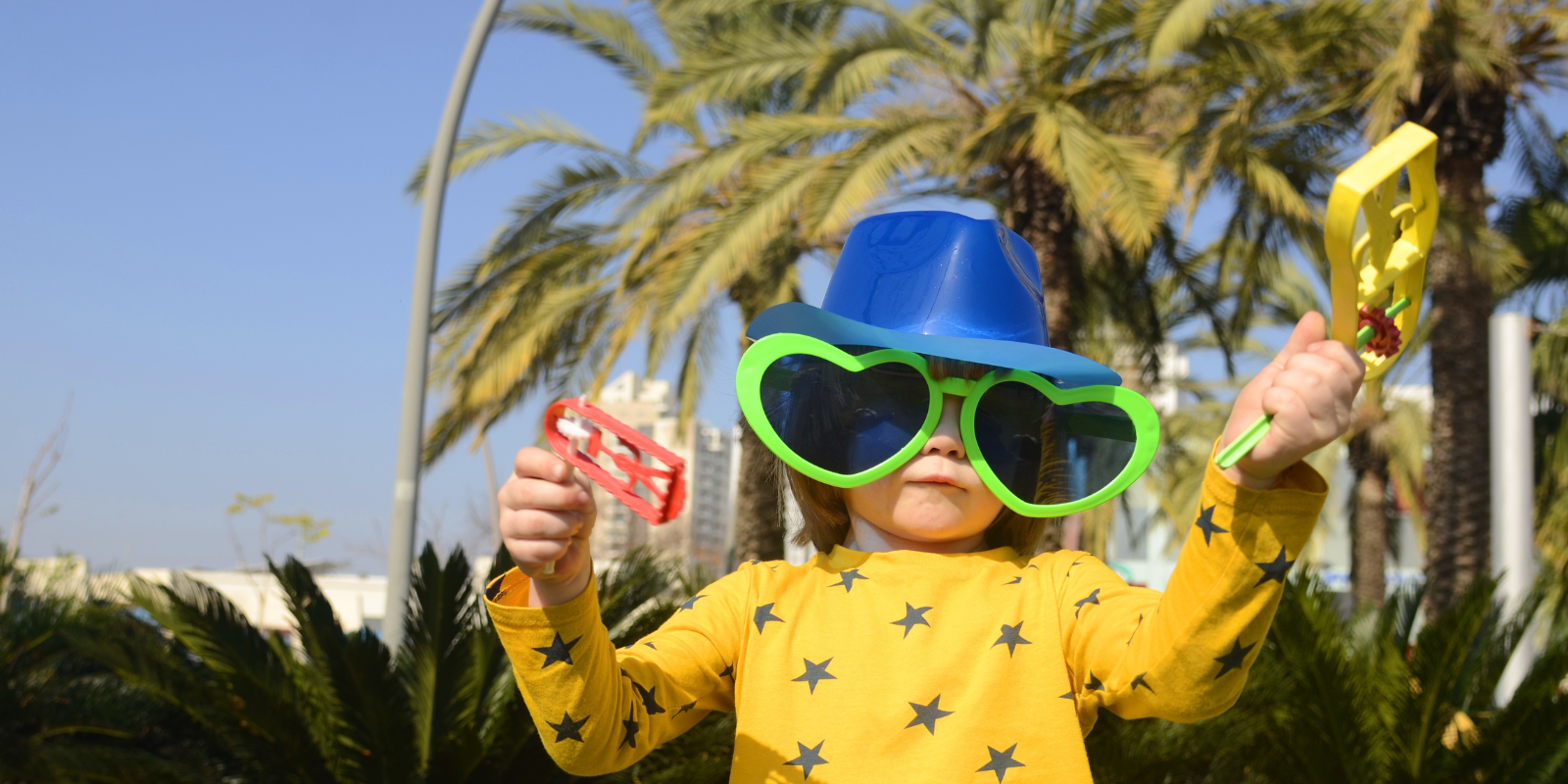
Purim is just one week away, and if your household looks anything like mine, it’s a whirlwind of costumes, last-minute Mishloach Manot (the gift packages of food and drink we send to friends and family on Purim) planning, and hamentaschen (the traditional triangular pastries that are synonymous with the holiday). But beneath all the joyful noise of the holiday, there is a message that often gets lost — one that speaks to the very soul of the Jewish people.
The Sages teach that on Purim, the Jewish people reaccepted the Torah — the same Torah they had accepted at Sinai over a thousand years earlier. The teaching comes from a close reading of Esther 9:27, and it raises an obvious question: why would the Jewish people need to reaccept a covenant they had already accepted? What exactly was missing the first time?
The Talmud explains that when God revealed Himself at Sinai, He held the mountain over the heads of the Jewish people like a barrel — accept the Torah or be buried here. This is derived from the verse in Exodus 19:17, which describes the people standing betachtit hahar — literally “underneath the mountain” — a phrase the Sages read not as a poetic description of the mountain’s foot, but as something far more ominous.
Rabbi Meir Simcha of Dvinsk, in his Meshech Chochmah, reads this not as a literal threat but as a description of divine pressure so overwhelming it amounted to the same thing. These were people who had just walked through a split sea on dry land, eaten bread that fell from heaven (Exodus 16), and drunk water from a rock (Exodus 17:6). When God speaks from a mountain in fire and thunder against that backdrop, “no” is not really an option. “The acceptance at Sinai was real, but it was the acceptance of a people who had no real alternative — you cannot say no to a God who has just split the sea before your eyes.
The Purim story unfolds in a completely different world. The Book of Esther is the only book in the entire Hebrew Bible that never once mentions the name of God — not once, in all ten chapters. The events read, deliberately, like palace intrigue in the Persian court: a vain king, a scheming minister, an unlikely queen. God’s presence must be inferred from the implausible coincidences that pile up until they can no longer be called coincidences. This is hester panim, the hiding of God’s face — and the rabbis noted that the name Esther itself alludes to the verse in Deuteronomy 31:18, haster astir et panai, “I will surely hide My face.”
The context of that verse gives the connection its full weight. It comes from Moses’ final address before his death, in which God warns that when the people enter the land and turn to other gods, He will hide His face from them — divine concealment as a consequence of faithlessness. The rabbis’ connection of Esther’s name to this verse is therefore deeply loaded: the hiding of God’s face in Persia is not incidental, but the fulfillment of an ancient prophecy. The entire book is a coded message about divine concealment.
And it was precisely in this darkness, with no miracles to compel them and no divine thunder to awe them into submission, that the Jewish people chose to remain Jews. That choice, made freely, with no supernatural leverage, was the real acceptance of the covenant. At Sinai they accepted. At Purim they confirmed — because this time, they had the genuine freedom to refuse.
But Rabbi Jonathan Sacks finds an even deeper root for all of this, buried in an exchange that takes place immediately after the sin of the Golden Calf.
God has just watched His newly covenanted people worship an idol forty days after the thunder of Sinai faded. His verdict is damning: “I have seen these people, and they are a stiff-necked people” (Exodus 32:9). He intends to destroy them and start over with Moses. Moses intercedes, and succeeds — and then makes one of the strangest arguments in the entire Torah. He asks God not only to forgive Israel, but to remain among them — and gives as his reason the very character flaw God had cited as grounds for their destruction:
How could Moses possibly invoke the people’s obstinacy as a reason for God to stay with them, when that same obstinacy was precisely what had driven God to want to abandon them? The answer, given its most powerful expression by Rabbi Yitzchak Nissenbaum, is that Moses was asking God to see this people not only as they were in that moment, but as they would one day become. Yes, they are stiff-necked in their disobedience now — but the same stubbornness that made them build the Golden Calf will one day make them go to their deaths saying “I believe…” Nations will demand that they assimilate; they will refuse. Empires will offer them survival at the price of conversion; they will resist. The very quality that is today their worst failing will one day be their most heroic virtue. Forgive them, says Moses — not despite who they are, but because of who they will become.
Rabbi Nissenbaum wrote these words in the Warsaw Ghetto. He did not survive to see their vindication.
This is the thread that connects Sinai, the Golden Calf, and Purim into a single story. Faced with God’s overwhelming presence at Sinai, Israel disobeyed Him. Confronted with His absence in Persia, they remained faithful. The people who could not resist the Golden Calf are the same people who could not be broken by Haman. The transformation Nissenbaum describes — from obstinate disbelief to obstinate belief — is precisely what Rava means when he says that Purim confirmed what Sinai began (Shabbat 88a).
Mordechai embodies this transformation in a single gesture, or rather, in his refusal to make one. The main narrative of the Book of Esther opens with four words that set the entire plot in motion: “And Mordechai would not bow down” (Esther 3:2). Rabbi Sacks captures the irony with precision: there is one thing that is genuinely difficult to do if you have a stiff neck, and that is bow. Mordechai could not bring himself to bow to Haman — and that refusal, that stubborn, unbending dignity before a man who held the power of life and death, is what set the entire salvation in motion.
That is the paradox of Purim. The holiday of masks and concealment is also the holiday of the most unmasked moment in Jewish history — the moment when Israel’s faith was stripped of every external prop and shown to be real. The covenant struck in fire at Sinai was ratified in silence in Persia. And in that silence, the stiff-necked people — obstinate, impossible, unkillable — confirmed who they had always been.