








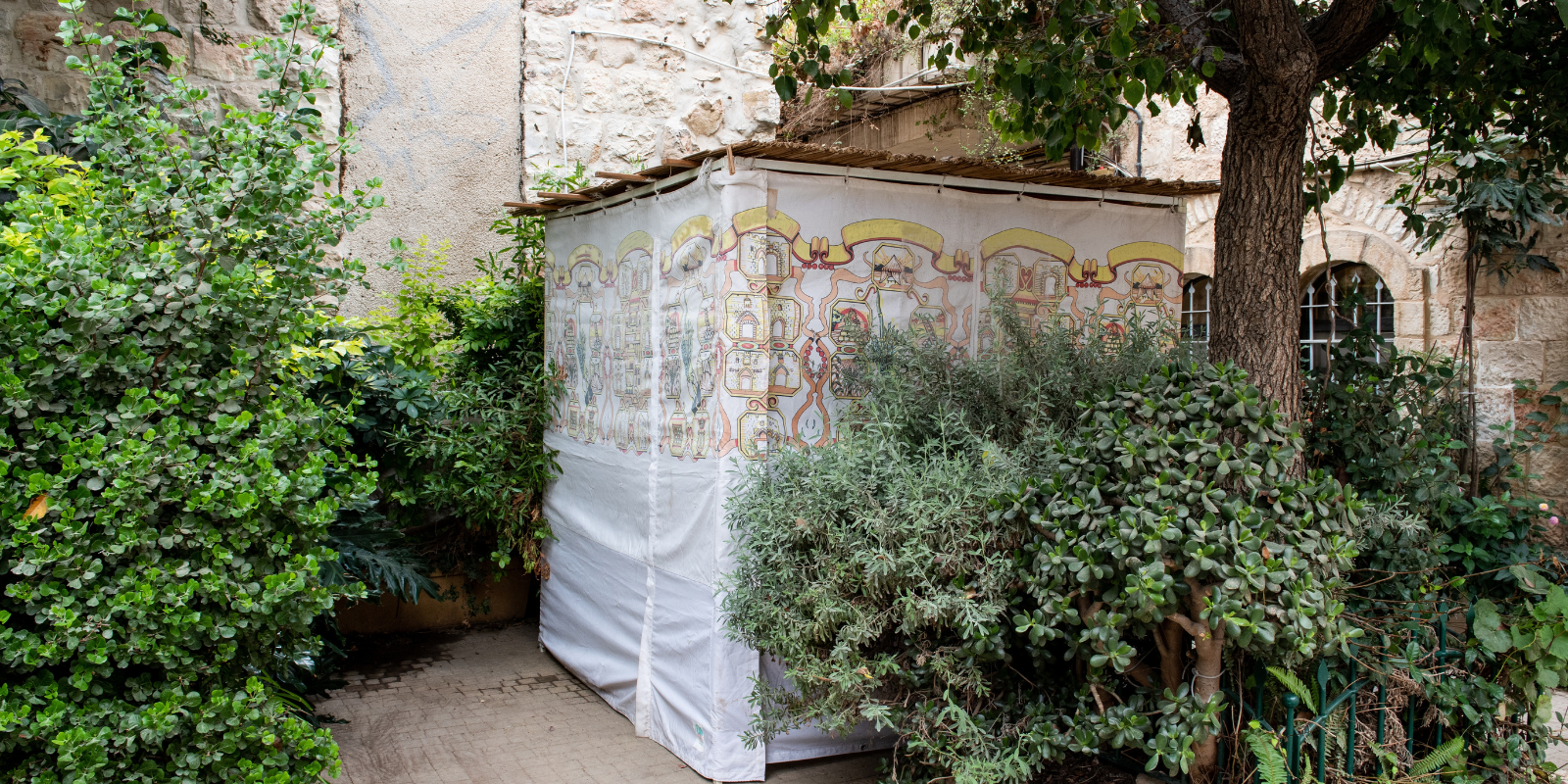
Every Jewish holiday carries its own title. Passover is Z’man Cheruteinu, the Time of Our Freedom, because we celebrate the Exodus from Egypt. Shavuot is Z’man Matan Torateinu, the Time of the Giving of Our Torah, when we remember the revelation at Mount Sinai. But Sukkot receives a title that may come as a surprise: Z’man Simchateinu, the Time of Our Joy.
Why do we call Sukkot our happiest holiday? The main ritual of Sukkot is leaving our comfortable, sturdy homes to live in temporary huts called sukkot. According to Jewish tradition, these booths remind us of the simple shelters used during the 40 years in the desert or the special clouds of glory that protected the nation along the way.
This makes Sukkot sound more like a reason for memory than pure happiness. How does sitting in a fragile hut under the open sky bring deep joy?
To understand why Sukkot is the season of joy, we first have to ask what real happiness actually means. Many people think happiness comes from having things; from collecting wealth, status, or material possessions. Yet accumulating more items rarely brings lasting peace of mind. Others treat happiness as a constant mood where everything in life goes smoothly. But life naturally has hard moments, challenges, and unexpected turns.
True happiness is not about what we own or having a trouble-free life. It comes from a change in perspective: realizing that lasting security comes from trusting God rather than relying on material wealth.
This idea is right at the heart of the Torah’s command for the holiday:
Sukkot occurs during the autumn harvest, which is the exact time of year when farmers gather all their crops, grain, and wine into their storehouses. Standing amidst the maximum abundance of their hard labor, it is natural for a person to feel self-reliant and attribute prosperity solely to personal effort.
At this exact moment of material security, the Torah commands us to step away from our fortified houses and full storehouses to sit under a simple roof of natural branches (sechach). Leaving our physical abundance behind forces a shift in perspective. The verse states that we rejoice specifically because God blesses our produce and handiwork, shifting our focus away from the physical harvest sitting in the barn and toward the Divine Source behind it.
When we realize that true security depends on God’s ongoing blessing rather than our material control, the anxious pressure of self-reliance dissolves. True, lasting joy is unlocked when we acknowledge that God is in charge, protecting and providing for us through both moments of harvest abundance and times of physical vulnerability.
The way a sukkah is built teaches us this exact lesson. The most important part of the sukkah is its roof (sechach), made from natural plants or branches. It must be placed so that it provides more shade than sunlight. It might seem strange that the roof of our happiest holiday creates shade rather than letting in full light.
Stepping out of our permanent homes to sit under this shaded roof reminds us where real protection comes from. Physical walls and financial success are helpful, but they cannot offer complete security. Sitting in the sukkah shows us that God is in control, protecting us even when life feels uncertain or shaded. When we let go of the need to control every outcome, the pressure fades away, leaving room for real peace.
That is a joy we can carry out of the sukkah when the holiday ends. The next time we feel pressure to accumulate more, or worry about what tomorrow will bring, we can remember the week we spent under a roof of branches, with the sky peeking through, perfectly safe.