





Every major Jewish festival comes with instructions.
Passover tells you exactly what to eat, what to remove from your home, and why: “So that you will remember the day you left Egypt all the days of your life” (Deuteronomy 16:3). Sukkot (Feast of Tabernacles) commands you to dwell in temporary booths to commemorate the desert sojourn. Even Rosh Hashanah (Jewish New Year), which the Torah calls simply “a day of blowing,” gives you something to do.
Shavuot (Feast of Weeks) gives you almost nothing.
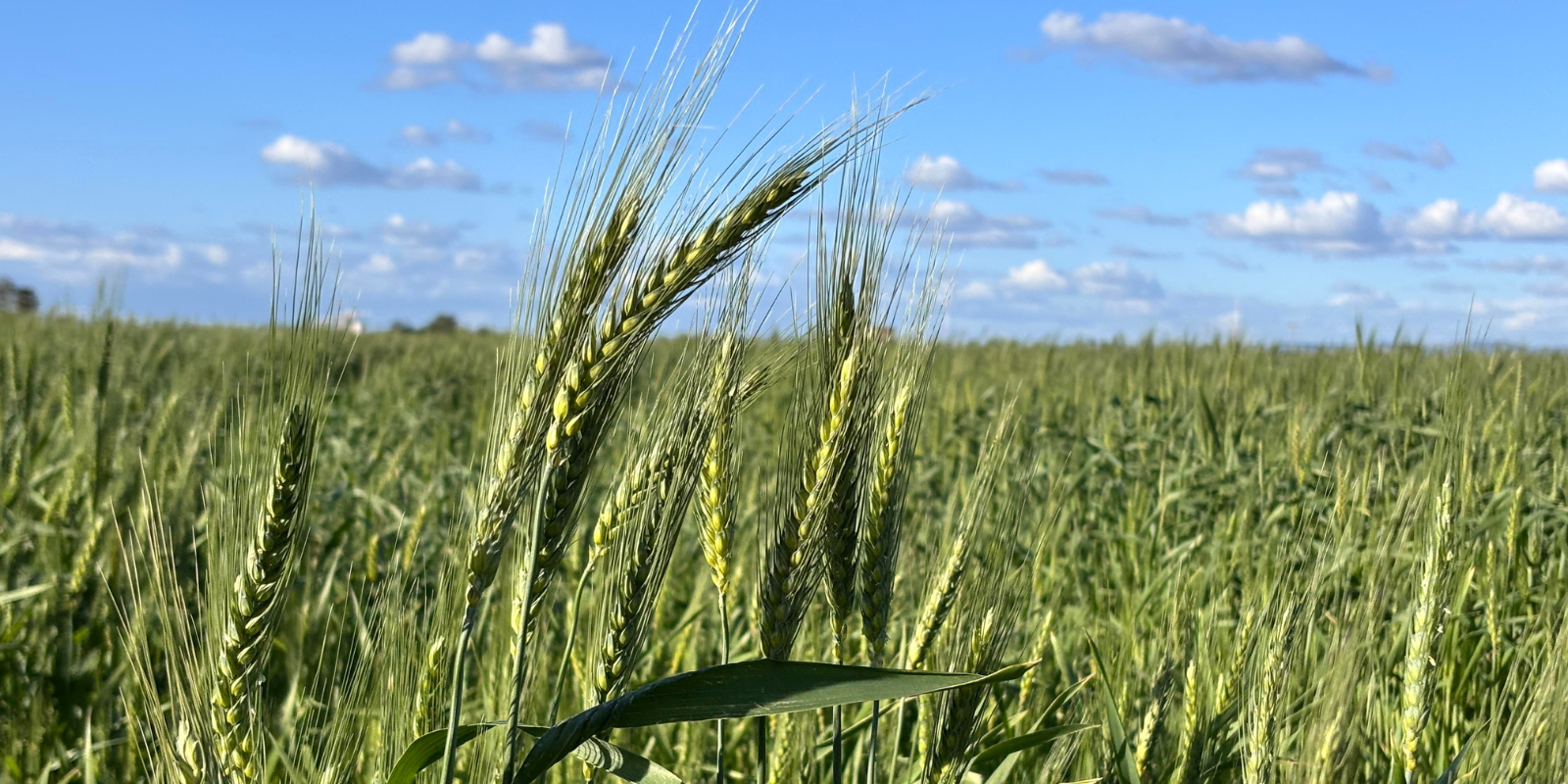
No date is assigned to it in the Torah. No historical event is named as its occasion. The Torah does give it an agricultural identity — it is the festival of the first fruits, the moment when the new wheat harvest is brought to the Temple.
But beyond that, the only instruction is to count seven weeks from Passover and then mark the fiftieth day. The holiday exists at the end of a countdown, but the Torah never tells you what you’re counting toward.
This is strange. Every other festival stands on its own. Shavuot exists only in relation to Passover — tethered to it by a fifty-day count, with no independent date, no named occasion, no prescribed ritual of its own.
So what is this holiday actually about? And what does it have to do with Passover?
On Passover, God redeemed Israel from Egypt. But, as Rabbi Pesach Wolicki points out, Israel was basically passive. God did everything. The plagues, the splitting of the sea, the pillar of fire — the Jewish people were witnesses to a divine performance, being carried out of slavery on eagles’ wings. Passover is what God does for Israel. Shavuot is what Israel does for God.
The fifty days of counting are not incidental. They are the journey from one to the other — from receiving redemption to accepting responsibility. And the responsibility Israel accepts at the end of that count is stated plainly in the verse God speaks to Moses just before the revelation at Sinai:
A kingdom of priests. The phrase is so familiar that it’s easy to read past it. But think about what a priest actually does. A priest does not serve himself. A priest stands between God and the people, carrying knowledge of God outward and the needs of the people upward. If Israel is the priest, the implication is obvious: the rest of humanity is the congregation.
This is the universal mission that Shavuot inaugurates. It is not a holiday about Jewish insularity. It is a holiday about Jewish responsibility to the world.
The rabbis understood this. A remarkable teaching in the Midrash (Exodus Rabbah 5:9) describes what happened when God’s voice went forth at Sinai: it divided itself into seventy languages, so that every nation on earth could hear it in its own tongue. Not just the Jewish people standing at the foot of the mountain. Every nation. The revelation at Sinai was addressed to all of humanity, even if only Israel accepted it.
That teaching reframes everything. Shavuot is not the celebration of a private covenant between God and one small people. It is the moment when God commissioned Israel to be His emissaries to all the families of the earth — the fulfillment of the promise made to Abraham that through his descendants, all nations would be blessed (Genesis 12:3).
For two thousand years of exile, that mission was largely impossible. A scattered, persecuted people without a land or sovereignty cannot function as a kingdom of priests to anyone. You cannot lead when you are running. You cannot bless the nations when you are begging them for refuge.
The return to the Land of Israel changes that equation. This is what Universal Zionism means at its core — not merely Jewish nationalism, but the restoration of the platform from which Israel can fulfill its Sinai mandate to the world. The same God who spoke in seventy languages at Sinai is the God who promised His people that they would return to their land and be restored. That restoration is not an end in itself. It is the precondition for the mission that Shavuot placed on Israel’s shoulders — the mission of being, once again, a light to the nations.