








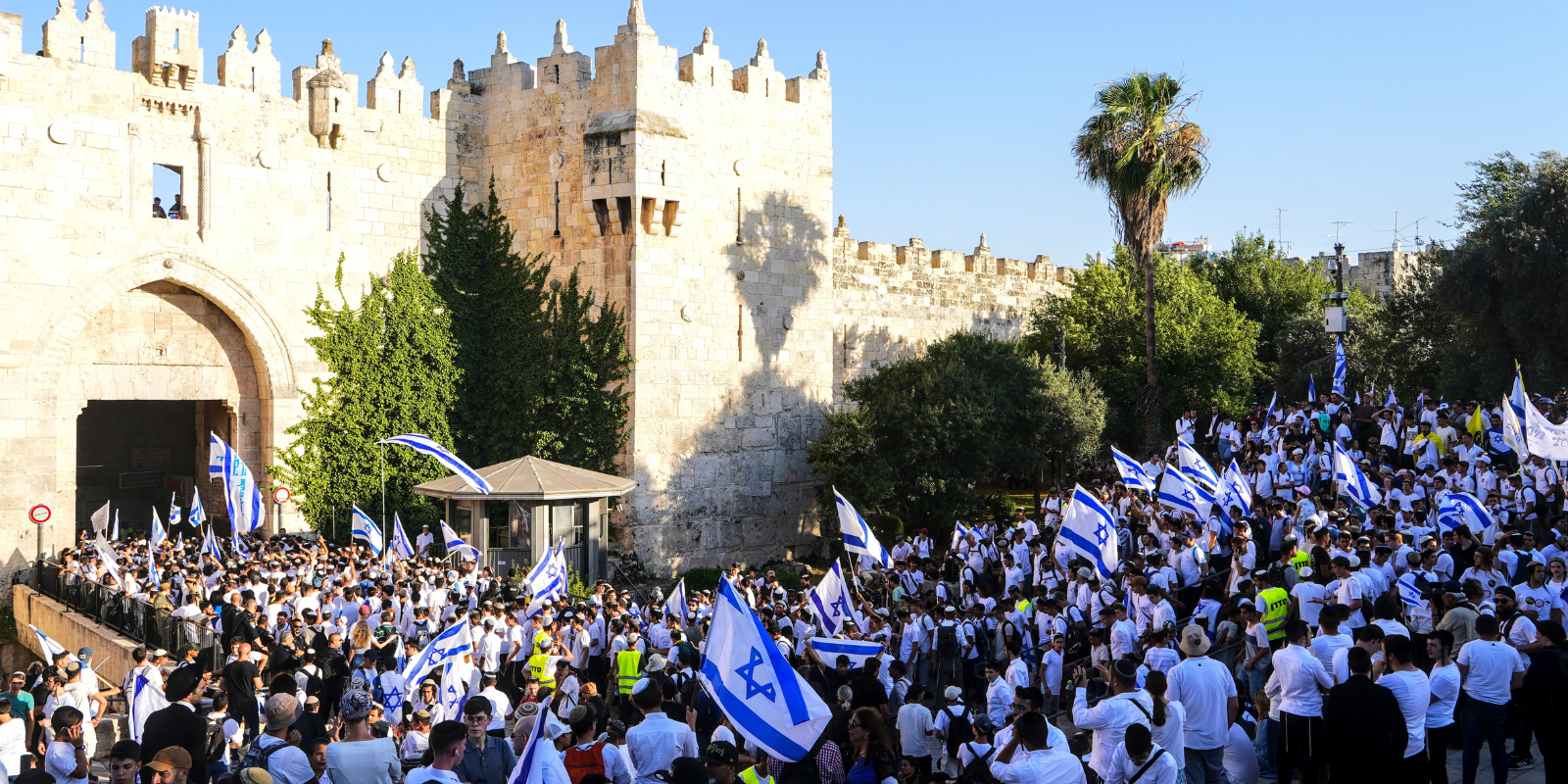
On June 7, 1967, Israeli paratroopers broke through the Lion’s Gate and reached the Western Wall. General Mordechai Gur’s voice crackled over the radio: “The Temple Mount is in our hands.” Hardened soldiers wept. The Chief Military Rabbi, Shlomo Goren, blew a shofar at the Wall. Men who had never prayed in their lives found themselves unable to speak. For the first time in two thousand years, the Jewish people had returned to the heart of their city.
The world has still not made its peace with what happened that day.
The United Nations has passed more resolutions about Jerusalem than about any other city on earth. The international community spent decades refusing to recognize it as Israel’s capital. When the United States finally moved its embassy there in 2018, the UN General Assembly voted 128 to 9 to condemn the decision. UNESCO has repeatedly passed resolutions denying any Jewish connection to the Temple Mount. The Palestinian Authority insists that no Jewish Temple ever stood there. And every few years, a new round of negotiations begins with the same demand: divide the city.
No one obsesses over a city this much by accident.
This week, we begin the Book of Numbers, the great march through the wilderness toward the Promised Land. The Israelites are counted, organized, and set into formation. The journey is about to begin in earnest. But where exactly are they going? The land, yes — but at the heart of the land, Jerusalem. The entire wilderness journey points toward a destination, and that destination is not merely a political capital. It is the place where heaven and earth were meant to meet.
The great medieval commentator Maimonides, in his Guide of the Perplexed, raises a question that has always puzzled careful readers of the Torah. The Torah commands Israel to bring sacrifices “to the place which God will choose” — but never names that place explicitly. God knows where the Temple will be built. Why the deliberate vagueness?
Maimonides offers a startling answer: if the Torah had identified Jerusalem by name, the nations of the world would have fought to keep it out of Israel’s hands, or destroyed the site altogether to prevent the Temple from ever being built. The concealment was a form of protection.
The Torah itself anticipated that the nations would fight over Jerusalem. Rabbi Yehuda Amital, one of the great Torah teachers of the twentieth century, drew the obvious conclusion: this is not a problem unique to the biblical period. Every war fought against Israel is, at its core, a war over Jerusalem. Strip away the political language, the arguments about refugees and borders and international law, and you find the same insoluble conflict at the center: who controls the Temple Mount?
The nations are obsessed with Jerusalem. They always have been. But the Torah and the prophets describe two very different relationships a nation can have with this city.
The first is the one Maimonides describes — the impulse to control, deny, and destroy.
The second is the one Isaiah envisions:
Isaiah’s Jerusalem is not a city that belongs to the Jews alone. It is the city toward which all of humanity is ultimately moving — not to conquer it, but to learn from it. Not to deny what happened there, but to receive what was always meant to flow from it.
But before Jerusalem can be a light to the nations, it must first belong to all of Israel. Rabbi Aharon Lichtenstein, reflecting on Psalm 122 and the nature of Jerusalem, pointed to the city’s dual character. On the one hand, Jerusalem is the dwelling place of God, the site of the Temple, a city defined by holiness. On the other hand, it is the heart of the nation, the gathering point of all the tribes, the place where Israel becomes one people. These two dimensions are not in competition — they reinforce each other. The more deeply Jerusalem belongs to all of Israel, the more powerfully it can fulfill its role as God’s address in the world.
But the prophets extend those concentric circles even further. If Jerusalem belongs to all of Israel, Isaiah says it ultimately belongs to all the world — not in the sense of international jurisdiction or United Nations administration, but in the sense of spiritual destination. The Torah that goes forth from Zion is not meant only for the Jewish people. It is the instruction that the nations themselves will one day seek out.
This is the vision at the heart of Universal Zionism — the idea that Israel’s restoration was never meant to be an end in itself, but the opening chapter of a story that ultimately encompasses all of humanity.
We are living in the early stages of that vision. Every year, millions of Christians travel to Jerusalem not as tourists but as pilgrims, drawn by the same place where Abraham bound his son on the altar, the city that David captured, where Solomon built the Temple and that Israeli soldiers liberated in 1967 with tears streaming down their faces. They come because something in them responds to what Isaiah described — a city at the center of history, a mountain toward which the human story is moving.
Jerusalem Day is not the fulfillment of Isaiah’s prophecy. The Temple has not been rebuilt. The nations have not yet beaten their swords into plowshares. But the reunification of Jerusalem in 1967 was the precondition for that prophecy becoming possible.
The nations of the world will each have to decide which relationship with Jerusalem they want. The one Maimonides warned about — fighting to deny, divide, and delegitimize. Or the one Isaiah promised — choosing to stream toward the mountain, saying to one another: Come, let us go up.
The paratroopers who broke through the Lion’s Gate in 1967 didn’t know they were setting the stage for Isaiah’s prophecy. But they were. The next act is still being written — and every nation gets to decide what part it plays.