






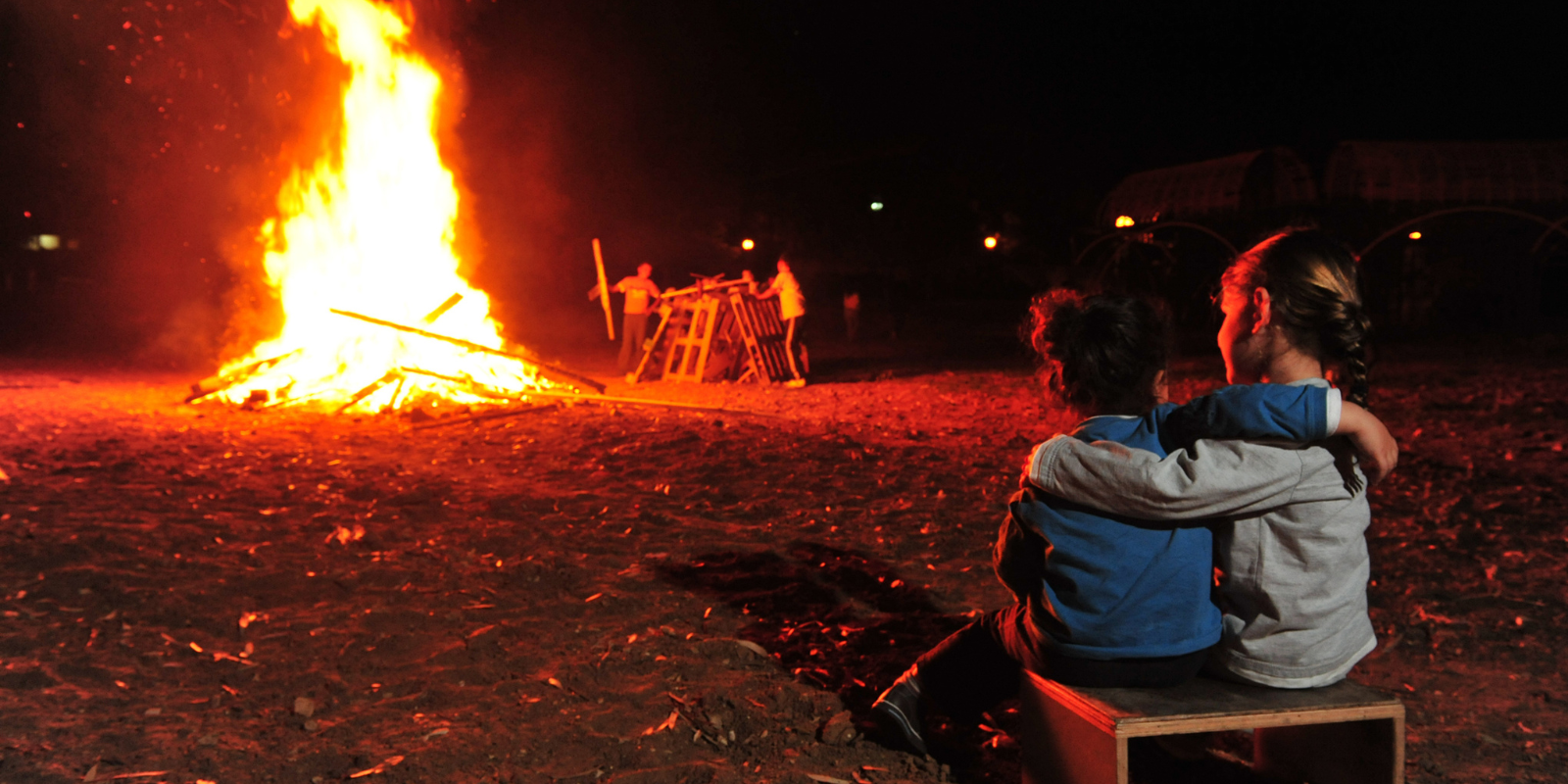
If you dropped into Israel on Lag B’Omer without context, you’d think you missed something big. The night is filled with bonfires. Kids run around with bows and arrows. Music plays. People gather outside in a way that feels closer to a block party than a religious observance. And yet, if you open the Bible, you won’t find this day anywhere.
So what exactly is Lag B’Omer, and why does it matter?
Lag B’Omer falls in the middle of a 49-day period called the Omer, the stretch between Passover and Shavuot. In the Bible, this time is marked by a daily count, a steady movement from the Exodus to Mount Sinai. But in Jewish practice, it also carries a tone of restraint. Celebrations are limited. The mood is quieter. That shift comes from a later historical memory, the deaths of thousands of students of Rabbi Akiva, one of the greatest teachers of the early rabbinic period. The tradition is blunt about why it happened. They did not treat one another with respect. Lag B’Omer, the 33rd day of the Omer, marks the point when that loss stopped. The mourning lifts. The restrictions ease. And the day becomes one of celebration. But that only sharpens the question. Why would a day of joy be tied to a failure in how people treated each other? To answer that, we go back to a commandment that sits at the center of the Torah, the very teaching that Rabbi Akiva emphasized above all:
It is easy to quote. Much harder to live.
What does it actually mean to love another person “as yourself”?
Taken literally, it sounds unrealistic. People are not wired to feel the same emotional attachment to others that they feel toward themselves. We are protective. We compare. We notice when someone else has what we do not. The Torah is not asking for emotional sameness. To “love your neighbor” means to want their good. To see their success as something positive, not threatening. That sounds simple, until it is not. When someone else gets the opportunity you wanted, or moves forward while you feel stuck, something instinctive kicks in. You measure. You question your own place. You feel diminished. That instinct is where the commandment operates. Jealousy is built on a false assumption, that another person’s success takes something away from you. That there is a limited amount of value, and if they have more, you must have less.
The Torah rejects that completely.
Every person has a distinct role. Different strengths. Different responsibilities. You were not given someone else’s abilities because you were not meant to live their life. Once that becomes clear, the entire framework shifts. You stop seeing other people as competition. You start seeing them as individuals fulfilling their own role. And from there, it becomes possible to want their success. That is what “love your neighbor as yourself” looks like in real life. It is not a feeling. It is a decision. And that is exactly where the students of Rabbi Akiva failed. They were learned. They were committed. But they did not extend basic respect to one another. Their knowledge did not shape their relationships. That failure had consequences.
Lag B’Omer is not just a break in a mourning period. It is a line in the sand. It marks the point where destruction stopped, but it also forces a recognition of what caused it.
You can build a life around faith and still get this wrong. The command to love your neighbor shows up in very real moments. In how you react to someone else’s success. In whether you honor it or resent it. In whether you can step out of comparison and recognize that their path is not yours. The fires that fill the night are not just celebration. They are a call to action.
Build a life where another person’s success does not threaten you. Because if you cannot do that, nothing else you build will hold.