





Anyone who has read through the Book of Exodus has noticed something strange. The final chapters of the book describe, in meticulous detail, the construction of the Tabernacle — every beam, every curtain, every piece of priestly clothing. The problem is that we’ve already read all of this. Several chapters earlier, God commanded the Israelites to build the Tabernacle, and the Torah recorded every specification in the same meticulous detail. So why repeat it? Would a single verse — “And the Israelites built the Tabernacle exactly as God commanded” — not have sufficed?
Rabbi Shlomo Riskin argues that to answer this question, you have to understand what happened in between.
Between the command and the construction stands the golden calf. The Israelites — freshly redeemed from Egypt, standing at the foot of Sinai, having just heard the voice of God — turned around and worshiped an idol. In the language the Torah itself uses elsewhere, it was adultery. God had just betrothed Israel as His bride, and she had already been unfaithful.
Were God only a God of justice, that would have been the end. But God forgives — and the repetition of every last detail of the Tabernacle’s construction is the proof. God commanded the building of His home among Israel before the sin. God accepted the building of His home among Israel after the sin. The repetition isn’t literary sloppiness. It’s God’s way of saying, we’re still in this together.
This is also the key to understanding the four special Torah portions read in the weeks before Passover — Shekalim, Zakhor, Para, and HaChodesh — which Rabbi Riskin reads as a single, unified journey.
It begins with Shekalim: every Israelite gives a half-shekel to the Sanctuary. This is an act of financial commitment, which is, not coincidentally, also the traditional form of betrothal in Jewish law. Israel pledges itself to God.
Then comes Zakhor: remember Amalek. Not only the external enemy who attacks from without, but the internal enemy — assimilation, indifference, the spiritual exhaustion that causes a people to drift away from its own identity. Amalek attacks, the Torah tells us, those who “did not fear God” — the stragglers, the weak, those whose connection had grown thin. Israel, betrothed to God, now faces the temptation to forget who she is.
Para follows: the red heifer, the mysterious ritual of purification for those defiled by contact with death. Even from the deepest impurity, there is a path back.
And then HaChodesh — this special additional portion that we will be reading this Shabbat.
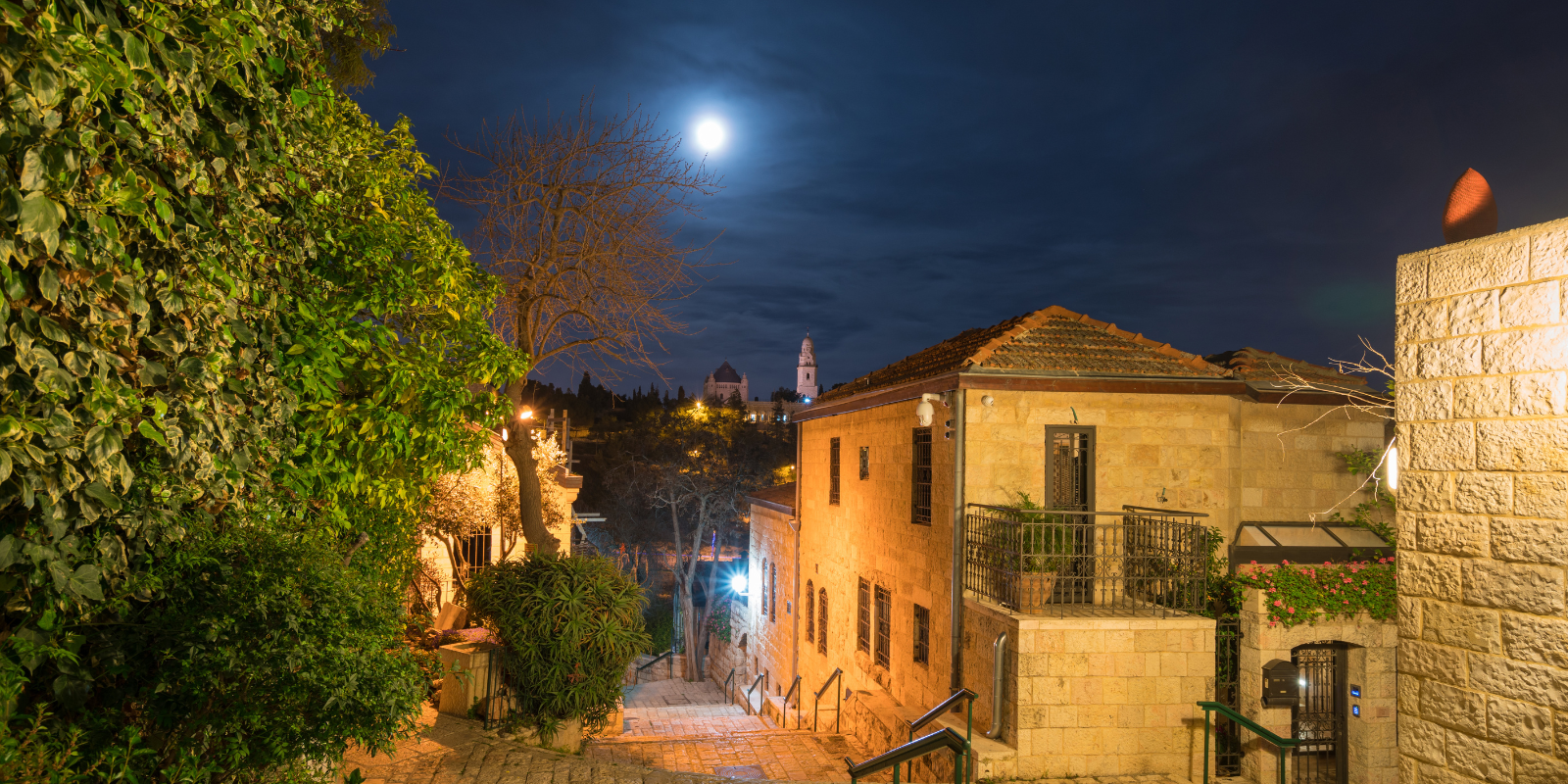
The Hebrew word for month, chodesh, shares its root with chadash — new, and chidush — renewal. The moon, which disappears into total darkness and returns to fullness, is the Torah’s symbol of the possibility of beginning again.
The journey of the Jewish people is not a straight line. It moves from commitment through failure, from failure through purification, from purification to renewal. What the Torah portion of HaChodesh announces — standing at the threshold of the month of Nisan, two weeks before Passover — is that the renewal is real. The relationship holds. Just as God accepted the Tabernacle after the golden calf, He accepts us after every stumble, and calls us toward a new beginning.
The moon may go dark every month, but it always comes back.
Ready to go deeper? Passover from the Inside: A Jewish Guide for Christian Readers walks you through the entire holiday — the rituals, the rabbinic debates, the songs, the theology, and the living tradition behind all of it. Order Passover from the Inside today!