








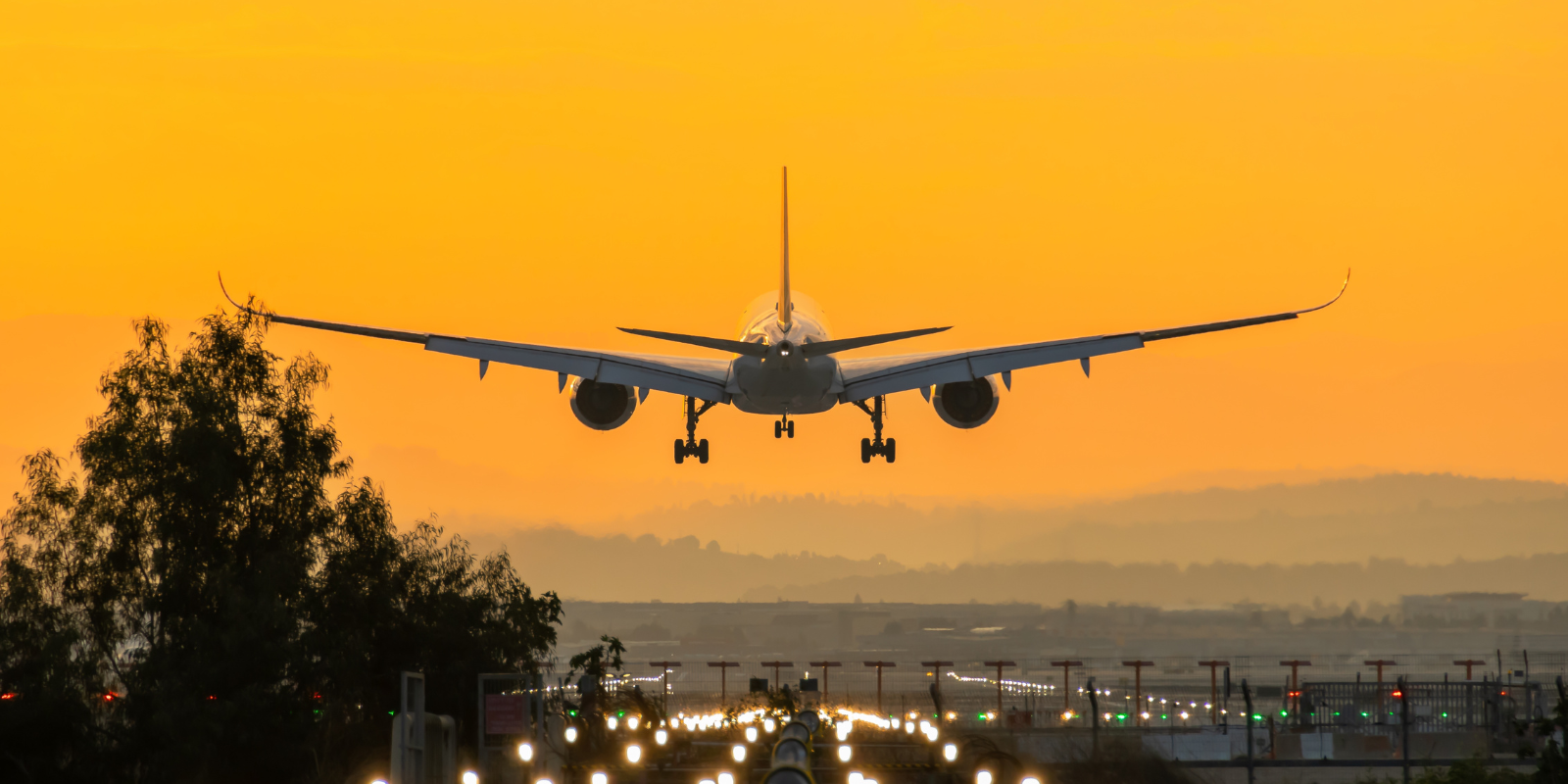
Ben Gurion Airport closed on the afternoon of August 20, 2026. Ground staff walked off the job late that morning, the check-in counters emptied, and by two o’clock the country’s main gateway was shut to arrivals and departures alike. An Air France flight out of Paris turned around in midair. More than a hundred thousand passengers had been scheduled to move through the terminal that day. The following morning Ben Gurion was the most disrupted airport in the world, departures running seventy to ninety minutes behind, and thousands of suitcases still sat on the floor while the people who owned them landed abroad without them.
The Histadrut denied calling any strike. The union’s account was that there had never been enough staff to handle the volume, that it had been saying so for months, and that the workers had run out of energy somewhere in the middle of thirteen-hour shifts.
Nobody disputed the number underneath the argument. Some 2.65 million people passed through Ben Gurion in August. Back in February the cabinet had already approved two new international airports — one in the north and one in the south — naming congestion at Ben Gurion as the reason, with the airport closing in on a ceiling of roughly forty million passengers a year. And the Airports Authority is now bracing for the Hebrew month of Tishrei: some two and a half million passing through Ben Gurion over the coming month, with four peak days of about a hundred thousand each.
It is a miserable way to travel, but it is also a strange thing to be complaining about.
For most of the last two thousand years the Jewish people had precisely the opposite problem. Arrival was the obstacle. Hadrian barred Jews from Jerusalem after the Bar Kokhba revolt and Byzantine emperors kept the ban in place for centuries. The Crusaders destroyed the community they found there. The Ottomans, who permitted more than most, began restricting Jewish immigration in 1882 and were soon limiting Jewish visitors to a three-month stay. The British capped entry at seventy-five thousand over five years, and held that line while Europe burned.
Jews came anyway, but in numbers small enough to count. Nachmanides in 1267. The exiles from Spain who rebuilt Safed. The students of the Vilna Gaon, arriving from Lithuania in 1808. Each of these was a hard journey undertaken against a system designed to make it difficult, and none of them ever produced a line at a gate.
So what do we make of a crisis whose entire content is that too many people are trying to get in?
This week’s Torah portion contains the answer. Moses is standing before the people on the last day of his life, and he lays out a future in which they will fail, be scattered to the far edges of the world, and then come back.
Rashi noticed something odd in the grammar. The verse should have said that God will cause your captivity to return (v’heshiv). Instead it says that God will return your captivity (v’shav), as though God Himself is among the returning. The Sages, Rashi explains, learned from this that the Divine Presence is bound up with Israel in the suffering of exile, and that when Israel is redeemed, Scripture writes of God’s own redemption, because He comes back with them.
Then Rashi adds a second reading. The day of the ingathering of the exiles is so difficult, he says, that it is as though God must personally take hold of each individual by the hand, one at a time, each from his own place, as it says in Isaiah, “and you shall be picked up one by one, O children of Israel!” (Isaiah 27:12).
One by one. Not a nation swept home in a single motion, but a line of individuals, each processed separately, each requiring attention.
The labor in that picture is God’s. But it is not the only labor the chapter describes. Rabbi Yitzchak Arama, the fifteenth-century Spanish commentator known by the name of his work, the Akeidat Yitzchak, read the whole passage as an alternating sequence. Israel makes the first move. It rouses itself, in his phrase, out of lethargy and despair, and that first step is immediately answered: the Lord your God will return your captivity. The divine response is then followed by a further turn from Israel, and that by a further blessing, each round stronger than the last. Redemption arrives as call and response, and the opening move belongs to us.
The Akeidat Yitzchak was writing for exiles, and he knew what he was asking. Make a beginning anyway, he says. Do it while you are still under foreign rule and while your deeds cannot be what they should be, and do what you can under the circumstances.
Rabbi Yehuda Alkalai staked his career on that order of operations, four centuries later, and most of his colleagues found it close to scandalous. The consensus of his day held that the return would come by divine intervention and that Jews were to wait for it. The Messiah would arrive by miracle, and any attempt to force the process was, at best, presumption. Alkalai argued that settling the Land was a necessary human contribution to bringing the redemption closer. From the 1840s he was calling for an assembly of Jewish notables to serve as a representative body, a fund to purchase land, organized settlement, the revival of Hebrew as a spoken language — the working parts of a return, assembled decades before Theodor Herzl was born to a family that had lived in Alkalai’s own town.
Alkalai understood that somebody would have to build it. What he could not have known was who would end up on the road.
The portion from the Prophets that accompanies this week’s reading, the last of the seven consolations before Rosh Hashanah, says it outright. “Pass through, pass through the gates! Clear the road for the people; build up, build up the highway, remove the rocks! Raise an ensign over the peoples!” (Isaiah 62:10).
The Metzudat David reads the whole verse as the prophet’s instruction to the nations. Pass through the gates and clear the obstacles from the road Israel will travel on its way home. Raise the highway and level it so the going is easy. Throw out the stones, so that no stumbling block is left. And the ensign, on his reading, is a signal lifted so that the nations will know to bring Israel back to its land.
The road crew, in other words, was never meant to be Jewish.
Isaiah says the same thing directly elsewhere, that God will lift up an ensign to the peoples, “and they shall bring your sons in their bosoms, and carry your daughters on their backs” (Isaiah 49:22). And once the return has happened, he describes foreigners standing to pasture the flocks and working the vineyards while the ancient ruins are rebuilt (Isaiah 61:4-5). Verses like these captivated nineteenth-century Christian Zionists, among them George Bush, the professor of Hebrew at New York University whose 1844 book The Dry Bones of Israel Revived argued that Scripture assigned gentiles an active role in Jewish restoration, and that the return of the Jews to their land would lift not only the Jews but all of humanity.
Count the hands at work. Rashi has God taking each exile personally, one at a time. The Akeidat Yitzchak has Israel making the opening move and God answering it. Metzudat David has the nations out on the road clearing the way. Nobody is standing around waiting, and no one party is doing it alone.
Which brings us back to Moses, and to a detail in this week’s portion that is easy to read past. Describing the desolation that would follow the breaking of the covenant, he says that a later generation will see it, and “the foreigner who comes from a distant land” will ask what happened here (Deuteronomy 29:21-23).
The Torah simply assumes the foreigner will come. Whatever condition the land is in, somebody from far away will make the journey to look at it and will draw conclusions from what he sees. For most of recorded history what he saw was ruin, and travelers wrote it down: swamps, bare hills, a few thousand people scattered across a province nobody wanted. That was the testimony available.
The testimony available now is a queue.
In Universal Zionism, Rabbi Tuly Weisz argues that Israel should be preparing for far more of it — that the country receives five million visitors a year where France and Spain receive ninety million, and that meeting the crowds who are coming will take highways, rail, hotels, and schools. The Airports Authority reached a version of the same conclusion this year, from the other direction, with far less enthusiasm.
There is a version of the coming weeks in which the delays at Ben Gurion are simply an aggravation, and in the days before Rosh Hashanah they will be. But the line at passport control is made of people arriving one at a time, each from his own place, exactly as Rashi described it — and the road they are traveling was cleared by more hands than ours.
We read this portion in the last days of Elul because the first move is the one that belongs to us. That move was made — by Alkalai, and by everyone before and after him who came onto ships and into swamps when the circumstances were far worse than a delayed flight. What is left is to keep up. The rest of the crew is already at work.