








On the morning of October 7th, Lieutenant Colonel Guy Madar, commander of the IDF’s Desert Patrol Battalion, was celebrating Simchat Torah at the home of relatives in Kiryat Gat. He was in civilian clothes and had only a pistol. But when terrorists invaded the south, he drove straight toward them.
In the Re’im area, he pulled a wounded Golani Brigade soldier from the field and killed the terrorist who shot at them. He picked up the terrorist’s weapon and kept fighting, eliminating several more terrorists before a gunshot wounded his leg. He joined forces with a policeman until they were shot at and their patrol car veered into a ditch. He applied a tourniquet to himself and lay there for two and a half hours, surrounded by dead terrorists, waiting.
When IDF forces finally reached him, they didn’t know what to make of what they saw: a wounded man in civilian clothes, armed, lying among the dead. They raised their weapons.
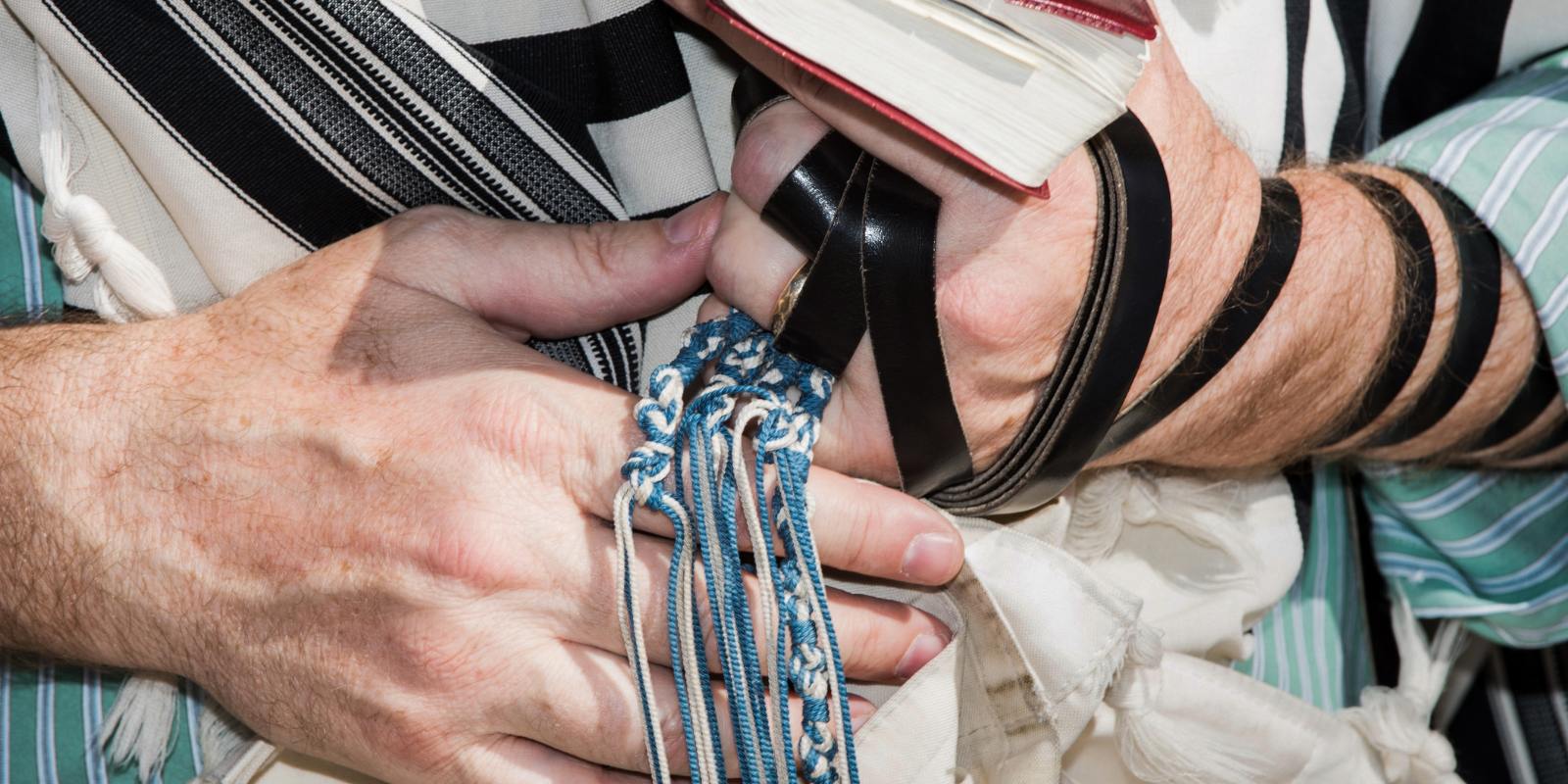
Then one of the soldiers noticed his tzitzit, the ritual fringes worn by observant Jewish men, hanging out from beneath his shirt. Guy Madar was evacuated to a hospital, alive.
This Torah portion of Shelach is best known for the story of the twelve spies sent to scout the land of Canaan. Ten returned with a report designed to terrify: giants in the land, fortified cities, a people before whom Israel would be like grasshoppers. The nation wept that night — and the Talmud tells us that God marked that night, the ninth of Av, as a night of weeping for generations. A single act of collective faithlessness reverberated through history.
But Shelach doesn’t end with the spies. After the punishment is decreed, after the mourning and the forty years of wandering are established, God gives Moses more commandments. At the very end of the portion defined by catastrophe, God commands:
Why here? Why now?
The medieval commentator Rashi answers: “The heart and the eyes are the spies of the body — they act as its agents for sinning.” The tzitzit commandment isn’t placed here by accident. It is the direct repair for the sin that preceded it. The spies went astray after their own eyes and their own hearts — trusting their own analysis over God’s promise — and so God commands a physical reminder, worn on the body every day, to prevent that same forgetting. See these. Remember who you are. Remember who you answer to.
The spies had forgotten. They stood before the walled cities of Canaan and concluded: impossible. “We were like grasshoppers in our own eyes,” they confessed — and in choosing to see themselves through the eyes of their enemies rather than through the eyes of God, they made themselves exactly that.
In Universal Zionism: The Movement for Israel and the Nations, Rabbi Tuly Weisz sees a version of that same forgetting playing out across modern Jewish history — and a dramatic reversal beginning on October 7th. For decades, many in Israeli society had treated the country’s existence as a purely strategic and political question, deferring the deeper question of identity and mission. What does it mean to be a Jewish state? What are we here for? Those questions had been argued over or dismissed as the province of the religious minority. October 7th made deferral impossible. As soldiers were called up and rushed to the front, the single most requested item from the front lines was not food, not ammunition, not extra clothing. It was tzitzit. Religious Jews across Israel worked through the night hand-stitching fringes on camouflage-colored garments to send to secular soldiers who asked to wear them for spiritual protection. These were men going to war reaching for something they couldn’t fully explain — something older than their politics, something that told them who they were when everything else was stripped away.
Rabbi Weisz argues that this inward reckoning is not a detour from Israel’s universal mission — it is the foundation of it. You cannot be a light unto the nations if the light has gone out inside. A people that has forgotten who it is cannot carry a mission to anyone. Zechariah’s prophecy describes a future moment when “ten men from every language of the nations shall take hold, they shall take hold of the cloak of a Jew, saying: ‘We will go with you, for we have heard that God is with you'” (Zechariah 8:23). What the nations reach for, in that vision, is not Jewish military strength or political influence. It is the Jew himself — his identity, his covenant, his visible connection to something eternal. You cannot grab hold of a thread that isn’t there.
The spies forgot who they were and a generation was lost. But on October 7th, Israel’s soldiers refused to forget.
Guy Madar was already wearing his thread. Lying wounded in a ditch, in civilian clothes, surrounded by the dead — it was the tzitzit beneath his shirt that told his fellow soldiers: this is one of ours.