






There is a crisis hiding in plain sight. Not in the headlines, not in politics, not even in the culture wars that dominate every news cycle, but inside the homes and sanctuaries of people who call themselves believers. Across America, across the Western world, people who carry a Bible have stopped reading it. And a civilization that was built on this book is now struggling to remember why it ever mattered.
That was the honest, sometimes uncomfortable conversation that unfolded at Israel365’s Open the Book webinar last week: a gathering of Jewish and Christian leaders, scholars, educators, and activists who sat together to name what is happening and refuse to look away. What they said was sobering. What they pointed to, however, was something extraordinary: the answer to this global crisis is emerging, of all places, from the very land where the Bible was written.
So where does a world that has lost the Book go to find it again?
The prophet Isaiah answered that question 2,700 years ago:
This is not poetry. It is prophecy with an address. At a moment when biblical literacy is collapsing across the West, when research from Barna shows that only 4% of Americans who call themselves Christian actually hold a biblical worldview, and only 1% among adults under 30, the one place on earth where people are running toward the Bible, not away from it, is Israel. That reversal is the most important story nobody is telling.
Rabbi J.J. Schachter, senior scholar at Yeshiva University, offered one of the most insightful readings of this moment at the webinar. For centuries, he explained, the Hebrew Bible sat on the margins of Jewish religious life. It was not ignored, but it was secondary: secondary to Talmud, to halacha, to the machinery of survival in exile. And the reason, he argued, is that the substance of the Hebrew Bible, kings and wars, land and sovereignty, national life and political consequence, simply did not speak to a people with no kings, no land, and no political power. A nation in exile stopped recognizing itself in its own book.
Then the State of Israel was reborn, and everything changed.
Jews returned to the land, and the land returned the Bible to the Jews. The places are real again. The stakes are real again. When an Israeli soldier knows that the battle he is fighting echoes the battles of Joshua or Gideon, not metaphorically but geographically, on the same hills, across the same valleys, the Bible stops being ancient literature and becomes, in the most literal sense, a living document. As Rabbi Schachter put it: “The new Jew looks like the Jew of the Bible. The heroism of Joshua and Gideon and David return to Zion meant stepping back into political history.”
Meanwhile, in America, the opposite movement has been playing out for decades. Troy Miller, President and CEO of the National Religious Broadcasters, traced the collapse precisely. Churches shifted from discipleship to entertainment, from deep biblical formation to seeker-sensitive programming. Sunday school disappeared. Wednesday night classes disappeared. Family Bible study around the dinner table disappeared. And a generation grew up holding a book they had never actually opened.
Tony Perkins of the Family Research Council made the point that landed hardest. The erosion of support for Israel among younger Americans is not primarily political. It is biblical. When you do not know that Abraham purchased the field at Machpelah (Genesis 23), that Jacob bought land near Shechem, that David acquired the Temple Mount as a legal real estate transaction (II Samuel 24), and that Jeremiah purchased land in Anatot during the Babylonian siege as an act of prophetic faith in God’s promise, you have no framework for understanding Jewish connection to the land of Israel. You are left with nothing but headlines. And headlines lie. As Perkins said: “If we understood our Bible as Christians, realizing these things are recorded, they’re deeded in Scripture, we could not go along with what is being advocated by the UN and others.”
Biblical illiteracy is not a trivia problem. It is a civilizational one.
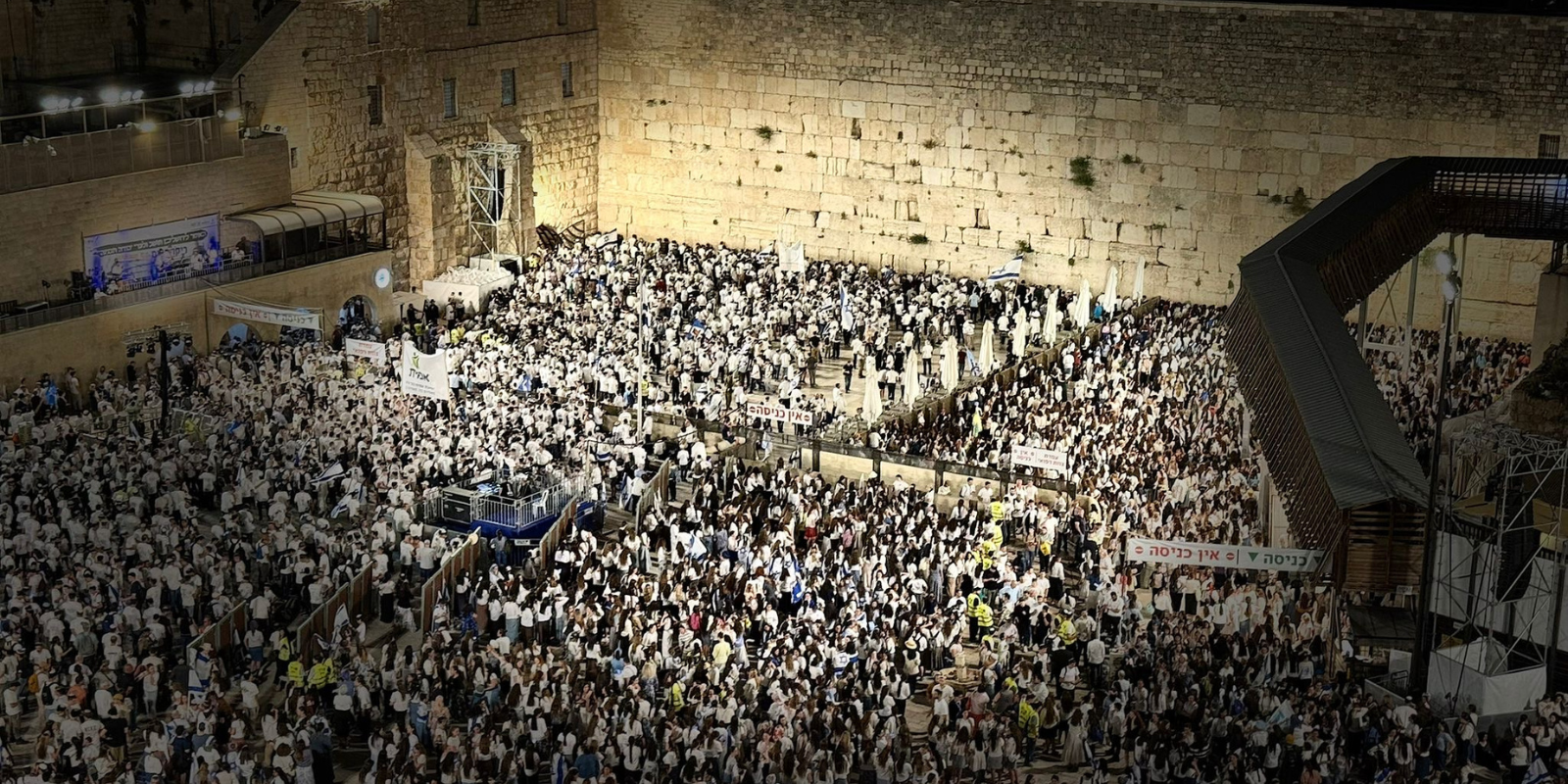
The good news is that Ki miTzion is not just a comforting verse. It is an active process. Israel is in the middle of a spiritual renaissance. A Channel 12 poll taken a year into the October 7th war found that 53% of Israelis under 29 said they are now Shabbat observant, more than double the rate of their parents’ generation. Soldiers are studying Torah under fire. The places, the prophecies, the purposes of the Hebrew Bible are not abstractions in Israel. They are daily life.
Want to be part of this conversation? Watch the entire Open the Book webinar for free on our YouTube channel. It was an incredible evening with some of the most important voices in Jewish and Christian life today, and we believe you will come away from it changed. This is exactly the kind of conversation the world needs right now.
Watch it here: [Israel Bible Channel on YouTube]