








I was elbow-deep in my kitchen cabinets last week, pulling out pots, wiping down shelves, doing the annual Passover prep that takes over every Orthodox Jewish home this time of year, when I picked up my colleague Shira Schechter’s new book, Passover from the Inside: A Jewish Guide for Christian Readers I figured a few minutes with a cup of tea was a well-earned break. One section stopped me cold. Schechter walks through why God commands us not just to avoid eating chametz (leaven) during Passover, but to physically hunt it down and destroy it. I have observed this commandment my entire life. I have scrubbed the ovens, checked the coat pockets, flipped the kitchen inside out. But reading Schechter’s treatment of it, I saw it with completely fresh eyes. And I thought: everyone who loves the Hebrew Bible needs to hear this.
Let me set the scene. In Jewish homes around the world right now, the weeks before Passover look like a controlled explosion. Kitchens are dismantled, shelves are lined, ovens are scrubbed at midnight, children’s backpacks are turned out for forgotten crackers. It is intense, all-consuming, and, if you are watching from the outside, probably baffling.
Here is the question buried in this commandment that changes everything: why does God demand that we eradicate leaven entirely from our homes, rather than simply telling us to eat matzah, unleavened bread?
The Torah commands with striking clarity:
Notice the absolute nature of this. It is not enough to eat the right thing. The wrong thing must not exist within your domain. You must go find it and remove it.
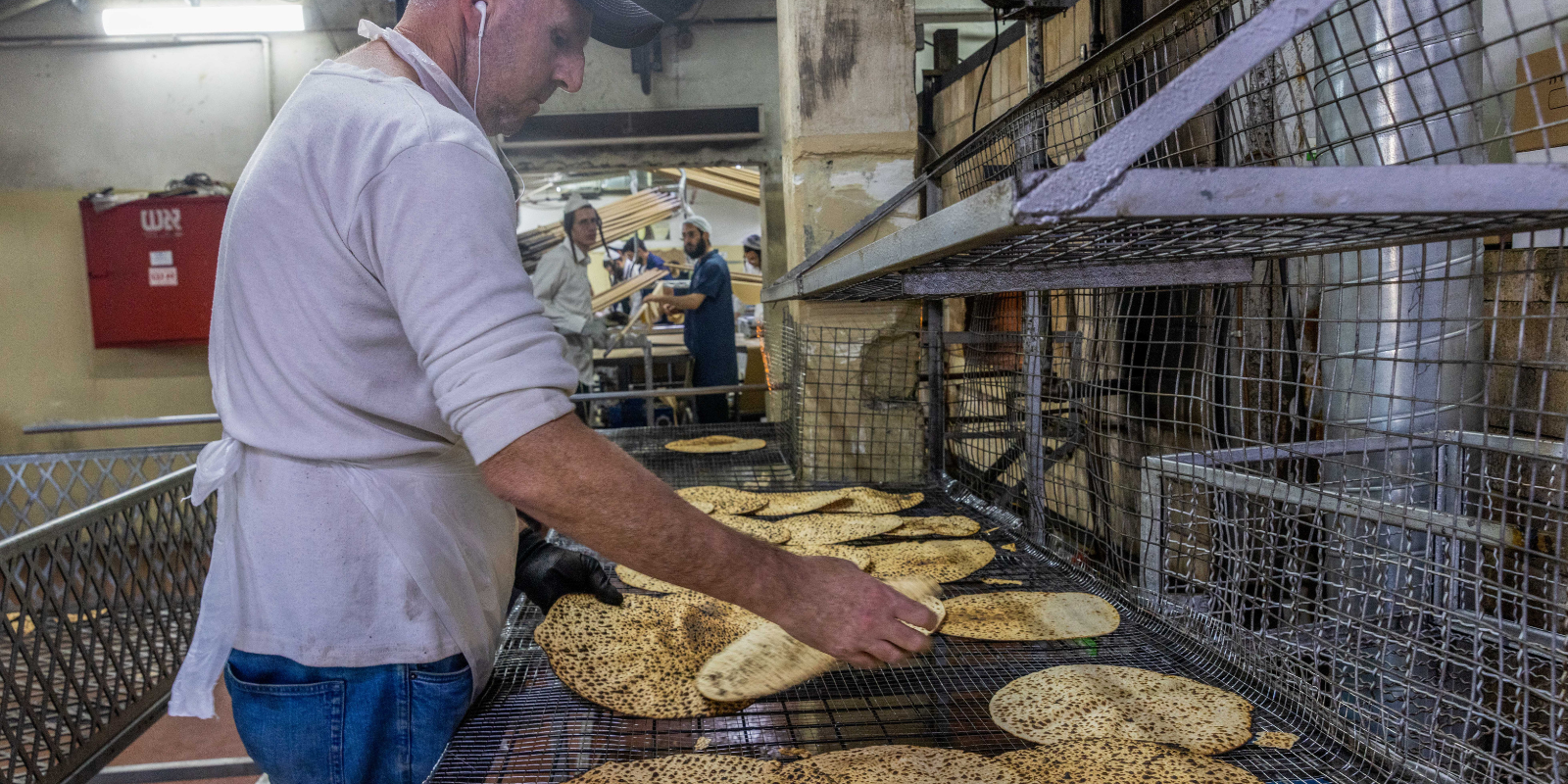
As Schechter explains, the key is understanding what chametz actually is. It is food made from grain mixed with water and allowed to ferment and rise: bread, pasta, crackers, cookies. Matzah is made from the exact same ingredients, flour and water, but baked immediately, before the dough has any chance to rise. The same grain. The same water. Two completely different outcomes. The only variable is whether you let it sit.
This is where the teaching cuts deep. The ancient rabbis understood chametz as a symbol of the inflated ego, the part of us that puffs up with self-importance, that takes credit for what God has given, that mistakes comfort for freedom. Just as dough swells with nothing but air, we swell with pride that has no substance. Matzah, by contrast, is flat, plain, unpretentious. The Torah calls it lechem oni, the bread of affliction, and it represents a posture of total humility before God. Schechter traces this idea beautifully through the biblical text: the same raw materials, shaped by nothing more than time and attention, become either the symbol of slavery or the bread of freedom. The difference is not in the ingredients. It is in what we allow to happen to them.
And this is exactly why God does not settle for avoidance. He commands destruction. On the night before Passover, Jewish families perform Bedikat Chametz, the search for leaven. We move through the house by candlelight with a feather and a wooden spoon, sweeping every corner, collecting whatever crumbs remain. Schechter points out that the rabbis understood this search as a mirror of an inner one: as we check the dark corners of our homes, we are meant to check the dark corners of our own hearts, hunting for the spiritual chametz, the pride, the anger, the petty jealousies, that have accumulated over the past year. And the next morning comes Biur Chametz: the burning of the leaven. The physical bread goes into the fire. The ego is meant to go with it.
This idea, that a physical act carries real spiritual weight, is one of the great gifts of the Hebrew Bible. God does not ask us to think holy thoughts and leave it there. He asks us to do holy things, and trusts that the doing will shape the being. Scrubbing a refrigerator shelf becomes sacred work when it is done in obedience to God’s command. Sweeping a crumb into a fire becomes an act of repentance. The material world is not an obstacle to holiness. It is the vehicle for it.
Schechter’s book traces all of this and more, from Passover’s origins in Egypt through the Temple period and into the home-based Seder we observe today. She writes as a Jewish educator who has spent years teaching Christian readers, and it shows. She does not simplify. She does not gloss over the hard parts. She brings you inside the tradition with the kind of depth and honesty that makes you understand not just what Jewish families do at the Passover table, but why it matters, and why it has mattered for three thousand years.
The chametz must go. The ego must go with it. And when we finally sit down at the Seder table, when the matzah is uncovered and the story of the Exodus is told again, we want to be truly free. Not just free from Pharaoh. Free from ourselves.
Passover from the Inside: A Jewish Guide for Christian Readers
The teaching you just read is one small piece of what Shira Schechter unpacks in Passover from the Inside. The full book takes you through the entire Passover experience, from the weeks of preparation through the dramatic Seder night and the seven days of celebration that follow. You will learn the meaning behind every cup of wine, every ritual food, every ancient question asked at the table. You will see why God introduces Himself throughout Scripture as the One who brought Israel out of Egypt, and why the Exodus is not background to the Bible but the event the rest of Scripture is built on. Schechter writes with the depth of a serious Bible scholar and the warmth of someone who has lived this tradition her whole life. If you want to understand the Jewish people as they understand themselves, and read your Bible with the fullness it was meant to carry, this is where you start.