


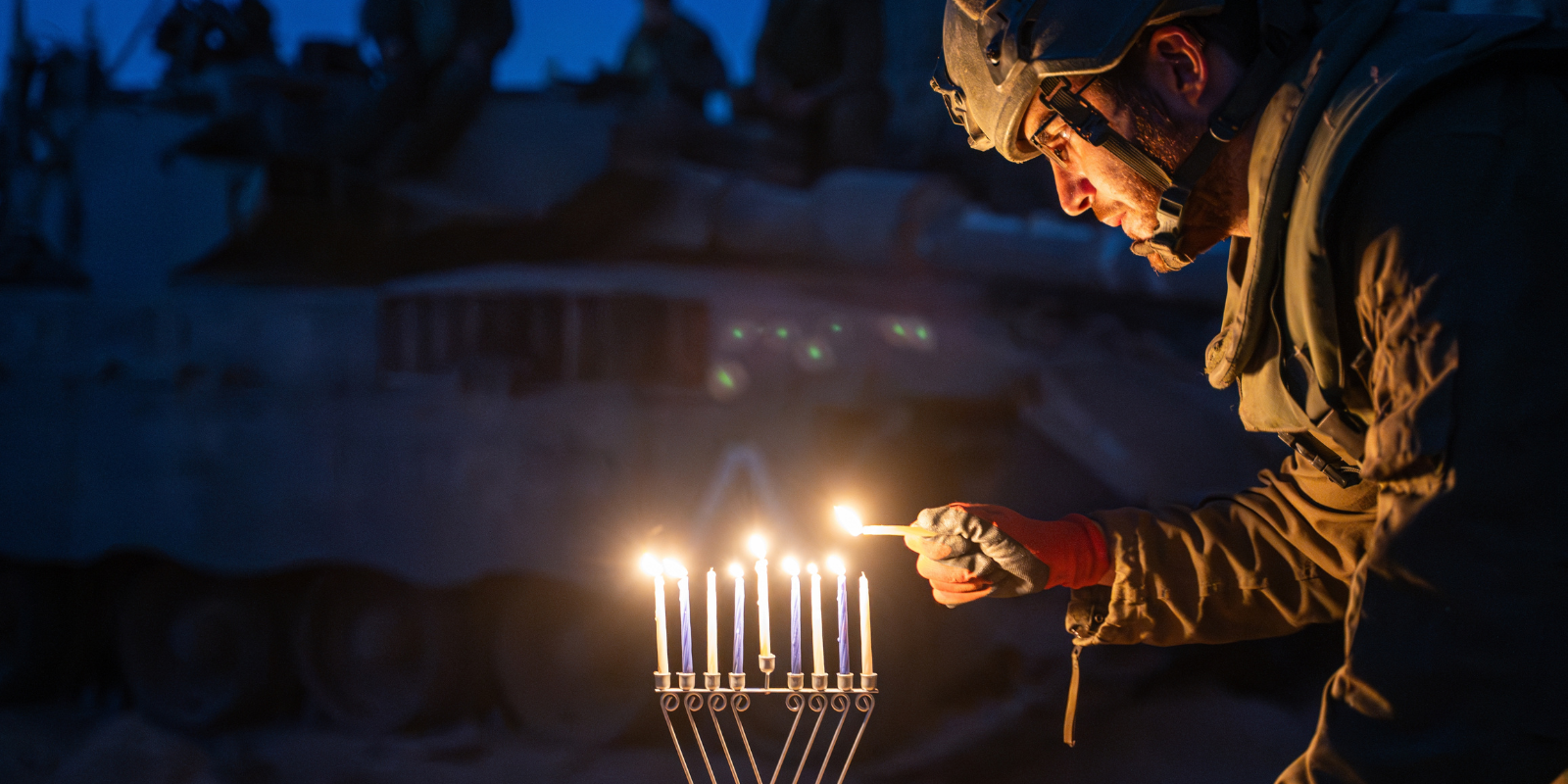
Every year, without fail, the Shabbat Torah reading during the holiday of Chanukah is about Joseph and his brothers. The story is familiar: the betrayal, the exile, the years of separation, and finally, the reunion. There are no coincidences or accidents in the Jewish calendar, and so, when the same story falls during the same festival year after year, we’re meant to notice and ask why.
Rabbi Joseph B. Soloveitchik saw something in this alignment that most people miss. Writing about this connection, Rabbi Aaron Goldscheider explains that Rabbi Soloveitchik believed the story of Joseph and the celebration of Chanukah share a common thread. Both stories are about a family torn apart. And both are about the hard, necessary work of coming back together.
Joseph, the favored son of Jacob, dreams of greatness and tells his brothers about it. They hate him for it. The hatred grows until they can’t stand to be near him. They throw him into a pit, sell him into slavery, and tell their father he’s dead. The family of Israel, the children who would become a nation, fractures at its foundation. Brothers become enemies. Unity dissolves into resentment and rage.
But that’s not where the story ends. Years later, after Joseph has risen to power in Egypt, his brothers come seeking food during a famine. Joseph recognizes them. He has every right to take revenge, every reason to remind them of what they did. Instead, he forgives them. Not with words alone, but with actions that prove the forgiveness is real. He provides for them, embraces them, weeps over them. The Bible tells us that after Jacob’s passing, he reassured them that he held no grudge against them and would continue to sustain them:
This wasn’t tolerance. This wasn’t grudging acceptance. This was full restoration—brothers reunited, the family whole again.
What does this have to do with Chanukah?
Chanukah tells a similar story, though we don’t always recognize it. We remember the military victory when the Maccabees defeated the Greeks against all odds. We celebrate the miracle of the oil lasting eight days. But Rabbi Soloveitchik reminds us that there’s another drama playing out beneath the surface, one that the Torah reading forces us to confront. The war wasn’t just between Jews and Greeks. It was between Jews and Jews.
On one side stood the Hasmoneans—the Maccabees and those who held fast to Torah law. On the other side were the Hellenists, the Jews who had embraced Greek culture, Greek philosophy, and Greek ways of living. The split wasn’t minor. It wasn’t a disagreement over interpretation or practice. It was a fundamental clash of visions for what the Jewish people should be. The nation was divided. Families were split. Brother fought against brother.
This kind of fracture threatens survival. A nation at war with itself cannot stand. The Greeks were a danger, yes. But internal division was worse. It struck at the very possibility of remaining a people.
Here’s where Rabbi Soloveitchik’s insight cuts to the heart of Chanukah. The Talmud tells us that the Sages waited a full year after the military victory before establishing Chanukah as a holiday (Shabbat 22b). Why the delay? Why not celebrate immediately?
Rabbi Soloveitchik explained that they were waiting to see if their would be true reconciliation within the nation. It wasn’t enough to drive out the Greeks and cleanse the Temple of physical impurity. The impurity of hatred between brothers, of a people unable to live together as one, had to be removed as well.
The Sages waited to see if Jews who had fought each other could make peace. If those who had chosen different paths could find a way back to unity. And they did. The reconciliation happened. The people came together. Only then did Chanukah become a permanent celebration—not just of military victory, not just of oil that burned, but of a fractured nation made whole again.
The moment of recognition is terrifying. Sometimes facing those we’ve wronged, or who have wronged us, demands more courage than facing an army. Joseph could have used his power to destroy them. Instead, he used it to heal. He chose reunion over revenge.
The Hasmoneans and the Hellenists faced the same choice. After the war, they could have continued the division. They could have insisted on their rightness, on the other side’s wrongness, on all the reasons unity was impossible. Instead, they chose differently. They chose to be one people again.
This is what Chanukah celebrates. Yes, we commemorate the military triumph. Yes, we marvel at the oil. But the deepest miracle is the miracle of reconciliation. A people divided found a way back to brotherhood. The children of Israel, like the sons of Jacob before them, became one family again.
Joseph’s story appears during Chanukah because both narratives insist on the same truth: redemption requires more than defeating external enemies. It requires making peace with each other. It requires the willingness to forgive, to be forgiven, and to let go of grudges that feel justified. It requires choosing unity even when division seems easier.