








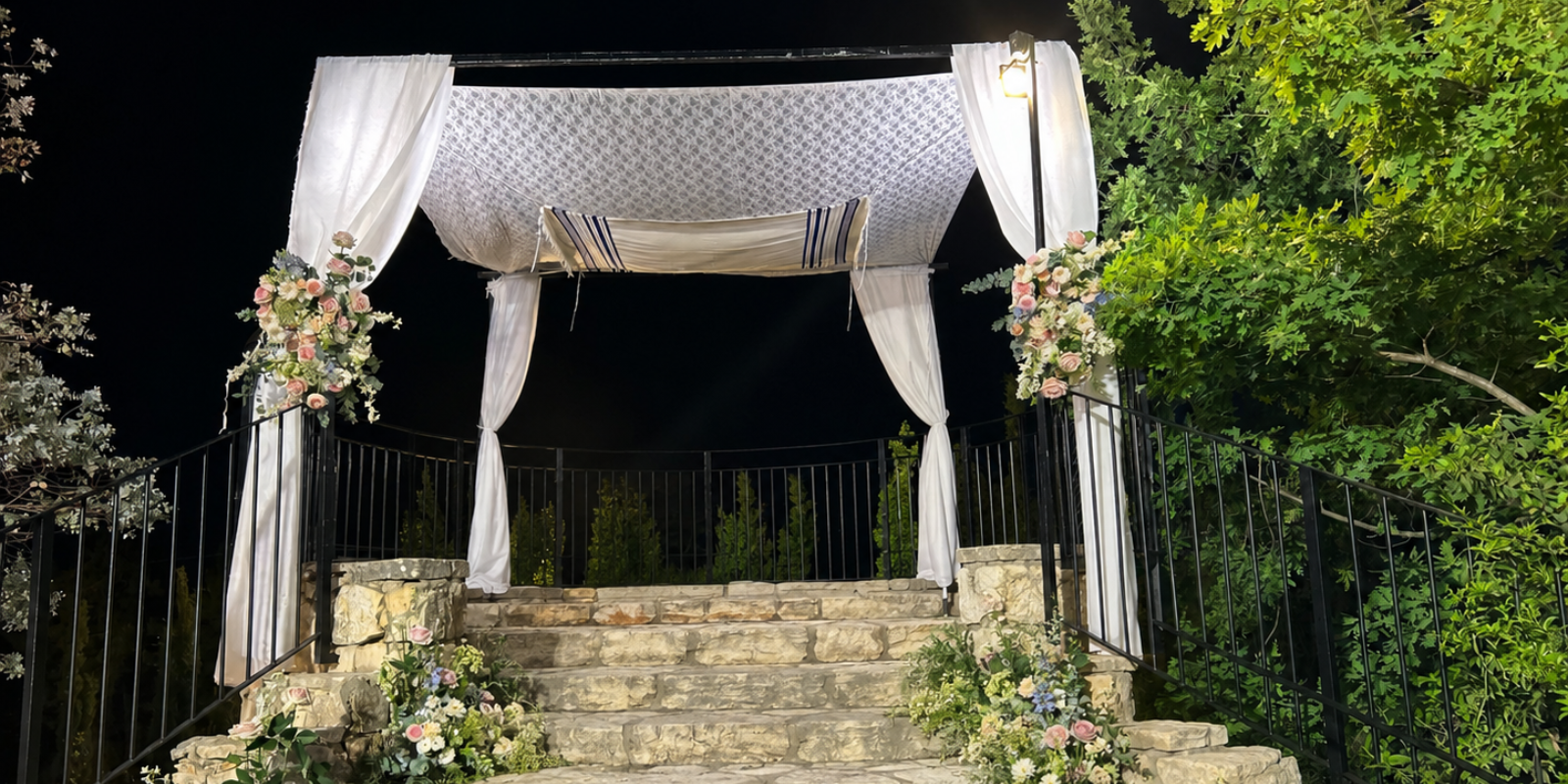
Two nights before Jerusalem Day, I attended the wedding of the son of a family friend. The groom, a young man who made Aliyah, immigrating to Israel, five years ago, joined the army soon after arriving and served this country with pride, passion, and love. Now he stood under the chuppah, the wedding canopy, beside his bride, both of them bright with joy. I stood as a guest and watched a young couple begin their life together. The music swelled. The guests sang. The wine was lifted. The seven blessings were recited. And because this was an Israeli wedding, the ceremony was not stiff or silent. It was alive, full of clapping, singing, and communal happiness.
At the end of the ceremony, the groom lifted his foot and broke the glass.
For many people, that is the moment they recognize most. The glass shatters. Everyone shouts, “Mazal tov!” Good fortune! Congratulations! The couple is married. The dancing begins.
But the breaking of the glass is not only a festive signal that the wedding has ended. In Jewish tradition, that sharp sound brings a very different message into the room. At the happiest moment of a Jewish life, we remember Jerusalem. We remember the destruction of the Holy Temple. We remember that even when our hearts are full, the world is still not whole.
So why does Jewish tradition bring sorrow into a wedding? Why interrupt love, music, and celebration with a reminder of destruction?
Because the Hebrew Bible never asks us to choose between joy and memory. Real joy does not require forgetting. A Jewish wedding carries both at once: the happiness of a bride and groom building a home, and the ache of a people still longing for the full rebuilding of Jerusalem.
King David writes:
“Above my chiefest joy” is a startling phrase. David does not say to remember Jerusalem only in mourning. He does not say to remember Jerusalem only on fast days, in exile, or in moments of national crisis. Jerusalem must be remembered precisely at the height of happiness. Even under the chuppah, even as a new home is being formed, the Jewish heart leaves space for the city of God.
At my own wedding, my family had an additional custom. Along with the breaking of the glass, ashes from Babi Yar were placed on the foreheads of the bride and groom. Babi Yar was the ravine near Kyiv where the Nazis and their collaborators murdered tens of thousands of Jews. It is not an ancient wound from the days of Rome or Babylon. It belongs to the modern Jewish story.
To place those ashes on a bride and groom is not meant to darken the wedding. It tells the truth about Jewish life. A Jewish marriage does not begin in denial. It begins with the knowledge that our people have survived fires, ravines, expulsions, ghettos, crusades, pogroms, and gas chambers. To build a Jewish home after all of that is not a small private milestone. It is an answer.
That is why this wedding, on the eve of Jerusalem Day, felt so powerful.
Jerusalem Day, Yom Yerushalayim, marks the reunification of Jerusalem during the Six-Day War in 1967. For nineteen years before that war, the Old City of Jerusalem was under Jordanian control. Jews could not pray at the Western Wall. The Jewish Quarter had been emptied of Jews. Jewish gravestones on the Mount of Olives were desecrated. The place toward which Jews had prayed for centuries was barred to them.
Then, in June 1967, Israeli soldiers entered the Old City. The words “Har HaBayit b’yadeinu,” “The Temple Mount is in our hands,” were broadcast across the nation. Soldiers stood at the Western Wall and wept. A people who had prayed toward Jerusalem for nearly two thousand years could once again stand before the stones their prayers had never abandoned.
For a believing reader of the Bible, that moment cannot be reduced to military strategy or modern politics. It belongs to the long biblical story of exile, return, covenant, and Jerusalem. The city David chose. The city where Solomon built the Temple. The city Daniel faced when he prayed in Babylon. The city Isaiah saw as the place from which God’s word would go forth to the nations.
So when a young man makes Aliyah, serves in the Israeli army, and then stands under a chuppah in the land of Israel on the eve of Jerusalem Day, the scene carries more than romance. It carries return. It carries responsibility. It carries the stubborn, holy insistence that Jewish life will keep building.
And still, the glass is broken.
Because Jerusalem is reunited, but the world is not yet redeemed. The Jewish people have returned home, but our enemies still rise against us. We have a sovereign state, but we still bury soldiers. We dance at weddings, but every Israeli wedding carries the invisible presence of those who could not be there, those who fell defending the land beneath our feet.
A Jewish wedding teaches the same lesson as Jerusalem herself: destruction is real, but it is not final. The Temple was destroyed, but Jerusalem was never forgotten. Exile scattered the Jewish people, but it did not sever the covenant. Ashes marked our history, but they did not stop Jewish children from being born, Jewish homes from being built, and Jewish brides and grooms from standing beneath the chuppah.
The breaking of the glass is not the end of the wedding’s joy. It gives that joy its depth. It says: we remember what was shattered, and we build anyway. We remember the Temple, and we make a home. We remember exile, and we return to Jerusalem. We remember the ashes, and then we dance.
On the eve of Jerusalem Day, I watched a bride and groom begin their life together in the land of Israel. The glass shattered. The music rose. The guests shouted Mazal tov. And the message was unmistakable: Jerusalem still carries our sorrow, but she also carries our future. We do not celebrate because the world is whole. We celebrate because God has commanded His people to keep building until it is.