







When the Jewish settlement of Magdiel celebrated its establishment in pre-state Israel, Rabbi Abraham Isaac Hacohen Kook was invited to plant the first tree. The organizers handed the chief rabbi a shovel, but he refused it. Instead, he dropped to his knees and began digging with his bare hands.
Those watching saw his entire body begin to shake. His face was aflame. He trembled as he placed the sapling in the ground, overcome with an emotion they couldn’t understand.
Afterwards, someone asked what had happened to him.
“When God created the world,” Rav Kook answered, “He engaged in planting first.” The verse came to him as he knelt in the soil: “The Lord God planted a garden in Eden” (Genesis 2:8). Then another verse came to mind: “When you shall come into the Land, and you shall plant all types of fruit trees” (Leviticus 19:23). “When I was about to put the sapling in the ground, I remembered these words and felt as if I was clinging to the divine presence. I was overcome by fear and trembling. How could I use a shovel or any other object to perform this great commandment, when there should be nothing separating me from the holy land I was planting in?”
Tu B’Shevat—literally “the 15th of Shevat”—is the Jewish New Year for trees. But it’s not just about trees, it’s about the connection between God, His people, and His land.
The biblical roots of the holiday appear in Leviticus 19:23-24:
The ancient Israelites had to count the years of a tree’s produce. This was significant for the command above, in addition to figuring out how much produce a tree had yielded in a given year for the purpose of tithing.
But when does a tree’s year begin? Not when the blossoms appear or the fruit ripens. It begins on Tu B’Shevat. This date serves as the cutoff. Fruit that ripens before Tu B’Shevat belongs to the previous year. Fruit that ripens after belongs to the new year.
But here’s what doesn’t make sense: The new year for fruit trees begins in the dead of winter. The trees are bare. There are no blossoms and no fruit. Why Tu B’Shevat? What is the significance of this date?
Though nothing is visible yet on the outside, deep inside the tree, invisible to us, the sap begins to rise on Tu B’Shevat. Most of the year’s rain has already fallen. The tree is preparing, in its hidden places, for the harvest that will come. We can’t see it. But we trust it’s happening. Though the trees may look dead on the outside, there is much growth taking place on the inside.
This is the significance of Tu B’Shevat. It teaches us that even though circumstances don’t always look favorable and the blessing isn’t always visible, God’s plan is already in motion, deep where we can’t see it.
Rabbi Eliyahu Ki Tov explains that since the commandments regarding fruit trees only apply in the Land of Israel, Tu B’Shevat actually celebrates the Land of Israel. We pray that the Lord bless the Land of Israel and give us blessings in the fruits, and there is a widespread custom to eat the fruits of the Land of Israel and speak about the land’s goodness.
The connection between Tu B’Shevat and the land of Israel is highlighted in the following story:
Rabbi Menachem Mendel of Kotzk once asked his brilliant student, Rabbi Yitzhak Meir to speak at their festive Tu B’Shevat meal. The student gave a lengthy, complicated scholarly discourse on the Talmudic teaching about Tu B’Shevat as the New Year for trees.
When he finally finished, the Kotzker Rebbe cut him off: “If we were in the Land of Israel, we could just go out to the fields and look at the trees. We would understand what ‘the New Year for the tree’ really means, and we would not need scholarly learning on the subject! For there, in the land of Israel, Tu B’Shevat does not say ‘study me’—it says ‘do me.'”
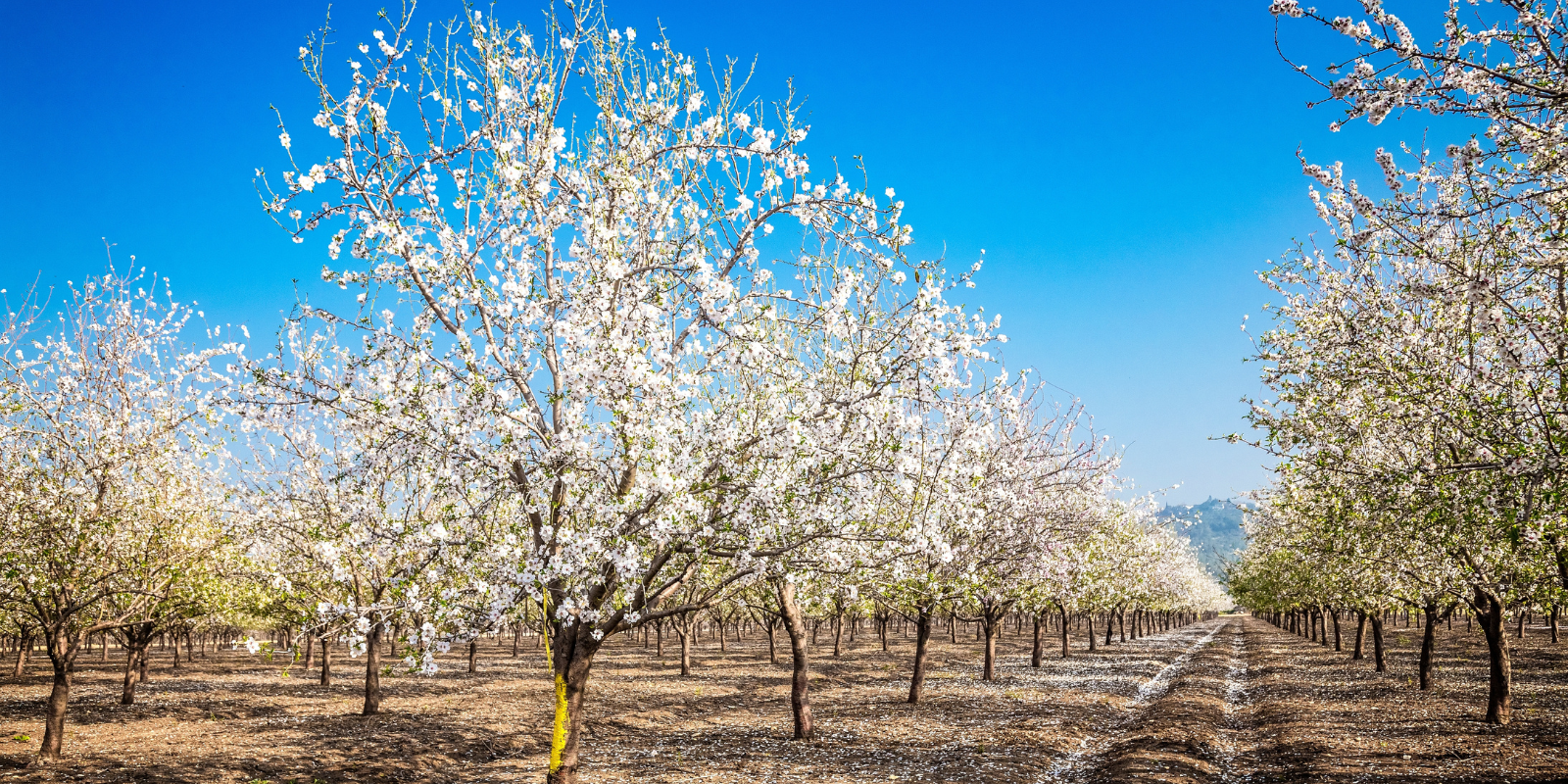
The Kotzker Rebbe was saying that in Poland, exiled from the land, all we can do with Tu B’Shevat is give fancy Torah lectures about it. We study it, analyze it, interpret it. But in the Land of Israel itself, Tu B’Shevat doesn’t need interpretation – it demands action. You walk outside. You see the almond trees beginning to blossom. You smell the earth after rain. You plant. You experience it.
For Jews living in Poland in the 18th and 19th centuries, going to Israel was not an option. But for all of us today, the land waits. Go to Israel. Touch the land. Plant the trees.
Tu B’Shevat is no longer an abstract theological concept. It’s dirt under your fingernails. It’s the actual land, the actual trees, the actual connection between the Jewish people and the soil God promised them.
When God created the world, His first act was to plant. When He brought the Israelites into the land, He commanded them to plant. Rav Kook understood that when you plant a tree in the Land of Israel, you’re not just doing agriculture. You’re imitating God Himself. You’re participating in His work of creation and redemption.
This Tu B’Shevat, as winter still grips much of the world, the sap is rising in the trees of Israel. The blessing is already there, invisible, preparing to break forth. God planted a garden in Eden. He’s still watching over His people in the land He gave them, bringing forth fruit in its season. Sometimes you have to trust what you cannot yet see. And sometimes you have to stop talking about it and just put your hands in the soil.
This Tu B’Shevat, you can plant a tree in the Land of Israel! Click here to plant a tree today!