







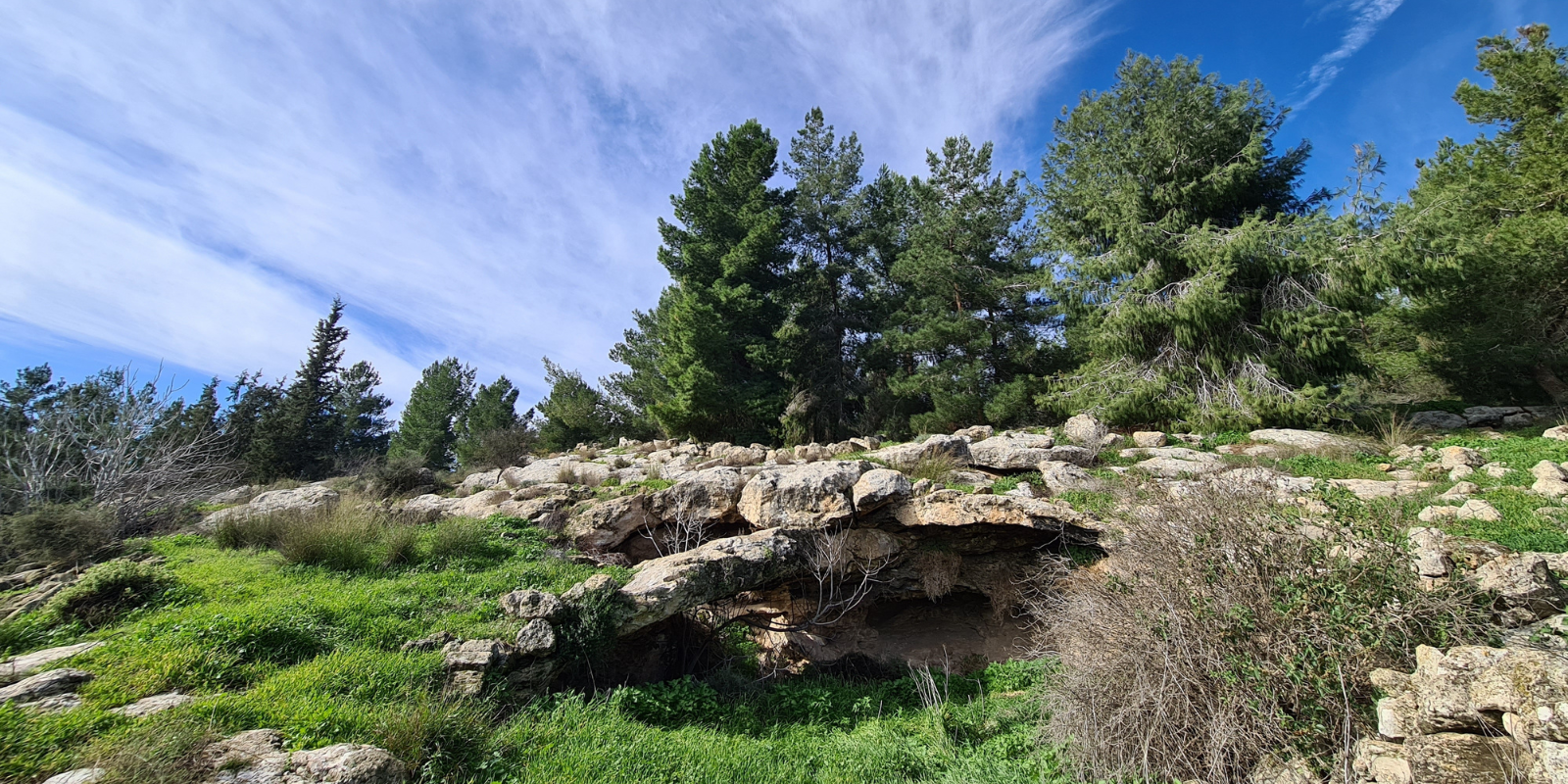
On the run from King Saul, hiding in a cave in the wilderness of Adullam, David received two groups of visitors. The first was his own family, who had reason to fear what Saul might do to them now that David was a fugitive. The second was harder to explain: roughly 400 men the text describes as “distressed, indebted, and bitter of soul” (1 Samuel 22:2). These were not soldiers. They were not David’s friends or allies. They were men who had lost things — land, livelihoods, standing — and who had nowhere else to go.
Who were these men and why were they so bitter?
The Book of Samuel does not explain what made them so bitter. Rabbi Amnon Bazak, in his close reading of this passage, points out that the answer comes just a few verses later — and it changes how you read the entire story. Saul, sitting under the tamarisk tree at Gibeah, spear in hand, rounds on his servants and demands to know why they had not warned him of Jonathan’s pact with David. His argument gives him away entirely:
The implication is unmistakable. Saul had been doing exactly that — distributing land and titles to his tribesmen, buying loyalty the way kings do, the way the prophet Samuel had warned a king would do: “He will take your fields, and your vineyards, and your oliveyards, even the best of them, and give them to his servants” (1 Samuel 8:14).
The dispossessed men sheltering in David’s cave were, in all likelihood, the people those fields had been taken from.
Rabbi Bazak points out that this connection is not incidental. The chapter quietly sets two groups against each other: those enriched by Saul’s patronage, and those ruined by it. And into this volatile situation steps David — leading 400 men with every personal reason to want the king dead, waiting for exactly the moment that arrives twice in the coming chapters, when Saul walks into their reach.
What happens when that moment comes is the real story.
In chapter 24, David’s men turn to him, practically trembling with anticipation:
David goes to Saul in the darkness — and cuts off the corner of his robe. That’s all. And then, the text tells us, his heart smote him even for that. He turns back to his men and stops them: “The Lord forbid that I should do this thing unto my lord, the Lord’s anointed” (24:6).
It is easy to read this as a story about piety. David won’t harm God’s anointed — full stop. But Rabbi Bazak’s framing opens up something deeper. The real test is not whether David is personally willing to kill Saul. The real test is whether he can hold back 400 desperate, landless, bitter-souled men who have every earthly grievance against this king, and who are waiting for the word. He holds them. They obey. Not once in all the stories of David’s wilderness years do his men act against his orders.
This, Rabbi Bazak argues, is where David first learns to lead. Anyone who can command the loyalty of 400 men who have lost everything, and direct that loyalty away from vengeance, can one day lead a nation.
But where does that restraint ultimately lead? Rabbi Elie Mischel, in a recent conversation on the Book of Samuel, draws out the answer. When David chooses his capital, he does not choose Bethlehem, his own city. He does not choose Hebron, where he rules for the first seven years of his reign. He conquers Jerusalem — a city that sits precisely on the border between the territories of Judah and Benjamin, the tribes of David and Saul — and the boundary line runs through the Temple Mount itself. The Psalmist calls it “the city that is bound together” (Psalms 122:3). The choice is a message: this kingdom is not the house of David’s victory over the house of Saul. It is the place where both houses become one.
You cannot build that city if you have spent the previous years letting bitter men take revenge. The restraint in the cave is the precondition for Jerusalem.
Saul’s model of leadership — land for loyalty, titles for silence — produced men who gathered in caves. David’s model produced something else entirely: men who could be led toward a purpose larger than their own grievances. That contrast is as alive in Israel today as it was three thousand years ago.
For more insights into the Book of Samuel and what it means for our generation, watch Rabbi Elie Mischel’s full Bible Month conversation on the Book of Samuel today!