





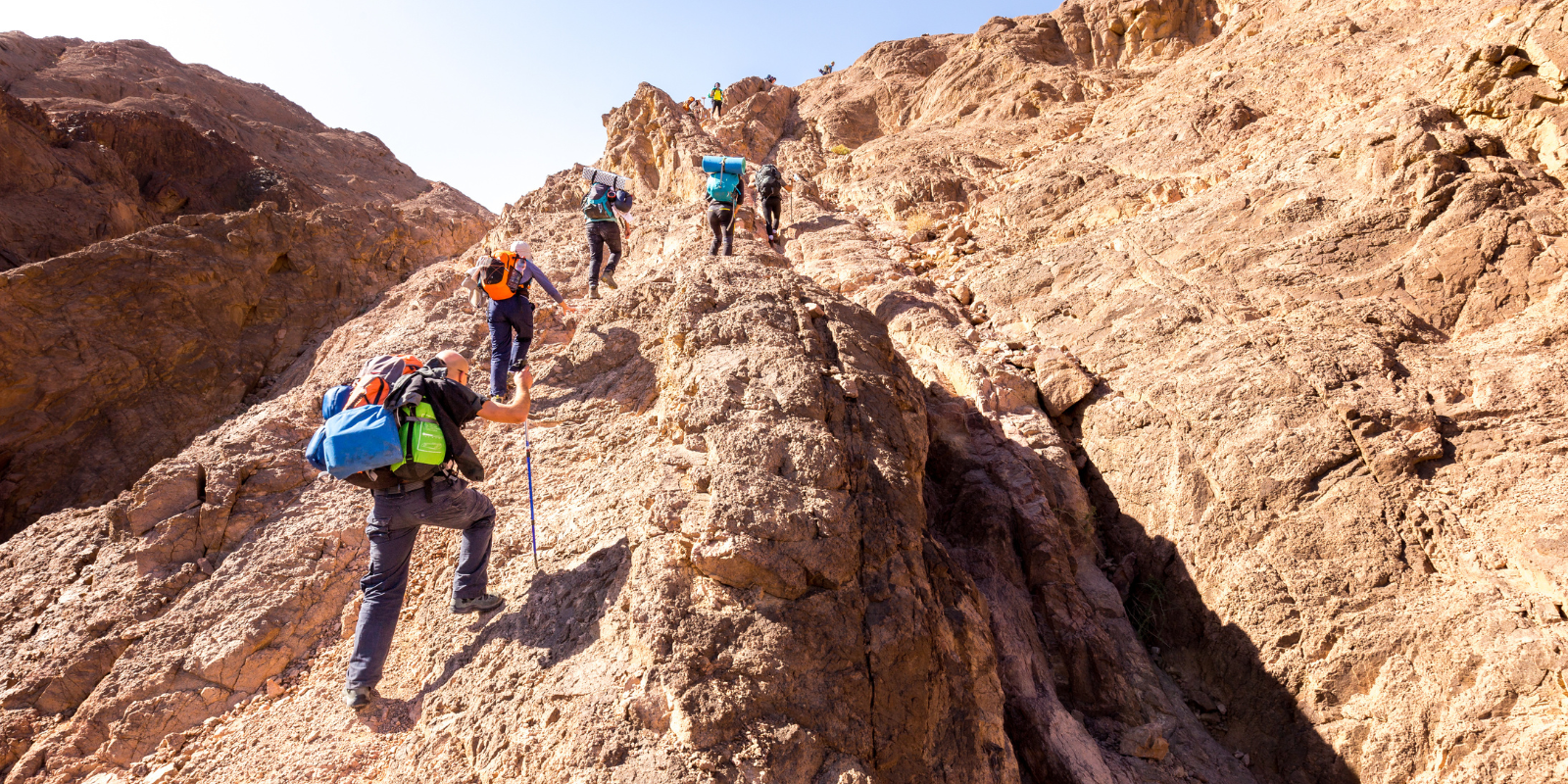
A few years ago, my husband and I watched Free Solo, the documentary about Alex Honnold’s rope-less ascent of El Capitan. We had just returned from hiking out West ourselves, still carrying the quiet thrill that comes from standing beneath towering rock formations that make you feel small in the best possible way. We love the outdoors. We love movement, challenge, and the humility that comes from realizing how vast the world is. Watching a human body move confidently across sheer stone was breathtaking.
And yet, alongside that admiration sat an uneasiness I couldn’t quite name. It wasn’t fear. It wasn’t judgment. It was a tension that lingered long after the credits rolled. Something about the climb unsettled me, even as I respected the discipline and mastery it required.
That feeling returned recently when Honnold made headlines again, this time for scaling Taipei 101, the tallest skyscraper in Taiwan, without ropes, streamed live to a global audience. When asked what he hoped viewers would take away from the feat, Honnold spoke about life’s finiteness, about using time well, about working hard to do hard things. There was joy in his voice, even playfulness. He climbed, he said, because it felt meaningful.
His words were sincere. They were thoughtful. And they sharpened the question that had been sitting with me for years.
When awe lifts us, what are we leaning on?
The Hebrew Bible agrees with Honnold on at least one point: life is finite. Time matters. Choices matter. The Torah does not encourage passivity or smallness. On the contrary, it demands courage, discipline, and effort. But it is uncompromising about one thing. Meaning does not begin with the self. And it does not end there either.
He climbs higher and higher, relying on strength, focus, and flawless execution. And yet the Psalms whisper a counterpoint: “The Lord is my rock and my salvation” — not my grip, not my resolve, not my moment of perfection.
King David writes:
The Hebrew word for rock, tzur, is not poetic decoration. It is structural. A tzur is something that holds weight, something that does not shift when pressure comes. David does not say God gives him strength like a rock. He says God is the rock.
That distinction matters.
Judaism does not deny human excellence. It refuses to worship it. The Bible is filled with towering figures who achieve astonishing feats, but none of them are celebrated for standing alone. Even Moses, the greatest prophet who ever lived, does not lead without support. When his hands grow tired in battle, others hold them up. When he falters, God intervenes. When he strikes the rock in anger, he is reminded, painfully, that power is not his to wield as he pleases.
This is not a small theological point. It is the backbone of the biblical worldview.
There is a reason the Torah commands “u’vacharta ba’chayim” choose life:
Life is not a canvas for personal transcendence at any cost. It is a sacred trust. The body is not a proving ground for existential meaning. It is a vessel placed in our care. To endanger it unnecessarily is not bravery. It is a refusal to acknowledge ownership.
This is where the contrast becomes clear.
Alex Honnold climbs without ropes because the risk sharpens the experience. Judaism insists on ropes — literal and metaphorical — because life is not meant to be wagered for clarity. Judaism does not seek perfection at the summit. It seeks faithfulness in the climb.
That is why Jewish tradition values limits. Shabbat interrupts productivity. Dietary laws interrupt appetite. Modesty interrupts display. These are not restraints on greatness. They are declarations of allegiance. They say, clearly and unapologetically: God comes first.
Awe, in the biblical sense, is directional. It does not circle inward. It moves upward. It begins with admiration but ends with submission. Not submission to fear, but to truth.
There is something undeniably beautiful about watching a human being do what seems impossible. Skill, strength, balance, and joy are all on display. But Judaism insists on a final clarification. Those capacities are not self-generated. They are given. Breath is borrowed. Strength is loaned. And life itself belongs to the One who formed it.
The Bible does not ask us to shrink our ambition. It demands that we aim it correctly. Not toward the illusion of self-sufficiency, but toward faithfulness. Not toward the thrill of standing alone, but toward the humility of knowing we never truly are solo.