






Israel woke up yesterday to sirens and history.
It was February 28th, 2026. The eve of Purim. Shabbat Zachor, the Sabbath on which we read the command to remember Amalek. As families walked to synagogue to hear those ancient words, the air-raid sirens began to wail.
By the time we finished reading the Torah, the Supreme Leader of Iran was already dead.
These are the moments when the Bible truly comes to life.
On Shabbat Zachor, we read:
It is the only Torah reading that commands us to remember evil. Not in vague moral terms, but by name. Amalek attacked the weak. Amalek targeted the stragglers. Amalek did not wage war for territory. Amalek waged war against covenant.
And in the Book of Esther, that war resurfaces. Haman is called an Agagi, an Agagite (Esther 3:1),
a descendant of Agag, king of Amalek. The Persian plot to annihilate the Jews was not random politics. It was the next chapter in an ancient hostility.
ThePurim story does not end with Haman’s death. That is where most people stop reading. Haman is hanged, the Jews are saved, roll credits. But the text is more dangerous than that.
After Haman is executed, the genocidal decree remains in force. The Jews are still marked for slaughter. The empire has not changed its mind.
The true turning point comes two months later, on the twenty-third of Sivan:
This past June, on the days surrounding the 23rd of Sivan on the Hebrew calendar, Israel fought a twelve-day war against Iran. That was Part One. The Jewish people, once again, exercised the right to defend themselves against a regime that had publicly and repeatedly called for their destruction.
And now, just days before Purim, over Shabbat Zachor, as the words “blot out Amalek” were being read aloud in synagogues across Israel, the Supreme Leader of that regime, the modern day Amalek was struck down.
That is Part Two.
Our Modern Day Purim story gave us both chapters, just in reverse order. First, the authorization to fight. Then, the downfall of the enemy. First Sivan. Then Adar. First self-defense. Then celebration.
The Book of Esther is famous because God’s name never appears in it. Not once. No splitting seas. No pillars of fire. No prophetic voice thundering from the heavens. Just a sleepless night of the king. A banquet delayed by exactly one day. Gallows built too early. A decree reversed at precisely the right moment.
In Esther, the miracle is hidden. But the God of Israel is not locked into one mode.
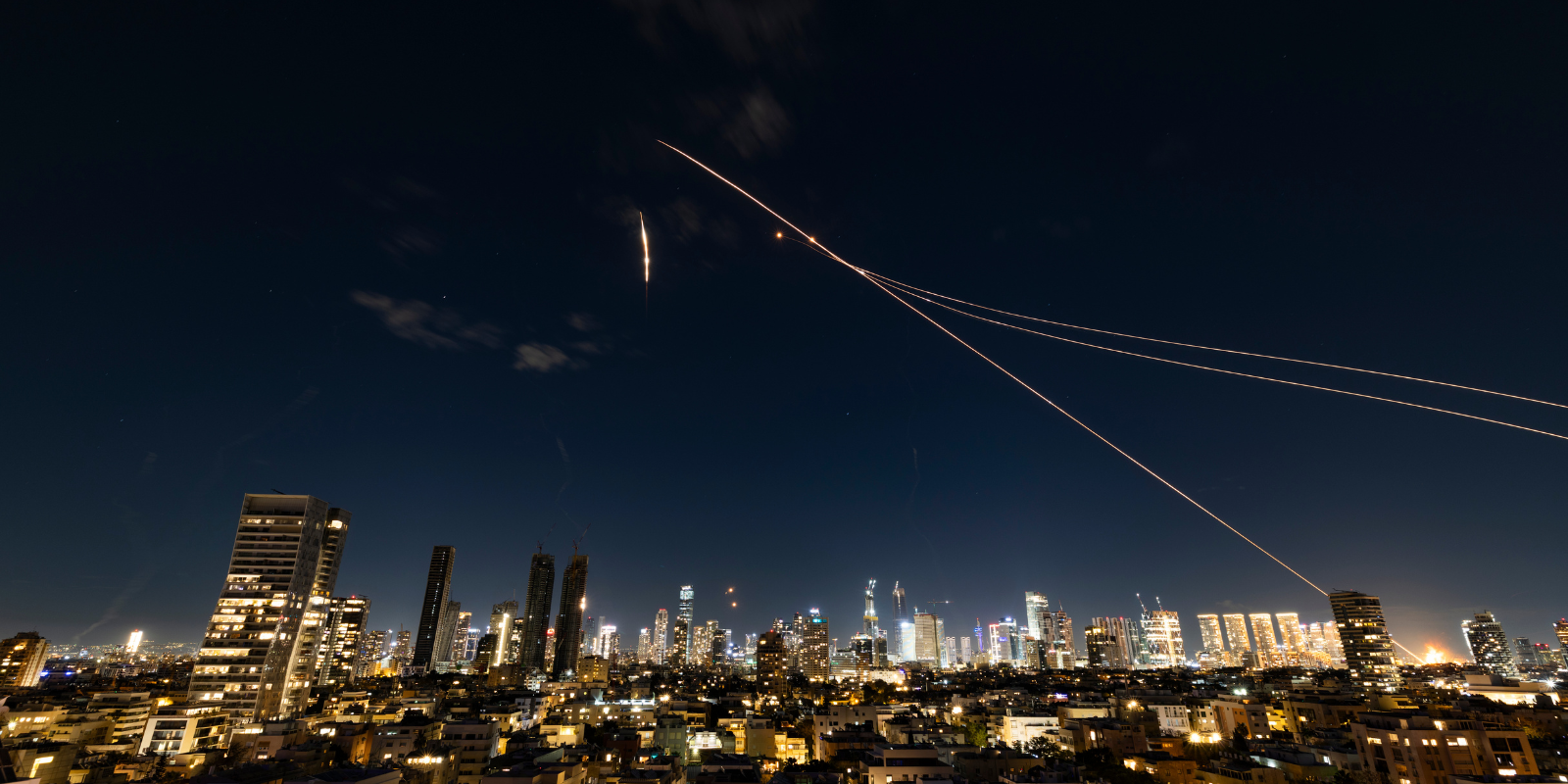
The modern State of Israel sees miracles that are not hidden at all. Thousands of rockets intercepted mid-sky. A nation that should have been destroyed a dozen times over, still standing, still building, still fighting. Children walking to synagogue under an iron dome that did not exist a generation ago.
And then, on top of the visible miracles that take place, there is also the miracle of the timing. A twelve-day war that aligns with the 23rd of Sivan. A strike against a genocidal regime that lands on Shabbat Zachor, and on the eve of Purim. The symmetry is not decorative. It is structural. It is the same Author writing in the same language, through the same calendar, for those willing to read it.
And so I am here. Typing away silently in the dark of the bomb shelter. My children are sleeping, and there are “booms” or explosions overhead as the miraculous and amazing Israeli Army shoots down Ballistic Missilies from Iran. There is still so much unknown right now.
And yet, we are filled with light and joy.
Now, Proverbs warns: “When your enemy falls, do not rejoice”. We are not celebrating death. We are celebrating the collapse of a regime that built its throne on the promise of Jewish destruction. We are celebrating that Jewish children woke up this morning. We are celebrating that the covenant holds.
And this year, as sirens pierced the morning air on Shabbat Zachor, the ancient command to remember Amalek did not feel like ritual.
It was the Bible coming to life before our very eyes.
We have remembered Amalek. And 2500 years later, history answered back.
Israel is at war. Stand with Israeli families under fire this Purim by donating to Israel365’s emergency fund — every dollar goes directly to displaced families, medical care, and children who have now survived multiple wars. Donate here.