








Earlier this week, former President Barack Obama made a troubling claim about the establishment of the modern State of Israel in 1948, suggesting that the Jewish people had taken land from those who lived there before them.
“What is also undeniable is that they took land off people and they were excessive,” Obama declared during a public appearance in Northern Ireland.
But what Obama presented as an undeniable historical fact ignores a crucial part of the Jewish people’s history. Long before the establishment of the modern State of Israel, Jews were legally purchasing land in their ancestral homeland. And long before those purchases, the Bible recorded the Jewish people’s connection to the land, including specific accounts of land being purchased openly and at an agreed price.For a former president of the United States to reduce this history to a sweeping accusation of land theft is not only misleading. It erases an essential part of the Jewish story.
And perhaps most strikingly, this accusation is not even new.
Nearly two thousand years ago, our sages addressed this very claim. In fact, they identified three specific places in the Land of Israel that the nations of the world could never legitimately accuse the Jewish people of stealing. What makes their teaching so extraordinary is that these three places are among the most fiercely contested sites in Israel today. To understand why, we need to return to Abraham and one of the Bible’s most carefully documented real estate transactions.
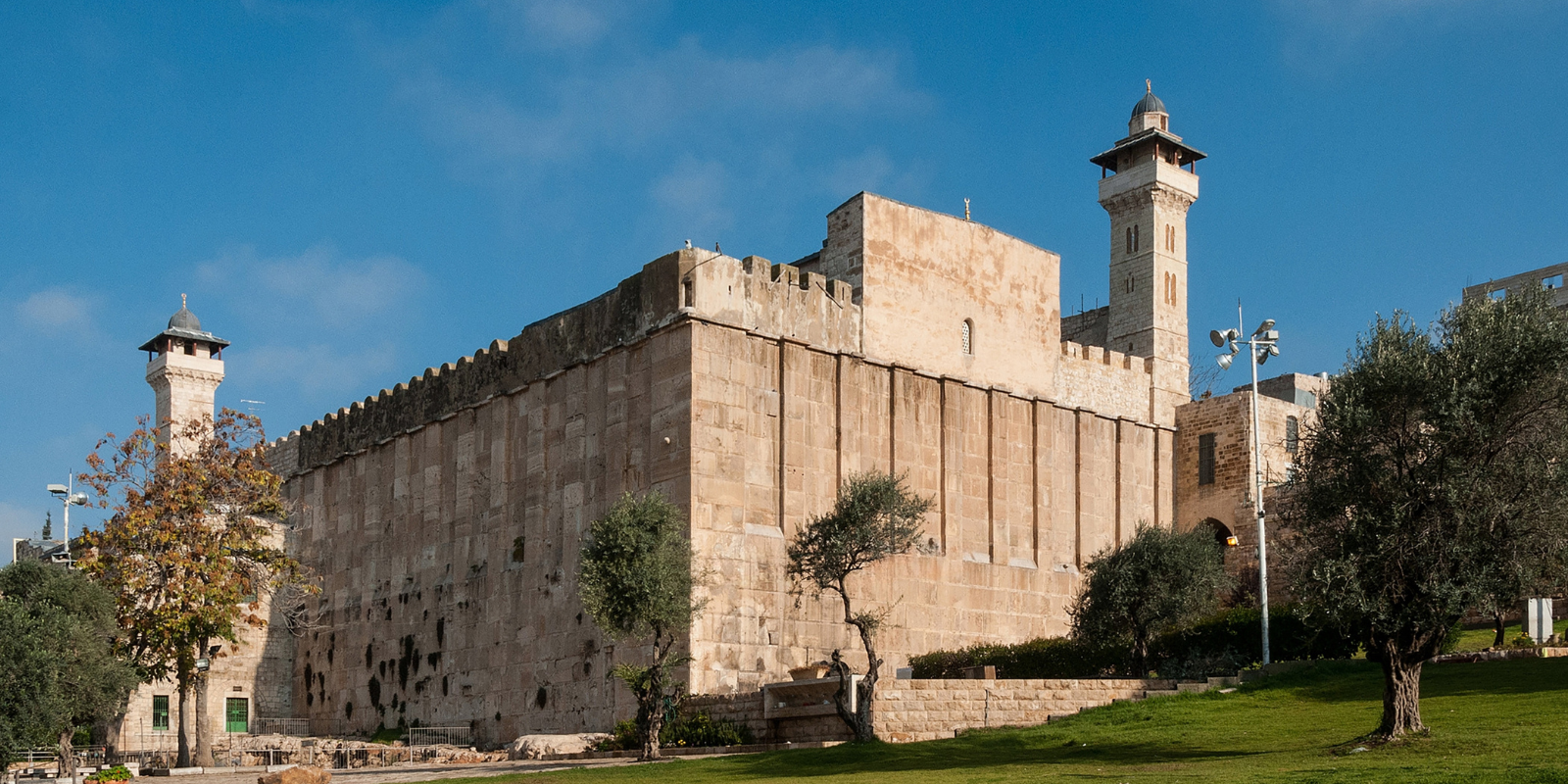
In Genesis 23, Abraham has just lost his wife, Sarah. He approaches Ephron the Hittite to purchase the Cave of Machpelah in Hebron as a burial place. Ephron initially offers to give him the land, but Abraham insists on paying for it. The Torah records the negotiations, the witnesses, and even the precise amount of silver that changed hands.
There is something extraordinary about how much attention the Bible gives this transaction. God had already promised Abraham the land of Canaan. If anyone could have claimed that the land was his by divine right, it was Abraham. Yet when he needed a small piece of that land to bury his wife, he did not simply take it. He paid the agreed price, in full, before witnesses.
And Abraham was not the only one.
In Genesis 33, Jacob purchases a field near Shechem from the sons of Hamor for one hundred pieces of money. That land later becomes the burial place of Joseph.
Generations later, in 2 Samuel 24, King David insists on purchasing Araunah’s threshing floor rather than accepting it as a gift. The site becomes associated with the future Temple in Jerusalem.
Three purchases. Three biblical accounts that make a point of recording how the land was acquired.
In Genesis Rabbah, an ancient collection of rabbinic teachings and interpretations of the Book of Genesis, Rabbi Yudan bar Simon makes a remarkable observation. He teaches that there are three places about which the nations of the world cannot legitimately accuse the Jewish people of possessing stolen property: the Cave of Machpelah, the site of the Temple in Jerusalem, and Joseph’s burial place in Shechem.
I find this fascinating, especially when we consider the geography.
Hebron. Shechem, near modern-day Nablus. Jerusalem’s Temple Mount.
These are not obscure locations from ancient history. They are three of the most contested places in the Land of Israel today.
The rabbis identified them as places whose purchases were explicitly documented in Scripture, precisely so that no one could say they had been stolen. Yet centuries later, these very places remain at the center of disputes over Jewish history, identity, and belonging.
The Jewish return to the Land of Israel did not begin in 1948, nor was it a story of strangers arriving to claim a land with which they had no connection. Jews have lived in the Land of Israel for thousands of years, and generations of Jews maintained their connection to it even while living in exile. Long before Israel declared independence, Jewish individuals and organizations legally purchased land, often at substantial cost.
For a former president of the United States to dismiss this history and characterize the Jewish return to their ancestral homeland as an act of theft is deeply troubling. The Jewish people’s connection to Israel is not a political invention. It is a historical reality, documented in the Bible and preserved through thousands of years of Jewish life, prayer, and tradition.
A promise from God to Abraham did not eliminate Abraham’s responsibility to act honorably toward another human being. He was promised the land, but he still paid Ephron. He believed in God’s covenant, but he also conducted his affairs openly and fairly.
Abraham’s confidence in his divine inheritance existed alongside his willingness to fulfill his obligations to the people around him.
And perhaps that is also what makes the ancient teaching so relevant today. The rabbis understood that even the most carefully documented history would not necessarily prevent future generations from questioning the Jewish people’s place in their ancestral homeland.
Nearly two thousand years ago, the rabbis anticipated that the Jewish people would be accused of stealing even the very places the Bible explicitly records them purchasing. Perhaps what they could not have imagined was that the accusation would still be repeated by a former president of the United States.
But the Bible’s record remains. Abraham paid for Hebron. Jacob paid for land in Shechem. David paid for the site associated with the Temple.
The Jewish people’s relationship with the Land of Israel is not a modern invention, nor can it be erased by a single political statement, even one made by the former President of the United States.