







One of my children was born on Yom Kippur. But on Rosh Hashanah of that year, just ten days before he came into the world, I heard a beautiful Torah thought about the Shofar, and I knew what I wanted to name my son. Ayal (pronounced Eye-yal). It means ram. On the second day of Rosh Hashanah, we read the akeida, the binding of Isaac, from Genesis 22. Abraham raises the knife over his son. An angel calls out. And then, verse 13:
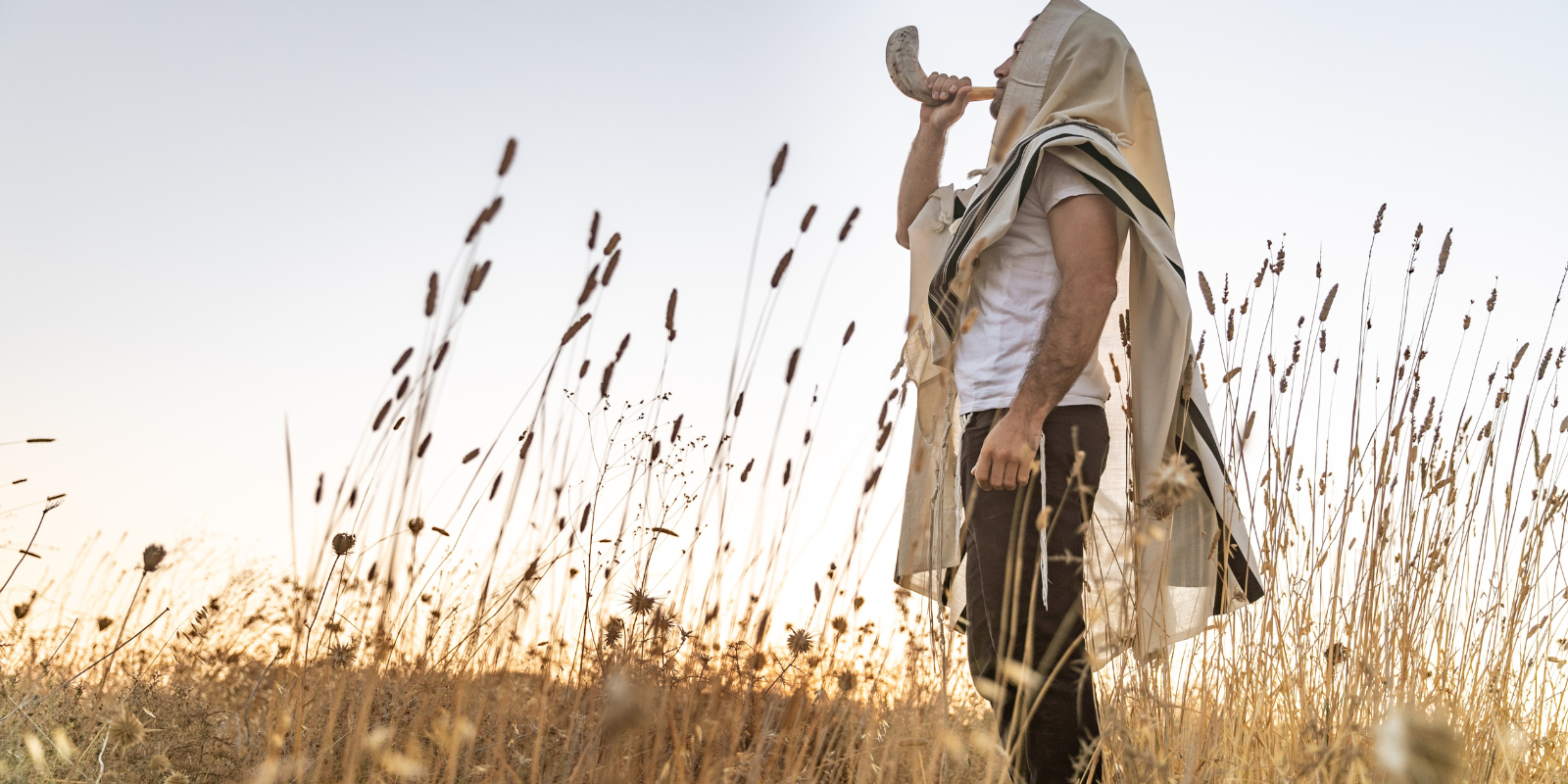
That ram is not incidental. Its horn becomes the shofar, the instrument we blow during the High Holiday season, and most notably on Rosh Hashanah, on this very day.
The Talmud records that God tells us: blow a ram’s horn before Me, so that I remember for you the binding of Isaac, and I credit it to you as if you had bound yourselves before Me.
What is the Talmud saying? Essentially, every blast of the shofar is, in some sense, an offering. Not a substitute for sacrifice, but a form of it. We place ourselves on the altar through sound.
This changes what the shofar actually is. It’s not simply an alarm clock for the soul, jolting us into repentance. It’s an act of surrender. When we hear the tekiah, the shevarim, the teruah, we are participating, however briefly, in Abraham’s walk up the mountain, in the willingness to give of ourselves for something larger.
That past few years have asked a lot of the Jewish people – asking again and again. Soldiers who did not come home. Families who gave without knowing if they’d get anything back. A people that has, in ways large and small, walked its own version of that mountain together. If the shofar is an echo of Isaac’s binding, then these past few years, more than most, we understand from the inside what that binding costs, and what it means to offer it anyway.
And yet the story does not end with the knife. It ends with the ram. Abraham does not lose his son. God draws close instead. The sacrifice is real, but it is not the final image in the story. It’s that of a father and a son walking down the mountain together. It’s closeness. And that, too, is what the shofar carries in its sound: not despair, but the hope that our offerings, the hard, costly, faithful ones, bring God nearer to us, not further away.
This Rosh Hashanah, the shofar sounds again. The question it carries has not changed in three thousand years: what are we willing to give, and to whom, so that God will ultimately draw closer.