





The best explanation of the FlyDubai miracle did not come from a rabbi, a pastor, or an aviation expert. It came from a young American woman with a phone and a lot to say. I watched her two-minute video this week, and then I watched it again:
“The story of the Israelis on the airplane surviving a literal 9/11-style hijacking is crazy to me. All the aviation experts are like, ‘I don’t know how the plane didn’t crash.’ Because it descended so many feet, the back of the airplane broke. And I’m over here like, ‘Duh, it’s the God of Abraham, Isaac, and Jacob!’ … The pilot, some of his body parts were almost severed. He managed to muster up enough strength to open the cockpit… A plumber who was just watching aviation shows stopped the plane from going down. A dentist actually stopped the bleeding… While y’all over here talking about, ‘Oh, Israel this, Israel that,’ I’m on my Rahab. Okay? Clearly, God is with these people.”
I’m on my Rahab.
She is right. A passenger jet plunged more than 17,000 feet, and it did not break apart in the air. A captain with stab wounds found the strength to unlock a door built to stay locked. A plumber kept the plane flying until a pilot could take over. The experts are still trying to explain it. She didn’t need an explanation.
Millions of Americans saw the same footage. Most of them read the headline, thought, “Huh, what do you know,” and scrolled on to the next video in their feed. Others went right back to the podcasters who tell them every day that Israel is the sinister enemy responsible for all their problems in life. But this young woman, a regular person with no title and no platform, watched a handful of Israelis fight their way into a cockpit and pull a plane back from certain disaster, and she recognized the God of the Bible at work.
Watching this young woman talk with wonder about the miracle moved me more than anything I heard about the flight from the experts. It also raised a question.
Why was she so moved, when millions of others watched the same story and felt nothing? What makes one person hear about the hand of God in history and let it change her life, while the people all around her hear the very same news and move on?
She pointed us toward the answer herself: “I’m on my Rahab.”
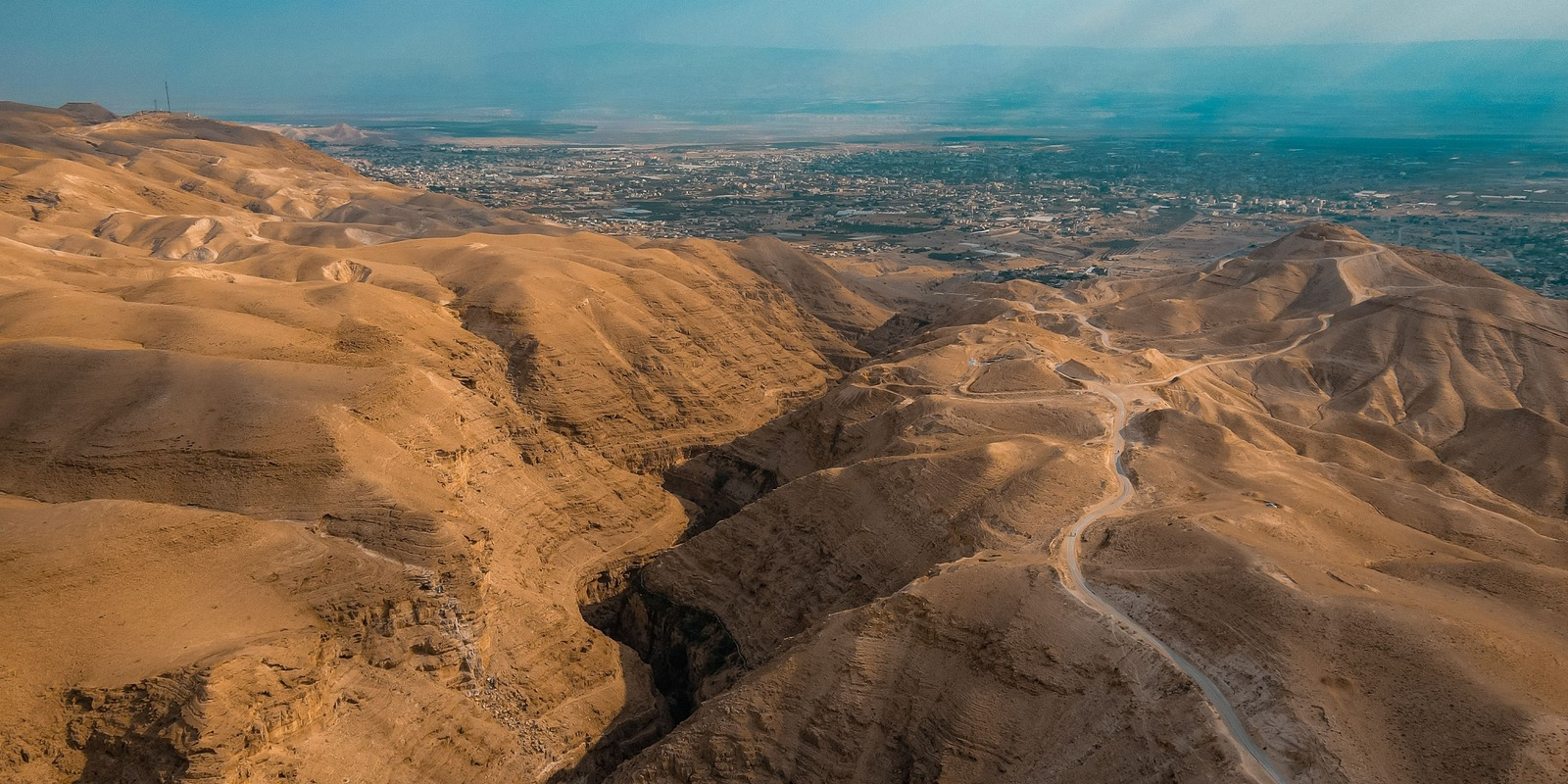
Rahab lived in Jericho, the walled city that stood between Israel and the Promised Land. Forty years earlier, God split the Red Sea for the Israelites as they fled Egypt. Then, on their way to the land, they defeated Sihon and Og, two powerful kings east of the Jordan River. Now the Israelites were camped on the riverbank, directly across from Jericho. Jericho was next.
Joshua sent two spies to scout the city, and they came to Rahab’s house, which was built into the city’s outer wall. Someone reported them to the king of Jericho, and the king sent soldiers to Rahab’s door with an order: bring out the Israelite spies. But Rahab did not comply. Instead, she hid the two men under stalks of flax on her roof and told the soldiers that the spies already slipped out of the city before the gates closed at nightfall. The soldiers raced off toward the Jordan to catch them. That night, Rahab lowered the spies down the outside of the city wall with a rope through her window, and they escaped.
Rahab committed treason to save two enemy spies. In the entire city of Jericho, not one other person lifted a finger for Israel.
Rahab was not the first to make this kind of choice. Jethro, the priest of Midian, heard about the splitting of the sea and traveled into the desert to join Moses. Amalek heard the very same news and attacked Israel. Same news, opposite responses.
So why did Rahab and Jethro hear the news and change their lives, while their neighbors heard it and went to war?
Rahab’s own words hold the beginning of the answer. Before she lowered the spies from her window, she told them what the entire city was thinking:
“I know that the Lord has given you the land. Fear of you has fallen on us, and everyone who lives in this land is melting in terror before you. For we heard how the Lord dried up the waters of the Red Sea before you when you came out of Egypt, and what you did to Sihon and Og, the two Amorite kings across the Jordan, whom you destroyed. When we heard it, our hearts melted, and no one has any courage left because of you, for the Lord your God, He is God in heaven above and on the earth below” (Joshua 2:9-11).
Rahab is not describing a private revelation. The whole city heard. The whole city believed it. The whole city was terrified. Jericho never doubted for a moment that the God of Israel was real. Yet Jericho still locked its gates and prepared for war.
In other words, the people of Jericho did not lack information. They knew exactly what the God of Israel did for His people, and they knew He was about to do it again. Their problem was not what they knew. It was what they did with their knowledge.
To see what Rahab did differently, look at the last line of her speech: “the Lord your God, He is God in heaven above and on the earth below.” Rahab did not invent those words. Only weeks earlier, just before he died, Moses said nearly the same thing to the people of Israel. But Moses added one more instruction:
Moses gives two separate commands. First, know it, veyadata. Then, take it to heart, vahashevota el levavecha. He separates them because they are not the same thing. It is possible to hear something, believe it, even be shaken by it, and never absorb what it means for your own life. That perfectly describes the people of Jericho. Their hearts melted, vayimas levavenu, but a heart that melts is not a heart that changes. They knew God was with Israel but never asked what that knowledge demanded of them. Rahab took it to heart.
But that only sharpens the question. Rahab and her neighbors heard the same reports and felt the same fear. Why did Rahab take the news to heart, while everyone else in Jericho did not? The Bible points to three answers.
First, the people of Jericho let the news of the miracles God performed for Israel “cool down.” To understand what that means, we need to go back to Amalek, the nation that attacked Israel right after the Exodus. Moses describes that attack with an unusual Hebrew phrase: asher karcha baderech, “how he (Amalek) met you on the way”.
The word karcha is related to kar, the Hebrew word for cold. So Rashi, the great medieval Bible commentator, reads the verse as “how Amalek cooled you down on the way.”
Rashi explains with a parable. Picture a bath filled with boiling water. No one dares to get in until one fool jumps in and burns himself badly. But though the fool was burned, the water is now a little cooler, and others are now willing to follow him into the bath. After God split the sea, every nation on earth was afraid to touch Israel. Amalek jumped into the boiling bath. Amalek lost the battle, but it showed the world that Israel could be attacked. After that, the nations no longer feared Israel the way they did when the sea split.
Jericho did the same thing. The people heard about God’s miracles for Israel and trembled, but they never acted on that fear. They locked their gates and trusted their walls to protect them (Joshua 6:1). The king of Jericho did not send messengers to make peace with Israel. He sent soldiers to hunt down Israel’s spies. Instead of letting the news of the Exodus change them, the people of Jericho let it grow cold.
There are always Amaleks ready to cool the bath. Today many of them host podcasts. Every week they take whatever God does for Israel and twist it into lies and conspiracy theories until their listeners are left with nothing but suspicion.
Second, taking the news to heart costs something. Jethro was the priest of Midian, a man of rank and honor. To join Israel, he gave it all up and walked into the desert to a nation of freed slaves. Rahab committed treason against her own city. If the soldiers of Jericho had found the spies on her roof, they would have put her to death. Most people sense, even if they never admit it, that if they take the news to heart, their lives will have to change. So they keep it at a safe distance. Jethro and Rahab let it in and paid the price.
Third, Rahab asked a different question than the people around her. The king of Jericho and his people asked, “How do we stop Israel?” Rahab asked, “Now that I know the truth, what should I do?” She did not admire the God of Israel from a safe distance. She told the spies what she believed, and then she asked them for a way to act on it. She made them swear to spare her and her family, and she did exactly what they told her (Joshua 2:12-21).
The young woman in the video understood this. When she retold Rahab’s story, she summed up Rahab’s attitude in one line: “Let me know what I need to do to help you.” That is the question of a person who takes God’s miracles to heart.
Rahab did not keep her choice private. Before the spies left, they gave her a sign: tie this scarlet cord in your window, and when Israel conquers the city, everyone inside your house will be saved.
Rahab tied it in her window that same day. Her house was built into the city wall, where all of Jericho could see it. With one red cord, Rahab told the whole city that she was on Israel’s side.
When the walls of Jericho fell, Rahab and her entire family walked out alive, and “she has lived among Israel to this day”.
The Sages teach that prophets of Israel, Jeremiah among them, descended from her. The woman who took the news to heart became part of the people of Israel.
Three thousand years later, a young American woman tied a scarlet cord of her own. She sat in front of her phone and told her friends and followers, many of whom would mock her for it, that God is with the Jewish people. Most of the people around her heard about the FlyDubai miracle and moved on. She took it to heart, and she said so for everyone to hear.
God has not stopped sending news. In the days of Moses, He split the sea for Israel. A few weeks ago, He gave a handful of Israelis the courage to pull a plunging plane back from disaster over the Arabian desert. Every time, the whole world hears. And every time, each of us faces the same choice as the people of Jericho: let the news fade, or take it to heart.
Becoming a Rahab does not require a miracle. It requires a decision: to take what we see to heart, to accept that it will change our lives, and to ask, “What do I need to do?”
Then tie a scarlet cord in your window, where everyone can see it.