





It’s August in Israel, which means one thing: it’s Camp Mommy.
My kids are not in any structured programming at this point in the summer, school has not started yet, it’s hot outside, and somehow all of the grownups still have work. Truthfully? As challenging as it sometimes can be, I am so, so grateful for this time and space. And I might be unique here, but I relish the forced family time. Someone once said that with each of your children, you only get 18 summer vacations with them. While mine are still little, I plan on enjoying them all.
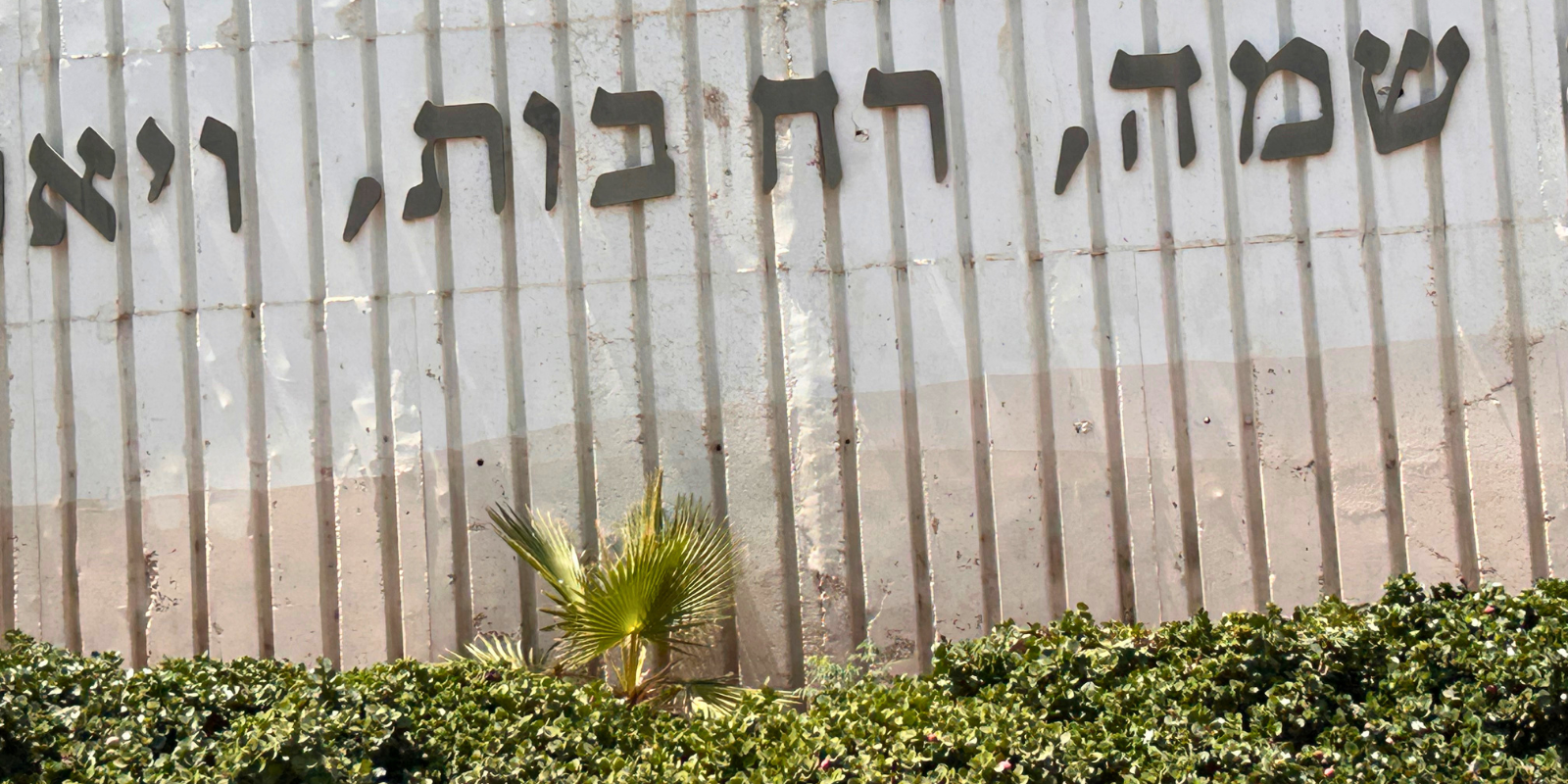
So what have we been up to? In addition to taking my kids to the pool, the beach, and a never-ending string of playdates, we recently visited the Rechovot Science Garden. As we were driving into the city, I noticed a verse written across one of the walls welcoming us to Rechovot:
The verse comes from the story of Isaac and the wells. Isaac’s servants dig a well, but the local shepherds fight with them over it, so Isaac names it Esek, meaning contention. They dig another well, and once again there is conflict. He calls that one Sitnah, hostility. Finally, Isaac moves on and digs another well. This time, no one fights him for it. He names it Rechovot. “Now God has made room for us.”
There is something so simple and beautiful about that phrase. God made room. And because we are now in Elul, the Hebrew month leading up to Rosh Hashanah, when Jews traditionally focus on repentance, reflection, and drawing closer to God, the verse felt especially timely.
I don’t know about you, but I often have an all-or-nothing mentality when it comes to my relationship with God. This is a vulnerable thing to admit, although I suspect many of you can relate. If I have not prayed properly in a while, can I suddenly start asking God for things? If I have been distracted, inconsistent, or just generally not as connected as I would like to be, can I really turn around one morning and begin talking to Him as if nothing happened?
Sometimes it can be hard to get back into the groove. We imagine that closeness with God has to begin from a place of spiritual perfection. We think we need to fix ourselves first, pray better first, become more disciplined first, and then we can approach Him.
But the notion of “Elul” seems to imply something very different. There is still room here. Room to return, room to repair, and room to grow.
God does not ask us to pretend the past year was perfect, or to arrive at Elul already transformed. Isaac did not arrive at Rechovot after an easy journey either. He came there after Esek and Sitnah, after contention, hostility, frustration, and having to begin again. Only then did he reach a place where he could say, “Now God has made room for us.”
Maybe our spiritual lives are like that too. We get busy. We lose focus. We go through stretches when prayer feels less natural or God feels a little farther away. We are so focused on entertaining our kids during the hot summer months. Then Elul comes along and reminds us that we can simply pick up where we left off, and, begin again.
Elul is the moment each year when God says to us what Isaac said at the well: there is still room here. Room to return, room to repair, and room to grow.
And the question for us is what we will choose to do with the space He has given us.