






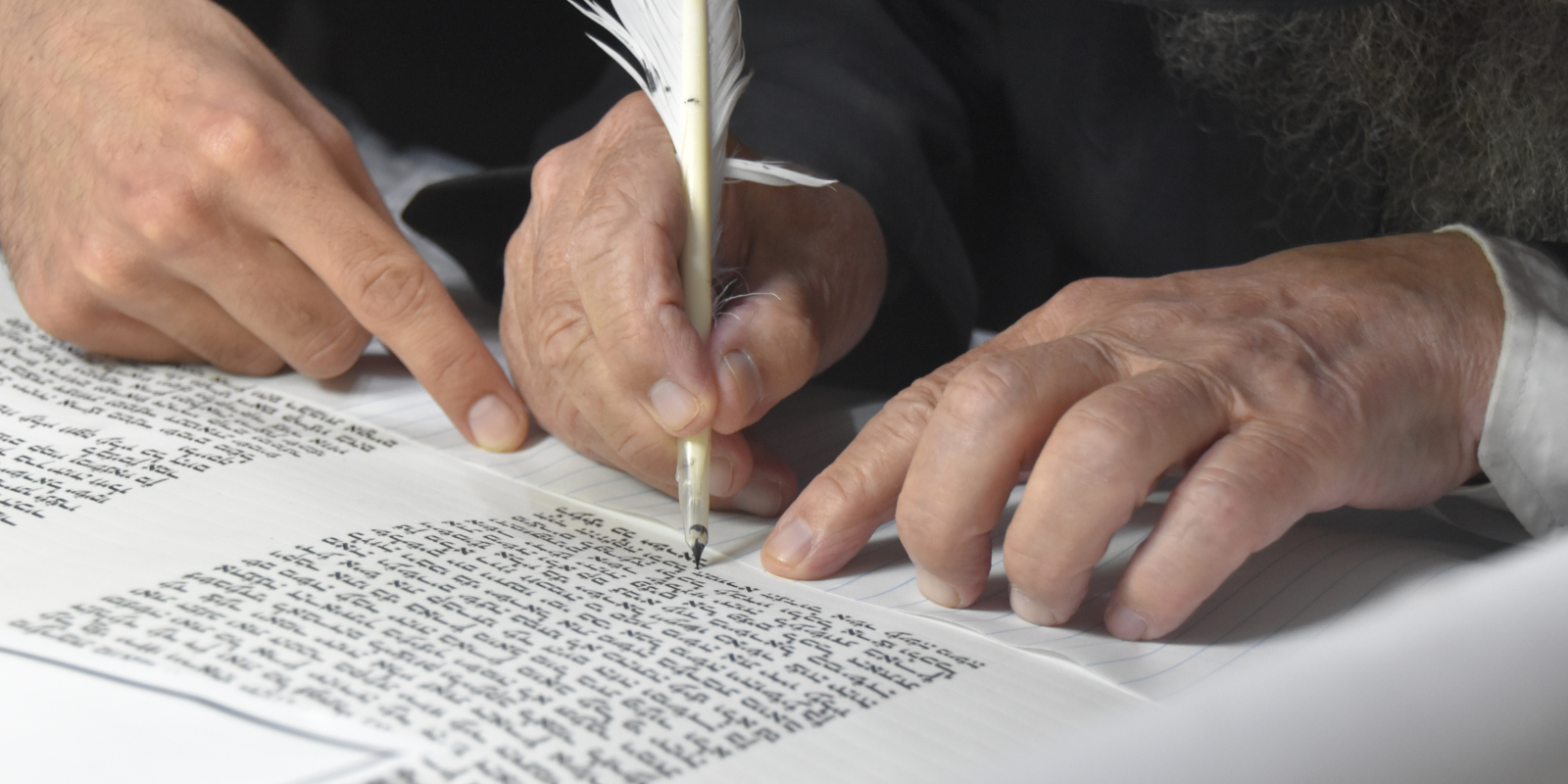
Last week, the streets of a Jerusalem-area neighborhood filled with celebration. A new Torah scroll, dedicated by the local Bnei Akiva youth group chapter in memory of Aner Shapira, was carried through the streets toward the synagogue where it will now live.
Those same streets had filled once before — just a few days after October 7th, when the neighborhood lined them for his funeral.
Aner Shapira was a twenty-two-year-old musician who had been dancing at the Nova festival when the massacre began. Aner and roughly two dozen others fled into a roadside bomb shelter. Hamas militants surrounded it and began throwing grenades inside. Aner caught them and threw them back, again and again, even after an RPG took his hand, until eventually a grenade took his life.
A funeral for Aner, and then, just over two and a half years later, a Torah scroll dedicated in his memory carried through that same ground in celebration. What a moving contrast.
But the contrast raises a question worth sitting with: why a Torah scroll? A community grieving a young man who gave his life for his friends had any number of ways to honor him. A garden. A fund. A plaque. They chose to commission a sacred scroll, written by hand over months, destined to sit in an ark and be read from for generations. What does a Torah scroll have to do with a young man at a bomb shelter?
The easy answer is that the Bible teaches courage, and Aner had it. But that answer doesn’t hold up. There are courageous people who have never opened a Bible, and there are people who know the Bible cover to cover and would never have done what Aner did. If the Bible were simply a manual for bravery, it would have produced a great many more Aners than it has.
The Bible itself calls the Torah “a tree of life.” A tree doesn’t just decorate the landscape. It sustains the people who live near it: fruit to eat, shade to sit under, air to breathe. Take the tree away and something physical is missing, not just something nice to look at. The Torah works the same way, except what it sustains isn’t the body. It’s what the Sages call chiyut — the aliveness underneath being alive. A reason to get up in the morning. A sense that the day means something. Take the Bible away and we can still eat and sleep and function, but something has gone out of the air.
This is what we were doing throughout June, when we studied the Hebrew Bible together as a community — one book a day, all twenty-four books across four weeks. Not to learn facts about ancient history. To stand under the tree.
And this is why a Torah scroll dedicated in Aner’s memory is the most fitting tribute. A plaque tells you what someone did. A garden honors a life from the outside. A Torah scroll gives back what sustains life.
If you missed any of our Bible month videos, you can find them on our Israel Bible YouTube channel.