








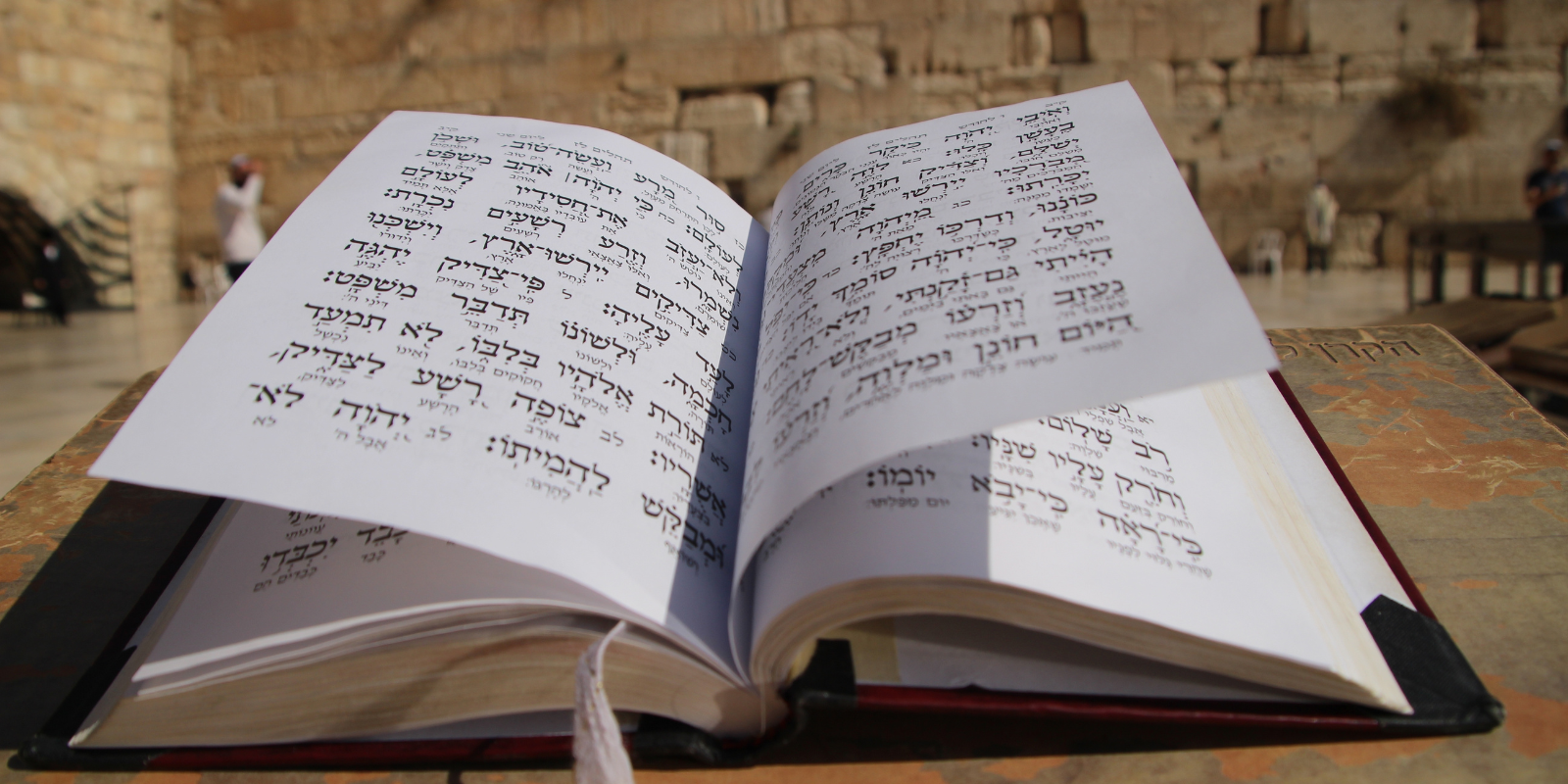
There is a pile of papers sitting in my house that I cannot throw away. Prayerbooks with torn covers, printed Torah commentaries, pages from Torah classes I have given — all of them waiting for burial because they contain the name of God, and you simply do not put God’s name in the trash. Every observant Jewish home has a pile like this.
Which makes what happens in this week’s Torah portion of Naso so striking.
A man has grown suspicious of his wife. He has no witnesses, no proof — only suspicion, and the cloud it casts over their marriage. Left unresolved, that suspicion will poison everything. The Torah prescribes an elaborate procedure: the woman is brought before the priest at the Temple, a solemn oath is administered, and then the priest writes the curses on a scroll and washes the ink off into bitter water.
The Sages teach that the name of God was written into those curses — and therefore the name of God dissolves into the water the woman drinks. The woman drinks the water, and the truth comes out.
The Sages confront the obvious question directly. How can the Torah command the erasure of God’s own name? The answer it gives is terse and astonishing: for the sake of peace between husband and wife.
That is the entire explanation. No lengthy qualification, no elaborate legal reasoning. God’s name is dissolved into water, and the reason given is simply that peace between two people matters enough to justify it.
The Sages understood this as a statement of God’s own priorities. He is not a distant sovereign indifferent to the lives of ordinary people struggling in their marriages and families. He is invested in their peace. And He is willing to pay a price — measured in the sanctity of His own name — to help restore it.
The erasure of the Divine Name in this ritual became, for the Sages, the paradigmatic proof that peace — wholeness, harmony between people — sits at the very top of God’s hierarchy of values. Not because conflict doesn’t matter, not because truth is unimportant, but because a world in which people cannot live in peace with one another is a world in which God’s name cannot truly be known.
This is worth sitting with — and it helps explain one of the most beloved figures in the entire Torah.
Aaron, the High Priest and older brother of Moses, was famous throughout Israel not primarily for his priestly duties but for something more personal: he pursued peace between people with extraordinary dedication. The Sages instruct: “Be of the disciples of Aaron, loving peace and pursuing peace.” The Sages record that when Aaron heard of two people who had quarreled, he would go to each of them separately and tell them that the other had expressed regret and wanted to reconcile — even if that wasn’t entirely true. By the time the two met again, the anger had dissolved, and peace was restored.
We live in a world that generates conflict with extraordinary efficiency. Social media rewards outrage. Political culture rewards division. Even within families and communities, grievances accumulate, suspicions harden, and the effort required to restore peace can seem disproportionate to the reward. It is easier to let a relationship stay broken than to do the uncomfortable work of repairing it.
But Aaron didn’t wait for people to come to him. He pursued peace — He pursued peace — went looking for it, worked for it, even stretching the truth to achieve it. He had learned, it seems, from the Torah he served: that if God Himself was willing to erase His own name for the sake of peace between a husband and wife, no effort on Aaron’s part was too great. The name can be rewritten. A broken relationship, left unrepaired, may not recover so easily.
Israel365 brings Torah teachings like this one to hundreds of thousands of Christians and Jews around the world every day — through the Israel Bible, Bible Plus, our books, and our growing network of educators and advocates. This work is only possible because of readers like you. If this Torah touched you, please consider supporting the mission.