








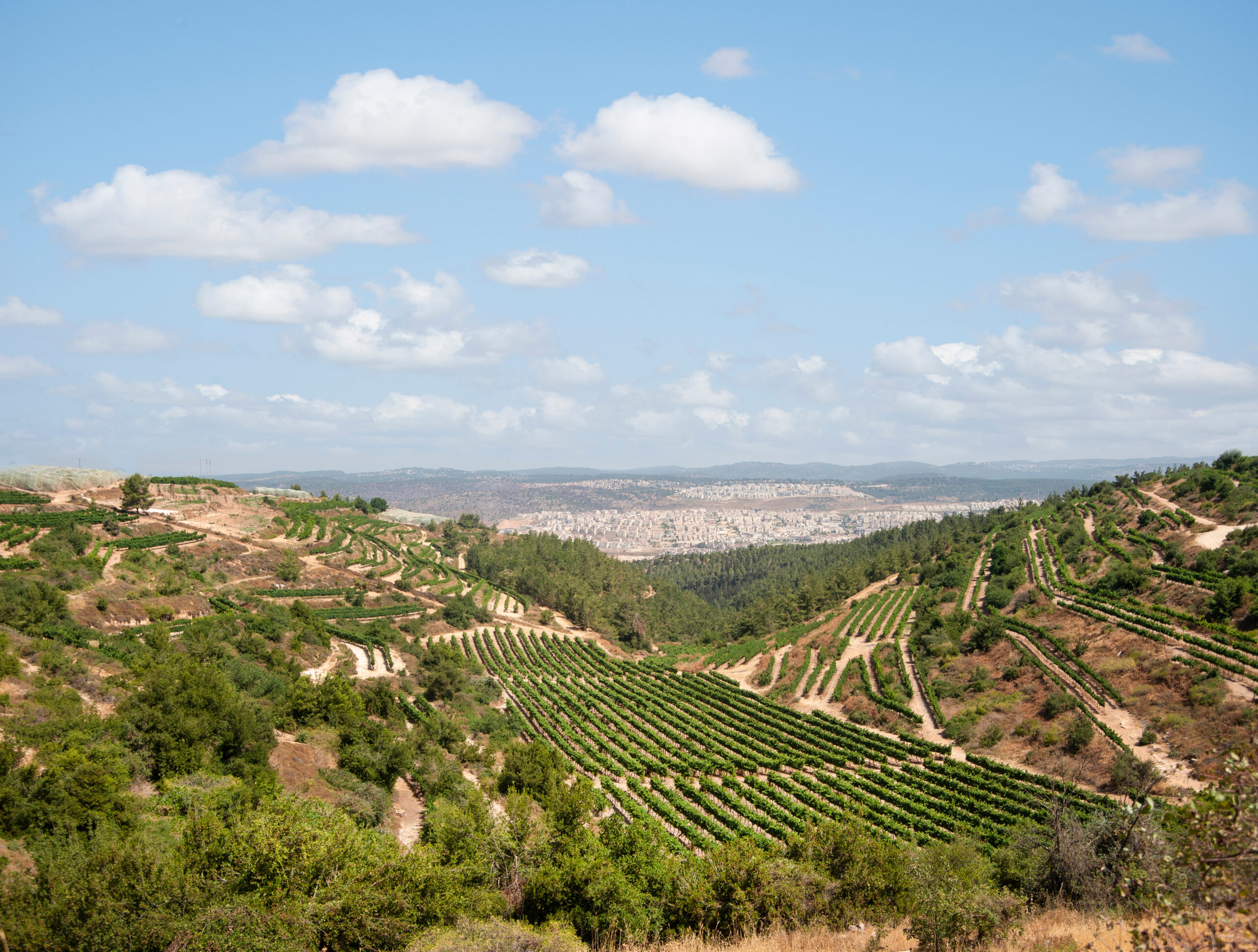
Last Friday, I drove my nine-year-old son from Modiin to Jerusalem — a thirty-eight-minute drive through the Judean hills — to spend Shabbat with his grandparents. I remember those weekends from my own childhood: twenty-four to forty-eight hours alone with grandparents who treated you like the center of the universe. I was excited to give him that. He’d made this trip before. It wasn’t new. But on this particular Friday, nothing about this experience was familiar.
We are in the middle of a war. Iran has been firing ballistic missiles at Israel — at cities, communities, and holy sites sacred to Jews, Christians, and Muslims alike. And on that Friday afternoon, one of those missiles was headed for our stretch of Highway 443, our Mitsubishi Outlander somewhere between the lowlands and the mountains of Jerusalem.
The pre-alert came through while we were driving.
I froze. When a siren sounds while you’re driving, the protocol is to pull over. But we were on a highway, the shoulder was narrow, and on the other side of the security barrier lay Palestinian towns. I wasn’t sure what to do. Then I saw other cars stopping. I hit my hazards, slowed down, pulled over. The siren began to wail. I got my son out of the car while other drivers kept speeding past, apparently hoping to outrun a missile the way you barrel through a thunderstorm.
We crouched by the side of the road. My son tucked his head down, his hands laced over his skull the way they teach them in school. And then, quietly, steadily, he began to recite Psalms. Psalms. Psalm 121, to be exact.
He was reciting those words while we were, literally, surrounded by the mountains of Jerusalem.
What does it mean to lift your eyes to the mountains?
Shir HaMa’alot, the superscription on Psalm 121, means “A Song of Ascents.” It is one of fifteen such psalms (120-134), each one traditionally sung by the Levites as they ascended the fifteen steps of the Beit HaMikdash, the Holy Temple in Jerusalem. Pilgrims also sang these psalms on the aliyah l’regel, the three annual pilgrimage festivals when every Jew was commanded to travel to Jerusalem. They sang as they climbed. They sang as the city came into view. They sang because the destination demanded a song.
The mountains the Psalmist is looking at are not abstract. They are these mountains. The Judean hills. The rocky, terraced, ancient landscape that rises from the coastal plain up into Jerusalem. Every person who has ever driven Highway 443 on a Friday afternoon has seen them, golden in the late light, covered in olive trees and history. My son was not reciting poetry. He was making a geographic statement.
And the question the Psalmist poses, me-ayin yavo ezri, “from where will my help come?” is not a crisis of faith. It is a setup. Because the answer comes immediately: “Ezri me-im Hashem, oseh shamayim va’aretz”, “My help comes from God, Maker of heaven and earth.” (Psalm 121:2). The mountains are stunning. The mountains are ancient. The mountains do not save you. God does.
This is the entire psalm in two verses. Everything that follows, God will not let your foot slip, God neither slumbers nor sleeps, God is your shade, God will guard your going and coming, is the elaboration of that single answer. Hashem is your shomer, your Guardian. Not a concept. Not a feeling. A present-tense, eyes-open, siren-wailing Protector who guards the people of Israel.
“Hinei lo yanum v’lo yishan shomer Yisrael”, “Behold, He neither slumbers nor sleeps, the Guardian of Israel.” (Psalm 121:4). While missiles were in the air and my son was crouched by the side of a highway, God was not asleep.
What I saw in my son, while the siren wailed, was something no classroom manufactures: a child whose first instinct under fire was to turn his face toward Jerusalem and say, I lift my eyes to the mountains. That is not a coping mechanism. That is a worldview. That is a people’s entire relationship with their God, passed down in eight verses across three thousand years, arriving intact in the mouth of a nine-year-old boy on the side of a highway while Iran tried and failed, again, to break us.
The missiles didn’t land. We drove the rest of the way to Jerusalem. My son ate his grandmother’s chicken soup and slept in a warm bed.
And somewhere in the Judean hills, God kept watch.