








There’s a particular kind of despair that settles in when the sun goes down on the worst day of your life.
The morning’s crisis has passed. The afternoon’s frantic activity—the phone calls, the difficult conversations, the desperate attempts to salvage what you can—has exhausted itself. Now there’s nothing left to do but sit in the gathering darkness and face the reality of what you’ve lost. The silence becomes deafening. The isolation becomes complete. And tomorrow? Tomorrow feels impossible to imagine.
This is the moment when faith falters. When optimism seems like a cruel joke. When even the most devout among us wonder if God is listening at all.
Yet it was precisely in this moment—alone, exiled, watching the sun set on everything he had known—that Jacob created something revolutionary.
Consider what had just happened. Jacob was forced to flee his homeland, leaving behind the only world he had ever known. His parents, Isaac and Rebecca, his home, the familiar landscape of his childhood—everything was suddenly gone. As the sun set on his first day of exile, he found himself utterly alone at a desolate spot. This wasn’t a temporary setback or a brief moment of difficulty. Rabbi Ephraim Shlomo of Luntshitz teaches that Jacob believed he was leaving forever, convinced he would need to build an entirely new life in a foreign land, setting out for an exile that would last his entire life.
Most people in such circumstances would be consumed by despair. Instead, the Torah tells us something remarkable:
The Hebrew words which mean “He came upon a certain place,” vayifga bamakom, literally mean, “he encountered the inside of the place.” In that moment of profound darkness, Jacob didn’t just see nightfall. He perceived something deeper.
This was no ordinary moment of faith. Jacob was creating something entirely new: the evening prayer service, Ma’ariv. His grandfather Abraham had established Shacharit, the morning prayer, when optimism comes naturally and every dawn brims with promise. His father, Isaac, had composed Minchah, the afternoon service, suited to midday’s sober determination when we push through challenges to meet our goals.
But evening? Evening is when energy fades, when mortality whispers in our ears, when yesterday’s dreams seem to slip through our fingers. Evening is when we realize that despite our best efforts, we didn’t accomplish everything we hoped. Evening is when loneliness settles in like a weight on the chest. Who prays with conviction when darkness closes in? Who can find words of gratitude when the day has brought only loss?
Jacob did. And his ability to find meaning in the deepest darkness reveals something profound about the nature of Jewish history itself.
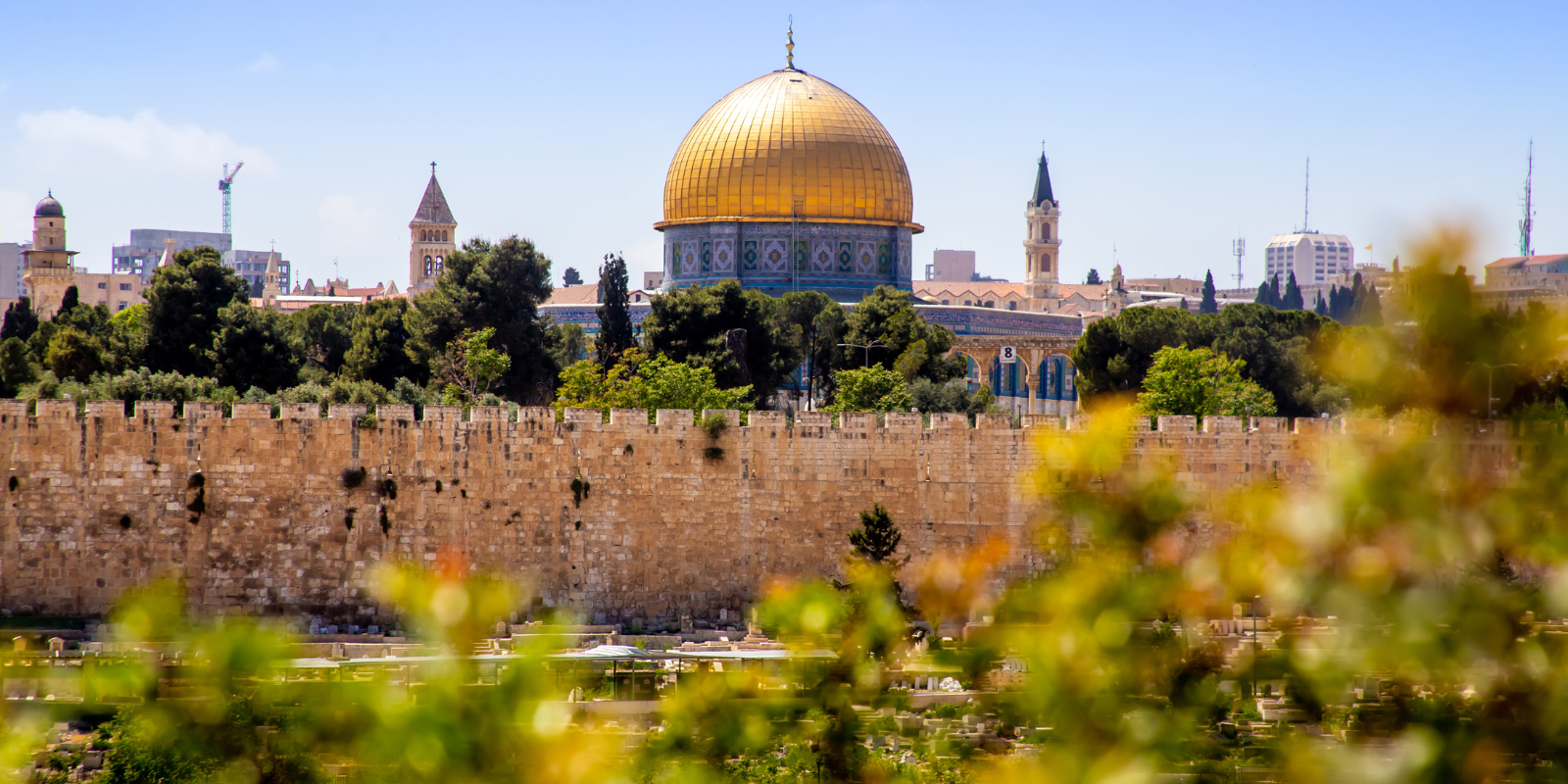
That desolate spot where Jacob stopped for the night? It would one day become the Temple Mount. And the Sfat Emet, the great Hasidic master, saw in these three prayer services a template for understanding the three Temples. The First Temple, like the morning, was filled with promise and infinite potential—a time when God’s love for Israel was palpable and undeniable. The Second Temple resembled the afternoon: a period of duty and determination, when the Jewish people faced relentless challenges—Persian rule, Greek persecution, Roman occupation—yet persevered through sheer commitment.
But the Third Temple, which we await, will be different. It will arrive in what should be history’s darkest hour—after the longest exile, the deepest dispersion, the most trying circumstances imaginable. Yet according to tradition, it will never fall. It will never be followed by another exile. Its light will never yield to darkness.
How is this possible? The answer lies in Jacob’s character and in what he discovered that first night of his exile. The Sfat Emet notes that Jacob embodied emet—truth—and just as truth can never be compromised, Jacob’s commitment never wavered. The dark could not unsettle him.
This is why the Third Temple draws its eternal strength from Jacob. Just as Jacob’s commitment to truth never wavered despite his circumstances, the Third Temple will stand eternal, immune to the forces that toppled its predecessors. Just as Jacob found meaning in the deepest darkness of his exile, the final redemption will reveal that exile itself—for all its pain and tragedy—contained a concealed divine purpose.
The Sfat Emet concludes with a striking prediction: “Jacob’s travels brought him to the Temple Mount. We, too, expect our wanderings to carry us there.” After centuries of exile, when we finally return to that holy place, we will discover what Jacob knew all along—that “the essence of the exile is, like the night, a light of unprecedented proportions.”
But what does this mean for us today, when we pray each evening?
Rabbi Pinchas Polonsky offers a profound insight. Jacob’s evening prayer, he explains, represents the truth that we can make contact with God precisely when we feel most lonely and vulnerable, “removed from life and from society.” This wasn’t abstract theology for Jacob—it was his lived reality. Standing alone in the darkness, cut off from everything familiar, Jacob discovered that evening is not when God is absent but when a different kind of divine presence emerges.
Abraham related to God as the giver of life, an aspect most clearly manifested in the morning when we awaken from sleep—hence his establishment of Shacharit. Isaac established Minchah for the afternoon, that time when we evaluate everything we’ve done in the course of the day and give an account of our actions.
But Jacob? Jacob revealed something revolutionary: that connection with God doesn’t require the optimism of morning or even the productive energy of afternoon. The evening prayer he established shows us that we can reach God in the night, when we are most alone, when achievement seems impossible, when all we have left is ourselves and our faith.
This is Jacob’s gift to us. When we pray Ma’ariv, we’re not just reciting words—we’re affirming that night is not the end of today but the beginning of tomorrow. We’re declaring that darkness is never final, that dawn is always coming, and that even when we’re weary, scattered, and alone—perhaps especially then—we can draw divine energy into our world.
The deepest night, Jacob taught us, contains the seeds of the brightest day.
To learn more of Rabbi Pinchas Polonsky’s insights on the Bible, order The Universal Torah: Growth & Struggle in the Five Books of Moses – Genesis Part 2 today!