







We all know someone like this. The person you can count on, in any situation, to find what’s wrong. The food at the wedding wasn’t quite right. The rabbi’s speech went too long. The organization raised a lot of money, but did you hear how they spent it? Something is always off, something is always broken, and they will make sure you know about it. You could hand these people a miracle and they would find the flaw.
In this week’s Torah portion, Shemini, the Torah lists the birds that we are forbidden to eat. The Sages teach that these birds share a common trait — they are predators, creatures that seize and devour. We become what we eat, and the Torah is careful about what we consume. But one bird on the list receives a specific and startling description.
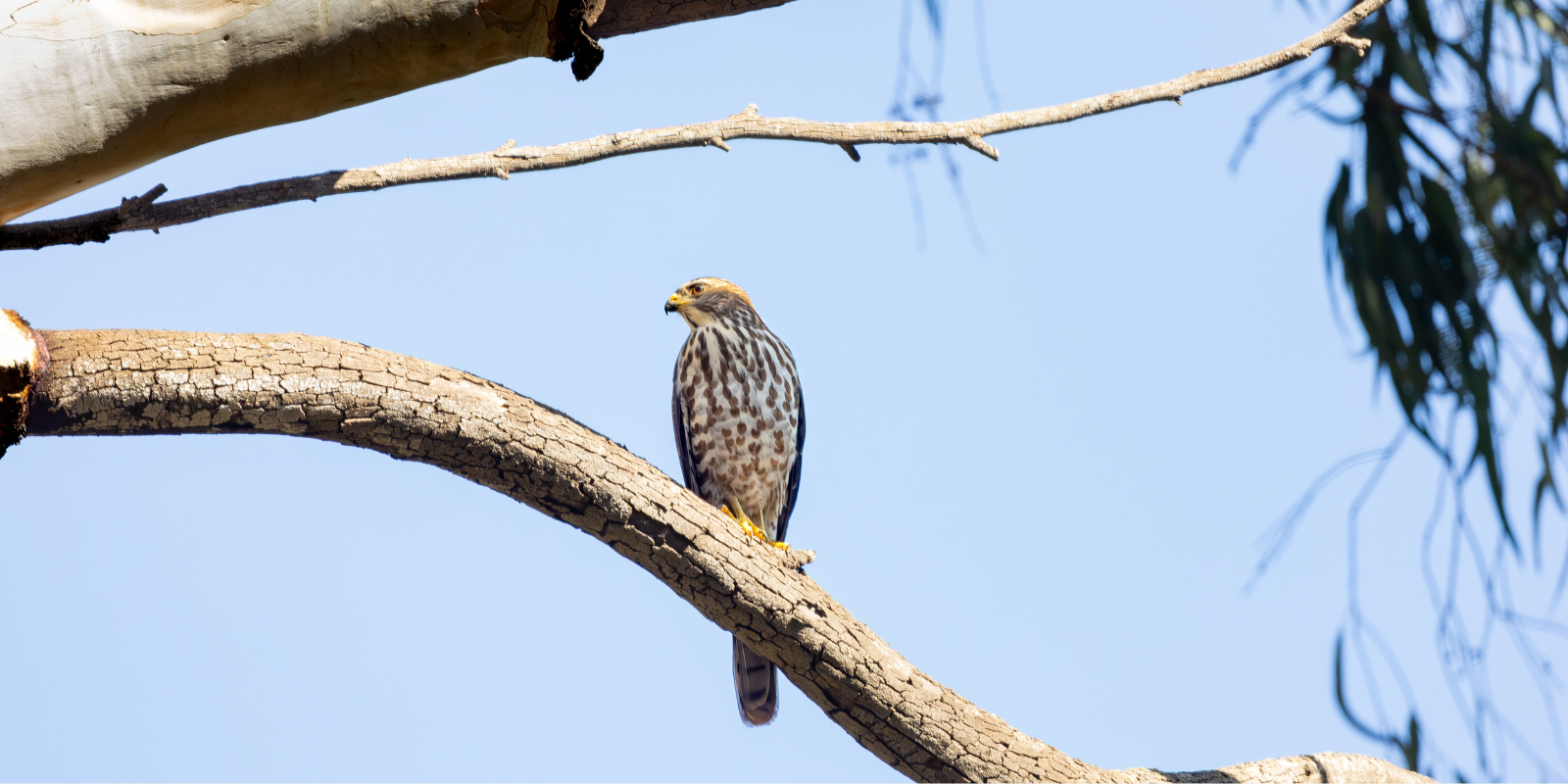
The da’ah, the kite, is described by the Sages as follows: “The kite flies in the skies of Babylon, and from there it can see a neveilah — a piece of non-kosher meat — lying on the ground in the Land of Israel.”
It has perhaps the most extraordinary eyes in the animal kingdom. It soars above the ancient world with an unobstructed view of everything below. And it uses that gift to find carrion.
Rabbi Efraim Mirvis points out that Babylon in rabbinic literature is not simply a city on a map — it is the symbol of exile, distance from home. The kite’s behavior, he suggests, is a parable about a particular kind of person: someone who looks at the Land of Israel from afar and makes it their mission to find everything wrong with it. They will tell you exactly what is broken about Israeli politics, Israeli society, Israeli leadership — with great confidence and from a great distance.
What they cannot do, or will not do, is see what the Land of Israel has given the world. Medical breakthroughs, agricultural technologies, and humanitarian missions that reach disaster zones on every continent. A tiny country, surrounded by enemies, that has buried its dead and kept building. The only nation in history to revive an ancient language and reclaim an ancient homeland. These are not small things. They are miracles — and they are visible, if you are looking for them.
But this is not only a statement about Israel. It is about how we move through life itself.
The kite looks out from the heavens toward the Land of Israel — toward the land of prophecy and covenant and divine promise — and all it can see is what’s rotten. Its gaze is fixed on the forbidden. Its gift is bent entirely toward the impure. The chronic complainer operates the same way. Whatever the situation, however much good surrounds them, they locate the flaw and make sure everyone hears about it. No blessing is ever quite enough.
The Torah forbids us to eat the da’ah. The Sages, according to Rabbi Mirvis, are telling us something deeper: don’t be the da’ah.
“Give thanks to God, for He is good, for His kindness endures forever” (Psalms 118:1). Gratitude is not naivety. It does not mean ignoring real problems or pretending failures don’t exist. It means training your eyes — those remarkable, God-given eyes — to see the blessings that are actually there, even when the negative is easier to spot.
The kite looked toward the Land of Israel and found carrion. We can look at the very same land and find a miracle.
The choice of what we search for is ours.