






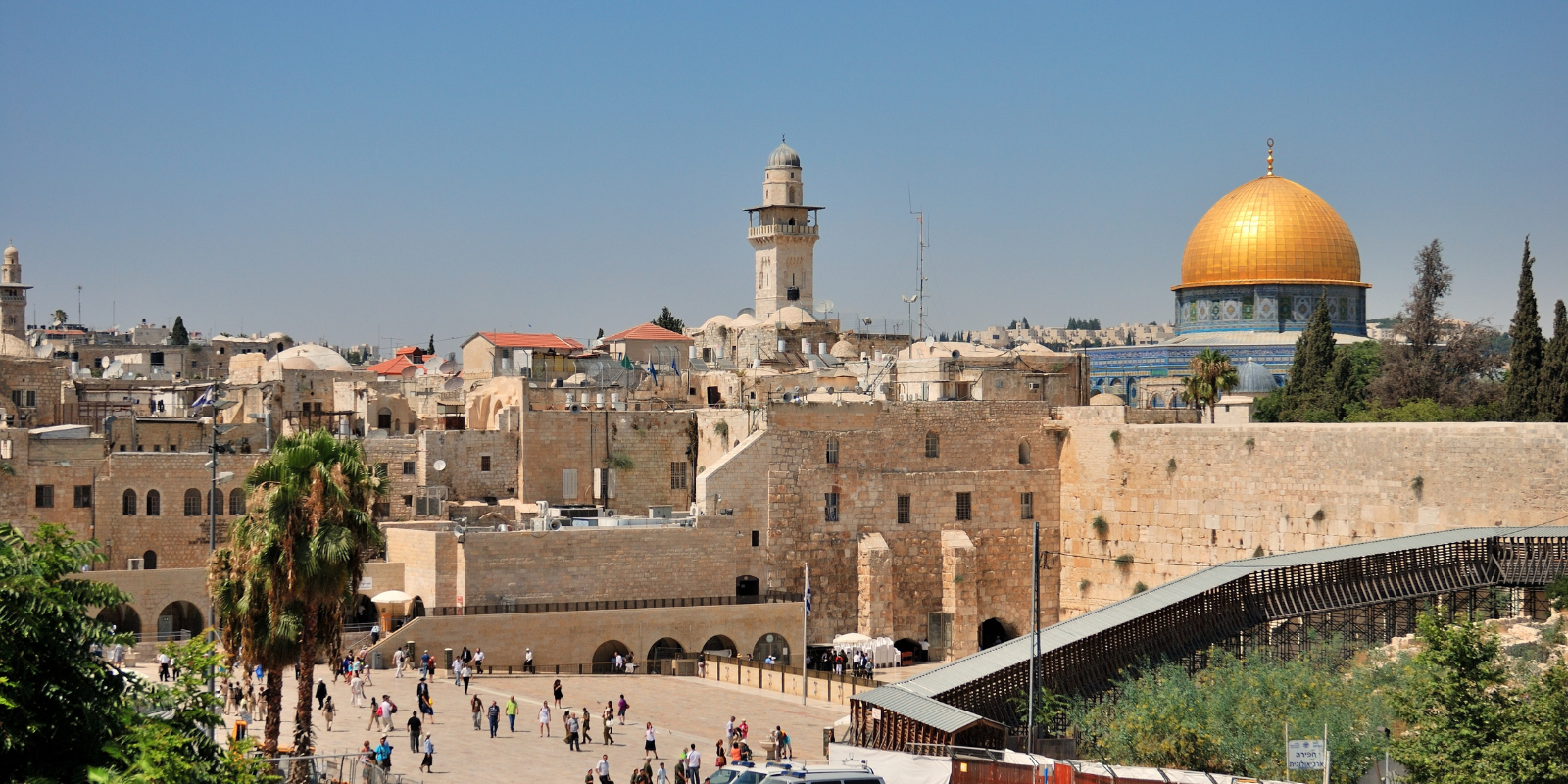
Last week, my family spent Shabbat in Jerusalem right outside the Old City. This was a particularly special treat for us. We’ve visited family in Jerusalem many times before, and while technically most places in Jerusalem are within walking distance from one location to the next, we hadn’t visited the Kotel, the Western Wall, on Shabbat in a while.
Saturday morning, we decided to make the thirty-minute trek down to the Western Wall for prayers. The weather was beautiful. Because it was Shabbat, very few cars were on the road, and the pedestrian mall outside the Old City, that we normally have to navigate through crowds, was all but empty.
As we walked through the Jewish Quarter and neared the descent to the Western Wall, we noticed a sign: “Entryway under construction, follow signs for temporary entrance.” Construction near the Western Wall is typical, and truthfully, I’ve been here so many times in my life that I knew where the temporary entrance was and didn’t need to follow any signs.
Actually, everyone around me walking to the Western Wall just kind of intuited where to go. Nobody was stopping to read directional signs or asking for help. We all moved with this quiet confidence, following an invisible map written somewhere deeper than memory.
I laughed out loud because it felt like the entire Book of Deuteronomy.
Why is Jerusalem’s name completely missing from the Five Books of Moses?
It’s a stunning omission. God talks constantly about “the place I will choose” to make His name dwell. He mentions it twenty-one times in Deuteronomy alone. He tells Abraham to go to Mount Moriyah to sacrifice Isaac, the mountain we later learn is in Jerusalem. He promises the Israelites a land, a capital, a dwelling place for His presence. But He never once says the word “Jerusalem” in the Five Books of Moses. Not once. The name doesn’t appear until the Book of Joshua, and even then, it’s just mentioned in passing as the city ruled by a Canaanite king.
The medieval commentator Rambam (Maimonides) offers three explanations for this deliberate silence. First: so foreign nations wouldn’t fight over it if they knew its cosmic importance. Second: so whoever controlled the land before Israel arrived wouldn’t destroy it out of spite. Third, and Rambam calls this the strongest reason, so the Israelite tribes wouldn’t fight among themselves over which tribe would get to claim it.
That third reason cuts deep. Jerusalem had to belong to everyone, which meant it couldn’t be named as anyone’s specific inheritance. The Torah’s silence protected the city’s future as a place of unity. Rambam points out that God commanded Israel to appoint a king before building the Temple specifically to avoid tribal warfare over the holy site. Jerusalem required a unified approach under one leader, not twelve tribes scrambling for ownership.
And there’s something else. The Torah doesn’t just hide Jerusalem’s name. It commands us to seek it.
The ancient Rabbinic commentators noticed this unusual phrasing. Most commandments tell you what to do and where to do it. This one tells you to look for the where.
The Rabbis explain that God wanted Israel to desire His presence badly enough to search for it. The place existed. Mount Moriyah had been designated since Abraham’s time. But the people had to want it. They had to invest spiritual energy into finding where God’s presence would rest. It’s like God was saying: You want me close to you? Then seek me out. Find the place. Prove that you long for this connection.
King David embodied this search perfectly. Psalm 132 describes how he swore an oath to God: “I will not enter the sanctuary of my house, nor give sleep to my eyes, until I find a place for the Lord, a resting place for the Mighty One of Jacob.” David refused to rest in his own palace until he secured a dwelling place for God’s presence. That restless seeking, that holy obsession, that’s what the Torah wanted from Israel.
Another Biblical commentator, Rashi, adds that God concealed the specific location to make it more beloved. Just like God told Abraham “go to the land I will show you” without naming it immediately, and “take your son to one of the mountains I will tell you” without specifying which one, God withheld the details to increase Abraham’s longing and reward his faith at every step. The not-knowing intensified the love.
So here’s what strikes me: for forty years, the Israelites wandered through the desert toward a destination God never fully named. Generations passed between God’s promise to Abraham and their arrival in the land. They had no Google Maps, no detailed itinerary, just faith in God’s words and an intuition about where they were headed.
And they made it.
They carried this knowledge in their bones, this unspoken certainty about where God’s presence belonged. Centuries later, David knew exactly where to build. The people recognized Moriyah when they saw it. Just like my family and everyone else walking to the Western Wall last Shabbat, moving together toward holiness without needing every detail spelled out.
God’s silence about Jerusalem wasn’t an oversight. It was an invitation to partnership. He gave Israel a promise and a direction, then asked them to do the holy work of seeking, longing, and finding. Some loves are too deep for names. Some destinations require faith in the journey, not just knowledge of the address. Jerusalem belonged to everyone because it was spoken in whispers, written in hints, and discovered through devotion.
The unsigned love letter reached its destination after all.