


A few times each year, I make a point of traveling through the United States to meet some of the many incredible Christian friends of Israel and the Jewish people. On every trip, I learn more about the complexities and dynamics of Christian life – their internal struggles and divisions, but also the dynamism and search for truth that is shaking up many churches.
On my most recent trip, I had the good fortune to spend time with an amazing group of people who grew up in the Amish community. In many ways, they are still a part of Amish society and culture. They raise wholesome children who are not addicted to screens; the young respect the elders; they are deeply committed to their community and take care of one another; and they are not caught up in our modern materialistic culture.
Yet at the same time, they’ve done things that the Amish community considers radical. They’ve reconnected with the people of Israel, seeking to repair a relationship that was broken for nearly two millennia. They’ve embraced the Hebrew Bible in ways their community finds strange. And they’ve made the decision to shift their day of worship from Sunday to Saturday.
These decisions came with a cost. Inevitably, many among their own community felt threatened by these changes and chose to isolate and look down upon these “strange” people in their midst.
This, of course, is how it always unfolds. When a small group begins to make deliberate changes, the discomfort it provokes has less to do with the changes themselves and more to do with what they imply. Their choices imply that inherited patterns are not the only faithful ones and that long-standing assumptions might need to be reexamined rather than merely preserved. And so difference is recast as danger, or even betrayal. Those who deviate—however gently—are labeled “strange.”
When I spoke at one of their gatherings, I didn’t sugarcoat it. I told them: “It’s true, You’re strange. And being strange is difficult. But perhaps that’s precisely what God wants from us.
In 1967, Israel was attacked by Egypt, Syria, and Jordan. Miraculously, we crushed our enemies in only six days, liberating Jerusalem and Judea and Samaria. For the first time in two thousand years, the biblical heartland was back in Jewish hands. Sadly, however, we didn’t rush to settle it. Israel’s secular government entertained giving it all back to our enemies for the sake of “peace.” It took the trauma of the Yom Kippur War in 1973, when Arab armies surprised Israel by attacking on Yom Kippur, to shake Israel awake. Out of that crisis came a new movement called Gush Emunim – the “Bloc of the Faithful.”
Gush Emunim was founded in 1974 by idealistic Religious Zionists who understood that Israel’s victory in 1967 was not only miraculous, but also signaled a new stage in Israel’s redemption. For these Jews, settling Judea and Samaria wasn’t politics. It was their sacred duty to partner with God in bringing the final redemption, which requires the people of Israel to return to its borders. Led by figures like Rabbi Moshe Levinger, Rabbi Hanan Porat, and Benny Katzover, they were the next generation of Israeli pioneers. Secular Zionism was losing steam, and so Gush Emunim resolved to continue what Israel’s secular establishment had abandoned.
For two years, these young idealists tried to establish the first Jewish settlement in Samaria. Time after time, the Israeli government blocked them. But they kept coming back. Finally, In December 1975, everything came together. Two weeks before Chanukah, the United Nations General Assembly officially declared that “Zionism is a form of racism and racial discrimination.” In response, Jewish pride swept through Israel. The Prime Minister gathered world Jewish leaders for a Zionist rally. Gush Emunim saw their moment.
On the second night of Chanukah, they marched out, once again, to Sebastia – northwest of Shechem (Nablus). Night fell before they reached their destination, forcing them to camp in a valley surrounded by mountains. It was cold, and rain started falling. But then something remarkable happened. Thousands of people pulled out Chanukah candles and plastic covers to shield them from the rain. The valley lit up with thousands of flames, shining brighter against the darkness and the downpour. They reached the old Turkish railway station at Sebastia. More convoys arrived from Jerusalem. Supporters kept streaming in, including leaders from Jewish communities worldwide.
Defense Minister Shimon Peres ordered the army to remove them. But Levinger, Porat, and Katzover refused to budge. The standoff paralyzed the government. Forcibly evacuating thousands of Religious Zionists, many of them prominent and respected, threatened to tear the country apart.
Peres negotiated a compromise. The settlers would temporarily move to the nearby Kadum army base while the government “studied” the matter. Both sides declared victory. But everyone understood the reality. “Temporary” in Israel means permanent. Within months, Kadum became a cluster of settlements. Sebastia became Shavei Shomron.
The celebration that night at Sebastia was other worldly. They had broken through. They had fulfilled Jeremiah’s prophecy:
Naomi Shemer, Israel’s most beloved singer, the woman who wrote “Jerusalem of Gold,” joined the protesters and stood on a makeshift stage to read a poem she’d just written:
“On the way here I met a very strange man,
walking like a sleepwalker, murmuring softly to himself:
‘On my bed at night I hear the ringing of a great bell;
in the morning I return and repeat, almost like a prayer:
The Land of Israel belongs to the people of Israel!’
‘Strange man,’ I said, ‘aren’t you ashamed of such an old slogan,
outside the consensus, outside fashion, no longer welcome in the public square?’
But then I saw around me the tens, the hundreds, the thousands—
so many strange people,
so strange and so beautiful,
their voices joined in a great chorus, like distant thunder rolling:
‘The Land of Israel belongs to the people of Israel!’
And then I said, worn-out, hopelessly sentimental as I may be:
‘Strange people—may my portion be with you.’”
Naomi Shemer grew up on a secular kibbutz. She wasn’t religious in any conventional sense. But she understood the Bible. She understood the Jewish connection to this land. She saw these strange men and women at Sebastia – the people the UN condemned as “extremists” and “obstacles to peace” – and she recognized something the establishment had missed entirely. The strange ones change history. The people who challenge the status quo, who refuse to accept what corrupt or misguided governments tell them – they are the ones who will heal the world.
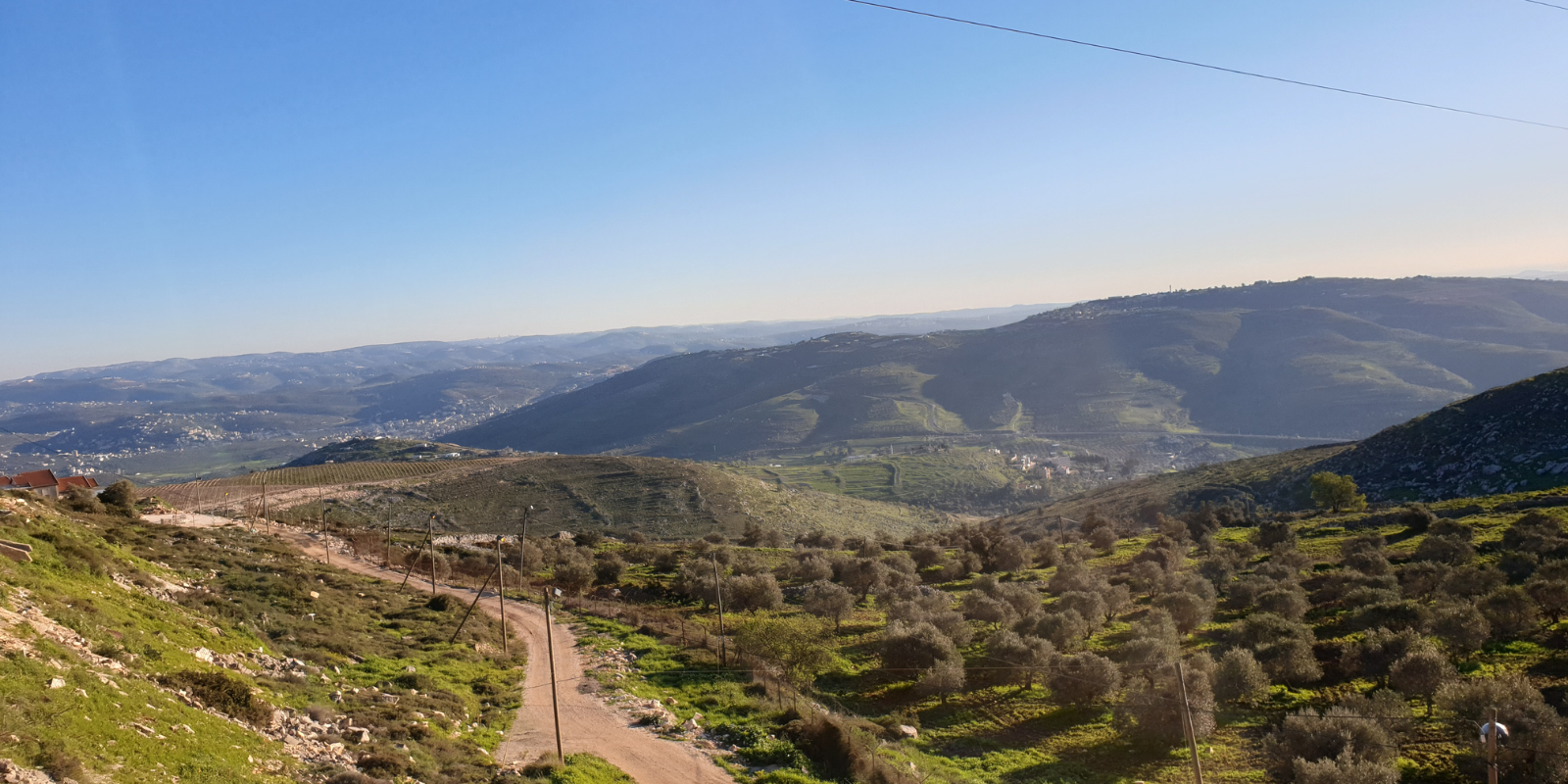
Today, because of what those “strange” people did at a place called Sebastia, 600,000 Jews live in the biblical heartland of Judea and Samaria. I and my family are blessed to be among them.
Strangeness isn’t a flaw. It’s our inheritance. Abraham was called Ha’Ivri, “the Hebrew” (Genesis 14:13). The Sages explain this name three ways. First, literally: Abraham came from the other side (eiver) of the Euphrates River. Second, genealogically: he descended from Eber. Third, and most important, existentially: “The entire world was on one side, and he was willing to be on the other side.”
To be a student of Abraham is to be strange – and proudly so. It means accepting the mockery and insults of those who are too afraid to accept the truth.
The “strange” people have only grown stronger. The day will come when they will reclaim all of Judea and Samaria, just as the prophets promised—and Gaza as well. They will defy the world, and even our own government when duty calls. Enemies will slander them, mock them, and try to break them as they always have. And yet, against every obstacle, they will endure. And in the end, they will be victorious.
Take strength, my “strange” Amish friends. You’re in excellent company. Every generation needs its strange people – the ones who refuse to bow to consensus, who refuse to trade truth for popularity. The world will mock you. But history belongs to the strange ones. To those willing to stand on the other side of the river. To those who plant vineyards on the mountains of Samaria and turn ancient prophecies into reality.
We are strange – and God is with us.