


There’s a question about Chanukah that has troubled scholars for centuries. I’ve heard dozens of answers over the years—clever ones, creative ones, answers that seemed to resolve the puzzle neatly. But this year, I heard an answer I had never encountered before. And it sheds new light on what we’re really celebrating on the first night of the holiday.
First, the question itself. We celebrate Chanukah for eight nights because the oil in the Temple burned for eight days. But if you think about it, the miracle was only seven days long. Here’s why: when the Maccabees found that single flask of pure oil, it contained enough to last one night naturally. The supernatural part—the oil burning beyond its capacity—didn’t begin until the second night. So why do we light candles on that first night at all? Why eight nights instead of seven?
To understand what makes this year’s answer so striking, you need the background. In the second century BCE, the Syrian-Greek empire under Antiochus IV attempted to eradicate Jewish practice. They outlawed circumcision, Sabbath observance, and Torah study. They desecrated the Temple in Jerusalem, erecting idols and offering pigs on the altar. A small band of Jewish fighters—the Maccabees, led by Judah and his brothers—launched a rebellion that defied every military calculation. After three years of guerrilla warfare, they recaptured Jerusalem and the Temple Mount.
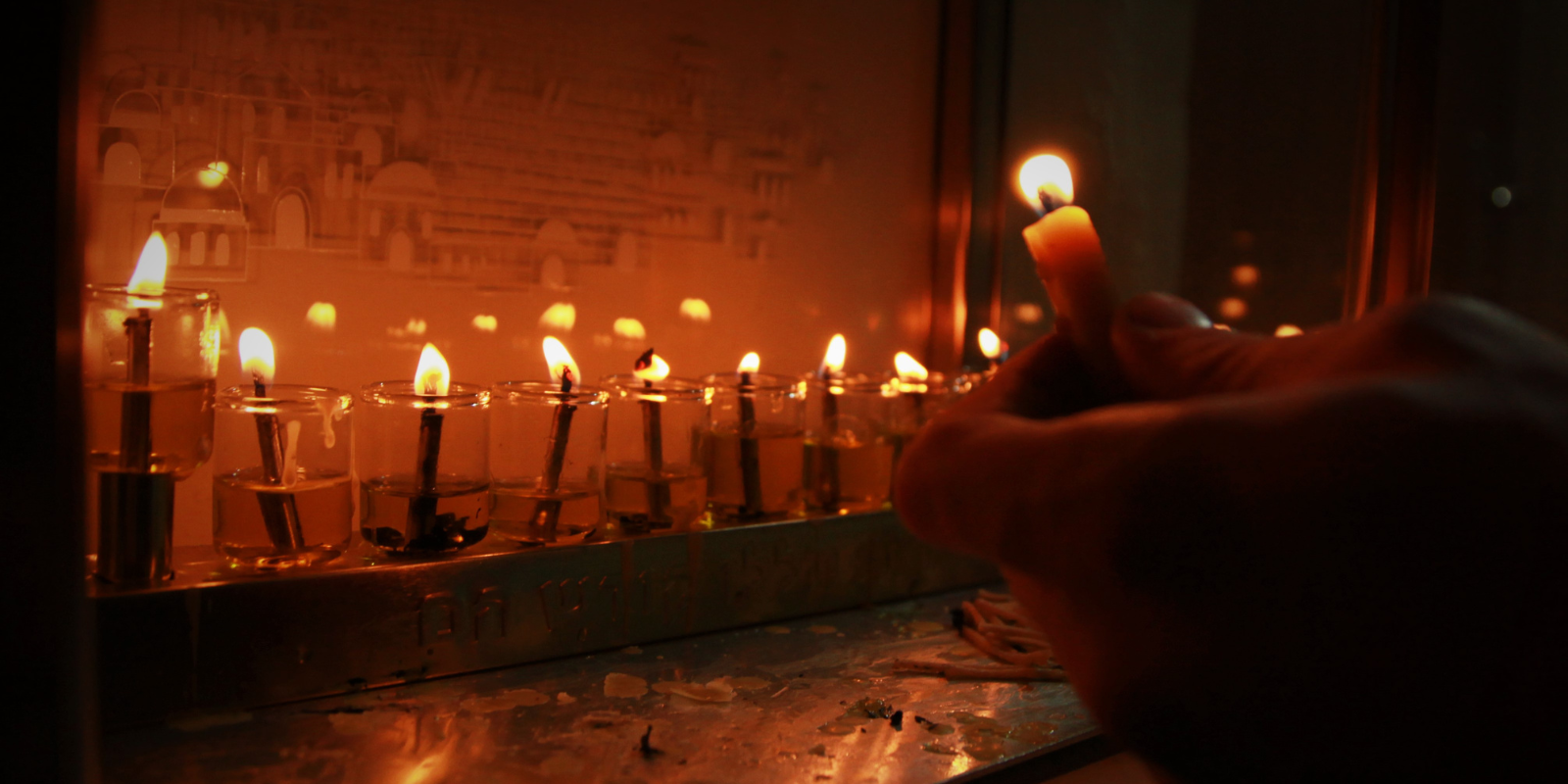
When they entered the Temple to re-dedicate it, they faced a problem. The menorah, the seven-branched candelabra, required pure olive oil to burn. But the Greeks had defiled or destroyed everything. The Maccabees searched through the ruins and found a single flask of oil, still sealed with the mark of the High Priest. Enough for one day. It would take eight days to produce fresh, pure oil. They lit it anyway. And it burned for eight days straight.
So why do we celebrate for eight days? Rabbis across the centuries have offered solutions. Some say the miracle began immediately—that the oil didn’t diminish even on that first evening. Others point to the military victory itself, arguing the first night commemorates the battlefield triumph while the remaining seven honor the oil. Still others suggest the very discovery of pure oil amid the desecration was itself miraculous. Each answer carries weight, each reveals a layer of meaning embedded in these eight nights.
But what if we’re asking the wrong question? What if the miracle we should be focusing on isn’t the oil lasting eight days—but the Maccabees looking for pure oil in the first place?
The Maccabees stood in the ruins of the Temple. They had just fought a brutal guerrilla war against the most powerful empire on earth. They had watched their brothers die. They had seen the Holy of Holies violated, the altar desecrated, every sacred vessel defiled. And they had won. Against every military calculation, against every reasonable expectation, they had reclaimed Jerusalem and driven out the Greeks.
The rational next step was simple: light the menorah. Use whatever oil they had available. The entire nation had been rendered ritually impure through contact with the dead in battle. When the majority of Israel is impure, Jewish law permits—even requires—the Temple service to proceed with impurity. There was no technical obligation to search for pure oil. No one would have questioned their decision to use what was readily at hand and get on with the urgent work of re-dedicating the Temple.
But they searched anyway.
They didn’t accept the easy path. They didn’t settle for “good enough” or “permissible under the circumstances.” Instead, they tore through the rubble. They refused to believe that everything holy had been destroyed. And in that refusal—in that determination to go beyond what was required, to reach for something higher than mere compliance—they found a single flask sealed with the seal of the High Priest.
This is where human nature breaks down. We are creatures of inertia. We take the path of least resistance. When we’re exhausted, when we’ve already given everything, when the rules explicitly permit us to stop—we stop. The Maccabees had every excuse to skip the search. They had earned the right to rest. The law was on their side.
But a miracle is something that transcends nature. The miracle of the first night is that the Maccabees pushed past the boundaries of human nature itself to look for a flask of pure oil.
Solomon saw this quality and marveled at it:
The ant doesn’t wait for orders. It doesn’t need permission or supervision. It acts because the work needs doing. This is the virtue Solomon praises—initiative that comes from within, not from external command.
The Greeks didn’t just want to kill Jews. They wanted to kill the Jewish instinct for holiness, the refusal to worship power and pleasure and the immediate. Hellenism said: be reasonable, be practical, accept the world as it is. The search for that oil was the ultimate rejection of Hellenism. It declared that Jews would not be practical when practicality meant settling for less than purity. That we would not be reasonable when reason meant abandoning the search for the sacred.
This is why we light candles on the first night. Not because the oil burned miraculously that evening—though perhaps it did. We light candles because the decision to search for pure oil was itself supernatural. It defied human psychology, the exhaustion of war, the tendency toward spiritual compromise.
The seven days of oil burning beyond its capacity showed God’s response to human initiative. But the first night? That night celebrates the miracle of Jews who wouldn’t accept permission to be ordinary. Who looked for light in the ruins. Who believed that somewhere in the wreckage, purity survived.
We don’t celebrate Chanukah because someone found oil. We celebrate because someone looked for it. Because in that looking—in that refusal to settle, that insistence on reaching higher even when the law said you could reach lower—the war against Hellenism was truly won. The Greeks lost not when the Maccabees picked up swords, but when the Maccabees picked through rubble searching for a flask they had no obligation to find.
Eight nights. The first for the miracle of human beings acting beyond human nature. The next seven for the miracle of Heaven responding in kind. Together, they teach us that the greatest lights are kindled not by those who do what’s required, but by those who search for what’s sacred even when no one would blame them for stopping.
That’s the miracle we’re really celebrating.