








For two thousand years, the books of Ezra and Nehemiah sat on the shelf gathering dust. Jewish communities across Europe, North Africa, and the Middle East studied Genesis and Exodus obsessively. They memorized Psalms and debated the prophets. But Ezra? Nehemiah? These books were practically invisible in the curriculum.
It wasn’t because they were considered unimportant or uninspired. The rabbis never questioned their place in Scripture. The issue was simpler and more painful: these books were irrelevant. They told the story of returning to the Land, rebuilding Jerusalem, and establishing Jewish sovereignty. What good were those stories to Jews stuck in the ghettos of Prague or the villages of Yemen? When you’re trying to survive pogroms, a manual on national restoration feels like cruel irony.
But something changed in 1948. Actually, something changed in 1967. And something changed again on October 7th, 2023. Suddenly, the book nobody read became the book everyone needs to understand.
What does it take to rebuild after catastrophe, and how do you make sure you don’t lose it all again?
That’s the question driving Ezra and Nehemiah, and it’s the question Israelis are asking themselves right now. The parallels are so precise they’re almost eerie.
The books open in 539 BCE, seventy years after the Babylonian destruction of Jerusalem. Cyrus, the Persian king, issues a decree: the Jewish exiles can go home. They can rebuild the Temple. They can reclaim their ancestral land. It should have been a moment of pure joy, the fulfillment of Jeremiah’s prophecy. But here’s the tension: the prophets had promised something grander. Isaiah spoke of the nations streaming to Jerusalem, of swords being beaten into plowshares, of the twelve tribes reuniting in glory. Ezekiel described an elaborate Temple that would dwarf anything Solomon ever built.
What the returning exiles found was disappointing. The land was desolate. Their numbers were small. Enemies surrounded them on every side, writing letters to the Persian authorities claiming the Jews were fomenting rebellion. The returnees faced a brutal question: Is this really it? Is this pale shadow of former glory what the prophets were talking about?
Some voices said no. The book of Daniel, written during this period, reinterprets Jeremiah’s “seventy years” as seventy weeks of years, essentially saying the real redemption hasn’t happened yet. Chronicles emphasizes the royal lineage of Zerubbabel, hinting that maybe the Davidic kingdom could still be restored. There was a faction that said: This isn’t the redemption. We’re still waiting.
But Ezra and Nehemiah take a radically different approach. They say: Stop waiting for perfection to fall from the sky. This imperfect moment is what we have to work with. The question isn’t whether this matches the prophets’ ideal vision. The question is what we’re going to do with the opportunity in front of us.
Look at Ezra’s priorities. He doesn’t chase after political sovereignty or messianic fulfillment. He brings the Torah back to the people. In a stunning scene in chapter 8, he gathers everyone (men, women, children) in the public square and reads the Law aloud from daybreak until noon. The people weep. They haven’t heard these words in generations. Ezra and the Levites translate and explain, making the ancient text accessible to Jews who’ve been living in Babylon speaking Aramaic.
This is revolutionary. For the first time in Israel’s history, the Torah stops being the possession of priests and becomes the inheritance of the entire nation. Ezra transforms Judaism from a temple-centered religion into a text-centered one. He’s preparing the people for survival even if (God forbid) they lose the Land again. “You want to know how to make sure we get to stay?” Ezra essentially says. “Here’s the formula. It’s all written down. Learn it. Live it.”
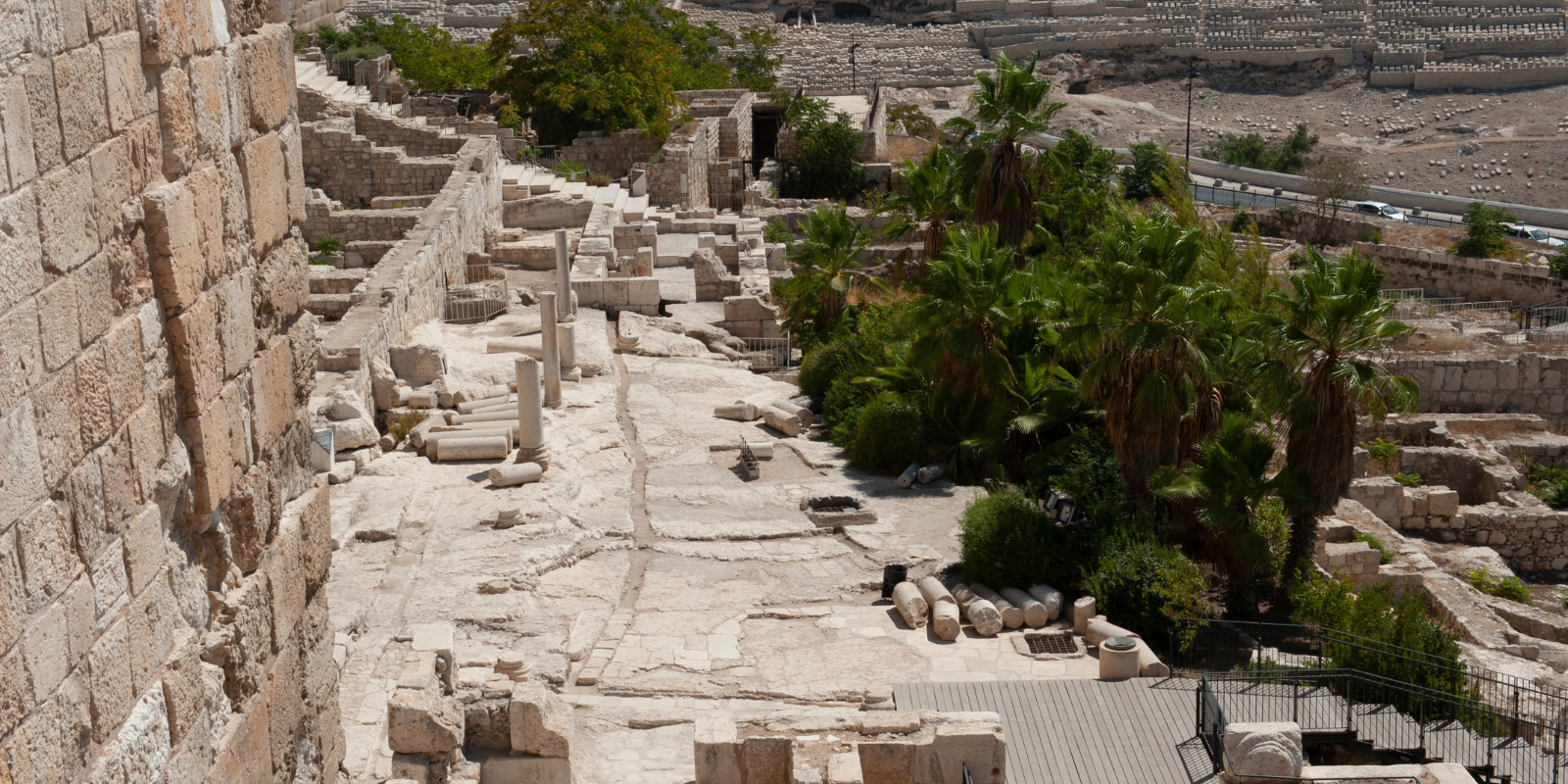
Then there’s Nehemiah, the cupbearer to the Persian king who risks everything to rebuild Jerusalem’s walls. He faces mockery, threats, conspiracy. Enemies hire a false prophet to lure him into the Temple to discredit him. His own people complain about the economic hardship. But Nehemiah understands something crucial: leadership isn’t about being popular. When he reads that the Torah forbids intermarriage with nations who worship other gods, he doesn’t poll focus groups to see if enforcing this will hurt his approval ratings. He acts. “Should we then listen to you and do all this great evil?” he thunders at those who’ve married foreign women. It’s harsh. It’s uncomfortable. But Nehemiah recognizes that boundaries aren’t bigotry. They’re survival.
Here’s the verse that captures the entire tension: “The people had a mind to work” (Nehemiah 4:6).
One half of the workers held weapons while the other half built the wall. They were constructing and defending simultaneously. That’s the posture of the returning exiles, and it’s the posture of modern Israel. You don’t get the luxury of choosing between development and security. You do both or you lose everything.
The books also grapple with a question that sounds ripped from today’s headlines: Who counts as part of the community? When locals approach the returning Jews and say, “Let us build with you, for we worship your God as you do,” the leaders refuse. It seems harsh until you realize what’s at stake. The Jewish people had just spent seventy years scattered across an empire. If “Jewishness” becomes purely geographical (if anyone living in the Land automatically counts), then the Jews in Babylon are suddenly not Jews anymore. The people fragments into competing definitions and disappears within a generation.
Ezra makes the painful decision to define Jewish identity genealogically rather than geographically. It’s not about xenophobia. It’s about maintaining cohesion when your people are scattered across continents. Modern Israel wrestles with the exact same tension. How do you welcome immigrants and converts while maintaining a clear identity? How do you stay open without dissolving?
The genius of Ezra and Nehemiah is that they didn’t wait for ideal conditions. They didn’t demand that reality match prophecy before taking action. They took the messy, complicated, dangerous situation they inherited and worked with it. They built. They taught. They established boundaries. They celebrated the festivals. And slowly (kimah kimah, as the Talmud says, like the dawn spreading gradually over the hills) redemption took shape.
That’s why these books matter now. Israel today isn’t waiting for a perfect peace or unanimous international support. It’s doing what Ezra and Nehemiah did: building with one hand and defending with the other, maintaining identity while engaging the world, turning catastrophe into opportunity.
The book nobody read for two thousand years turns out to be the playbook for right now.
Want to go deeper? This teaching is based on insights from Bible scholar Yael Liebowitz’s new course on Bible Plus, where she unpacks Ezra and Nehemiah as the ancient manual for modern Israel. Watch the full interview series on Bible Plus, today.