








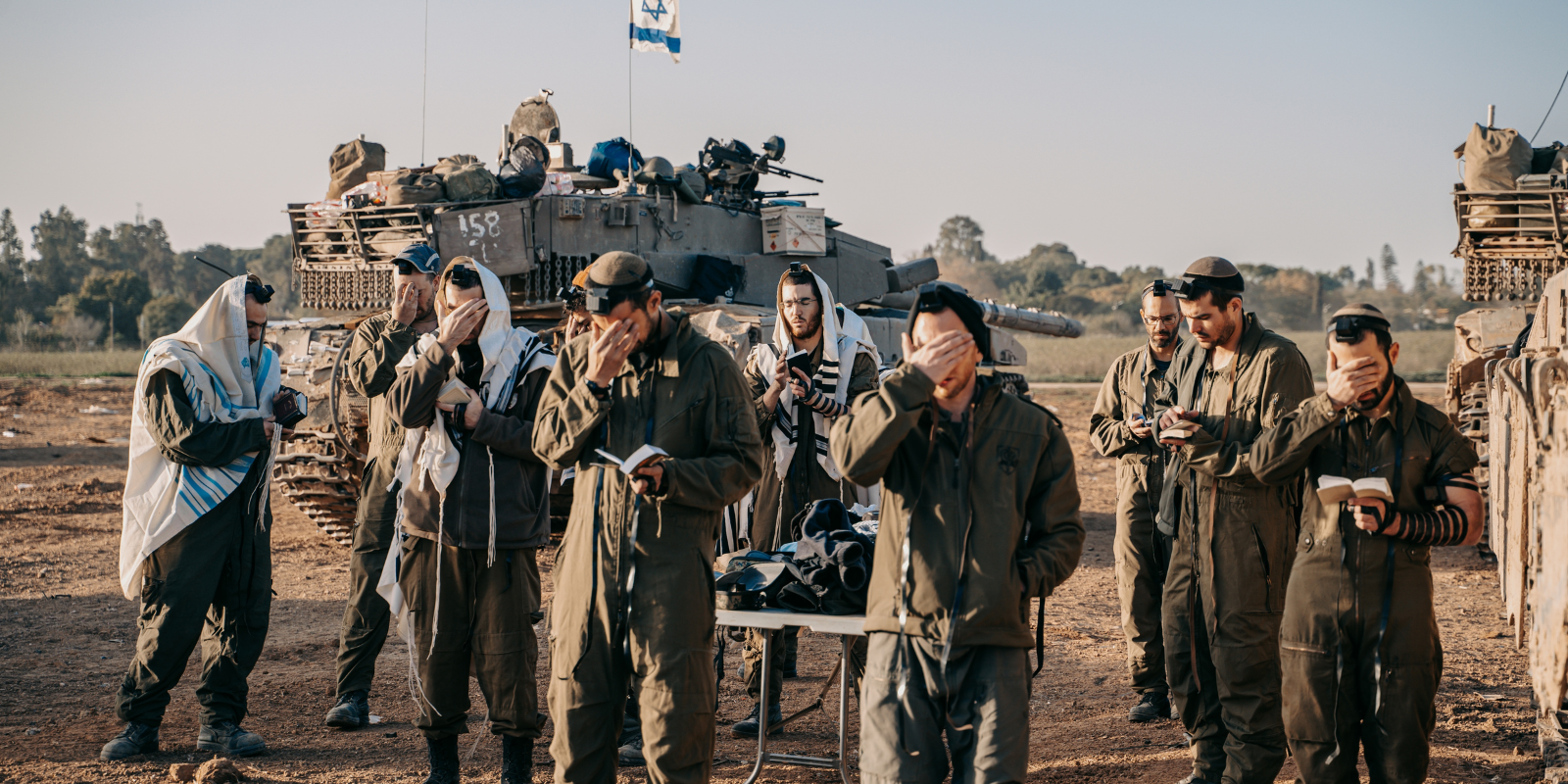
In Israel today, life continues while missiles fly overhead.
Sirens interrupt ordinary moments. Families move quickly between kitchens and shelters. Children who should be worrying about homework are instead learning the sound of missile interceptions in the night sky.
Over the past few days, many people I have spoken with outside Israel have asked the same question: What can we do right now?
Most of us are not soldiers. We are not pilots or intelligence officers. We are not sitting in command rooms making military decisions. But the Bible teaches that strength in times of conflict does not come only from weapons. It also comes from something deeper: spiritual clarity. And that clarity begins with studying the Torah.
For thousands of years, the Jewish people have understood something the modern world often forgets. The Bible is not only a book of inspiration. It is a guide for living through history’s most difficult moments. When the world becomes uncertain, the Torah reminds us who we are, why we are here, and how to turn toward God.
One of the most powerful ways the Bible teaches us to do that is through prayer. But the Bible’s understanding of prayer may not be what most people expect.
One of the courses inside Bible Plus explores a fascinating question: Who was the first person in the Bible to pray? Many people assume the answer is Abraham. Others guess Moses or King David. But when you read Genesis carefully, the answer may surprise you.
According to Rabbi Pesach Wolicki, the course instructor, the first moment of prayer in the Bible actually comes from Cain.
After Cain murders his brother Abel, God confronts him and declares his punishment. The ground will no longer produce for him and he will become a wanderer. Cain responds with words that are often misunderstood. In many translations it sounds like he is complaining about the severity of his punishment. But in Hebrew, the key word avoni can also mean “my guilt,” not simply “my punishment.”
Suddenly the verse reads very differently. Instead of protesting his fate, Cain recognizes the depth of his sin. He understands what he has done and the distance it has created between himself and God. His words become something extraordinary: the first prayer of repentance in the Bible. Even the first murderer can turn back toward God. Pasted text
That lesson carries a powerful message. Prayer is not reserved for the perfect. Prayer begins the moment a person turns toward God with honesty and humility.
But prayer is only part of the picture. The Bible does not only teach us to pray. It teaches us how to understand the world we are praying about. When we study the Torah, we begin to see history through the eyes of Scripture.
There is something else surprising about prayer in the Torah. The Five Books of Moses contain hundreds of commandments. According to Jewish tradition there are 613. The Torah instructs us how to celebrate holidays, how to run courts, how to treat the poor, and how to serve God. But nowhere in the Five Books of Moses is there a direct commandment to pray.
Why would something so central be missing? One classical explanation is that prayer is so fundamental that it does not need to be commanded. If a person truly believes that God created the world and guides history, then speaking to Him becomes the most natural response imaginable. Prayer is not merely a ritual obligation. It is the instinct of faith.
Right now Israel is engaged in a very real war against Iran and its terror proxies. The battle is physical. Soldiers are risking their lives. Cities are under threat. Families are carrying burdens that few outside Israel fully understand. But the Bible reminds us that battles are not fought only on the battlefield. They are also fought in the human spirit.
Fear weakens people. Confusion weakens nations. Hopelessness spreads quickly in moments of crisis. Torah study does the opposite.
When we study the Bible, we remember that the Jewish story has always unfolded under pressure. Pharaoh looked unstoppable. Haman looked unstoppable. Many enemies throughout history believed the Jewish people would disappear. Yet the Jewish people are still here.
Every page of the Bible reminds us that history is not random. God moves through history, often in ways we cannot see until later. The Torah says it plainly:
Israel’s soldiers carry the weapons, but they do not fight alone. And neither do we.
Every time we open the Bible, we strengthen something inside ourselves. We remember that the Jewish story is bigger than the headlines of any single day. We remember that God is still guiding history. That kind of spiritual strength is not abstract. It is armor. In times like these, armor matters.
Ready for the Spiritual Fight?
The world feels uncertain right now, but the Bible has guided people through moments like this for thousands of years. Sign in to Bible Plus and explore the Hebrew Bible with world-class teachers who bring its wisdom to life.
For just $7 a month or $60 a year, you will gain access to a growing library of courses designed to deepen your understanding of the Bible and strengthen your faith.