








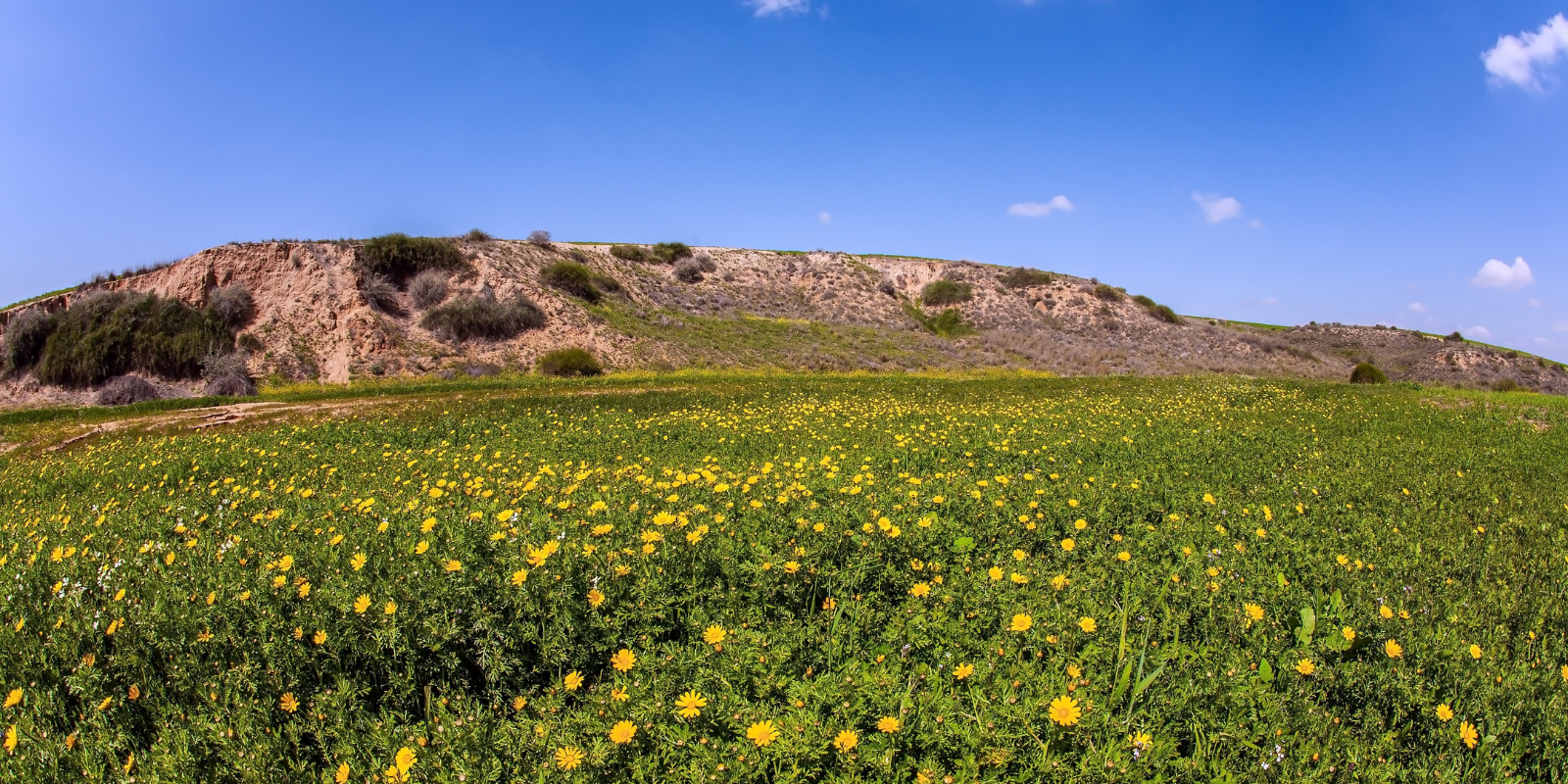
The punishment God handed down was staggering. An entire generation — every adult who had left Egypt, witnessed the plagues, crossed the sea, and stood at Sinai — condemned to die in the wilderness without ever setting foot in the Promised Land. Forty years of wandering. All because twelve men went on a scouting mission and ten of them came back with the wrong report.
Those ten men were not villains. They were leaders of their generation, one chosen from each tribe of Israel. They spent forty days scouting the land of Canaan and returned carrying enormous clusters of grapes, pomegranates, and figs. The land, they reported, was everything God had promised. Fertile beyond imagination. Flowing with milk and honey.
And then came the word that changed everything.
But.
The inhabitants were too powerful, too large, too terrifying.
The people of Israel wept through the night. God’s fury descended. And an entire generation was condemned never to see the land they had been promised.
How does something like this happen? What could such holy men have done that was so catastrophically wrong?
The standard answer points to fear and faithlessness. But there is a deeper layer to this story — one that reveals not just what the spies got wrong, but what they fundamentally misunderstood about God’s entire purpose for Israel.
Consider the world the Israelites had been living in for the past year. Manna fell from the sky every morning. A miraculous well followed them through the desert. Clouds of glory shielded them from the sun and guided their path. They lived, in a word, miraculously. Every physical need was met by direct divine intervention. They had been lifted entirely out of the natural world and placed in something closer to a heavenly existence — a world of pure spiritual sustenance, untouched by the sweat and struggle of ordinary human life.
That world was real. And it was necessary. The wilderness was the crucible in which a nation of slaves was forged into a people capable of receiving the Torah. You cannot hand the word of God to people whose minds are still in Egypt. The desert stripped everything away and rebuilt them from the ground up. It was holy, and it was irreplaceable.
But it was never meant to be permanent.
God was not calling Israel to live forever in the sky. He was calling them down — into the dirt of Canaan, into its cities and courts and fields, into the ordinary and the difficult and the messy. From now on, they would plant and harvest their own food. They would build their own houses. They would raise their own armies. The manna would stop. The clouds would lift. And in their place would come something harder and, ultimately, greater: the task of bringing the holiness of the desert into the world itself.
The spies looked at the land of Canaan and saw the end of something sacred. What they failed to see was the beginning of something even more sacred.
Think about the Temple in Jerusalem — the holiest structure in human history, the place where the divine presence dwelled on earth. It was not built of light. It was built of cedar wood, of stone, of gold hammered by human hands. The priests who served in it walked on physical ground with bare feet. The most transcendent reality in the world was housed in the most physical of structures. That was not a compromise of holiness. That was its ultimate expression.
This is the mission God gave to Israel — and through Israel, to all who love His word. Not to escape the physical world, but to enter it fully and transform it. Not to keep the Torah in the desert, pristine and untouched, but to bring it into cities, into families, into the grinding work of building a civilization. The light that Israel carries is not meant to shine only in the wilderness, where there is no one to see it. It is meant to shine in the world, for the world.
The spies saw two separate realms: the higher world of the spirit and the lower world of matter. What God was showing them — what they could not bring themselves to accept — was that these two worlds were never meant to stay apart. The entire purpose of the Torah was to close that gap. To make the earth a place where heaven was not just glimpsed from afar, but actually lived.
They were not wrong to love the desert. They were wrong to want to stay there.
Caleb understood something the other ten did not. When the people broke down in tears and despair, he stood up and cried out: “We shall surely go up, and we shall conquer it!” (Numbers 13:30). He was not braver than the others, or less aware of the dangers ahead. He simply grasped what they had missed: that going forward was not a step away from God. It was a step toward Him.
To hear more about the sin of the spies, watch our The Israel Bible – YouTube.