






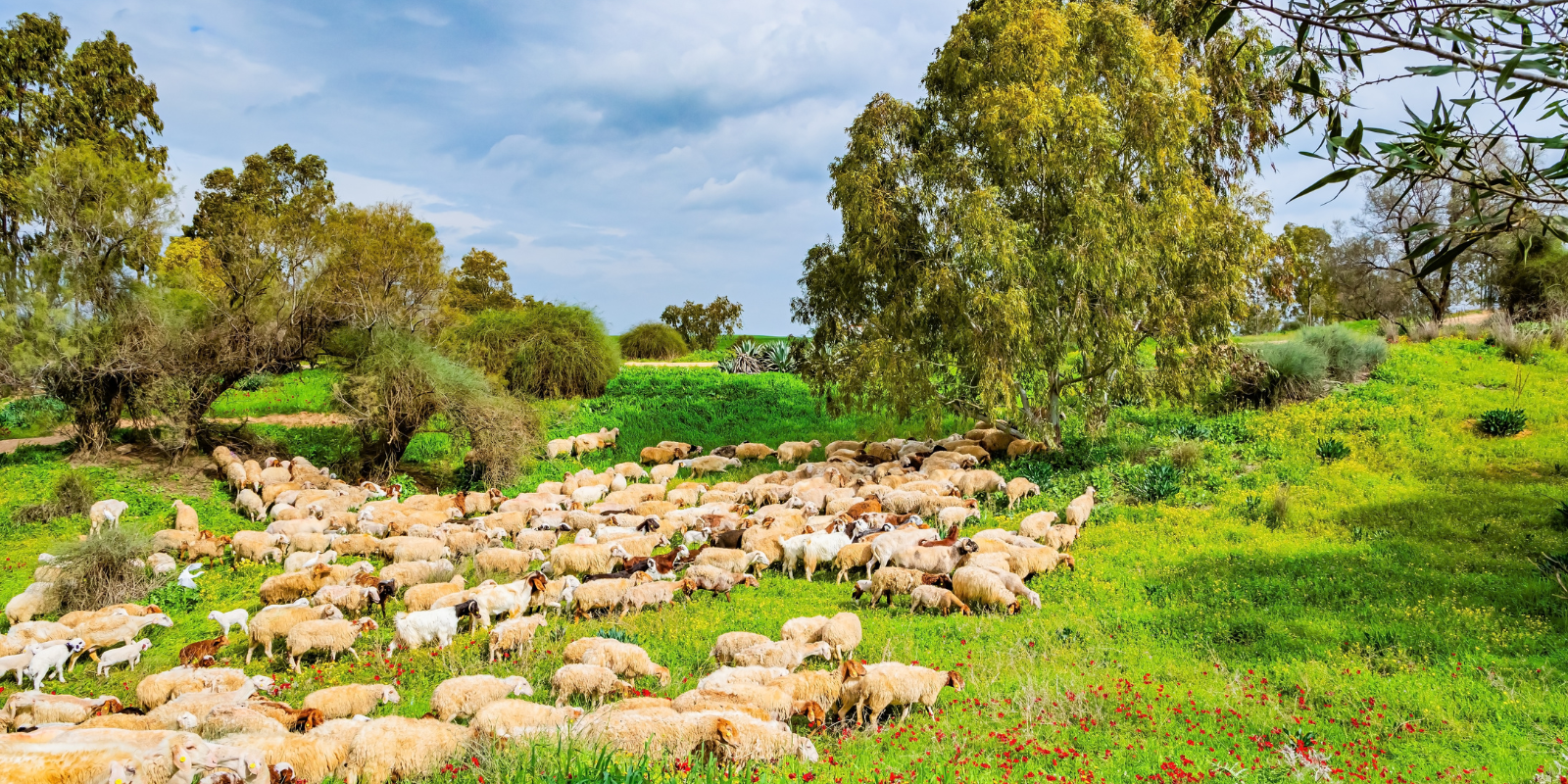
There’s a moment in Rabbi Elon Adler’s teaching on the first chapters in Exodus that I keep coming back to. It wasn’t the dramatic confrontation at the burning bush or the miraculous staff turning into a serpent. It was something simpler—a shepherd counting his flock and realizing one sheep had wandered off.
Moses could have done the math: ninety-nine out of a hundred isn’t bad. He could have justified the loss: these things happen when you’re managing livestock. Instead, he went searching. And when he finally found the missing sheep licking water from a puddle, Moses didn’t scold the animal for wandering. According to Jewish tradition, he said, “Had I known you were thirsty, I would have brought you here myself.” Then he carried that sheep back on his shoulders.
God was watching. And God made a decision: This is the man who will lead My people out of Egypt.
What makes someone qualified to stand before the most powerful ruler on earth and demand freedom for an entire enslaved nation?
The answer isn’t what we’d expect. Moses wasn’t chosen because he was eloquent—in fact, he couldn’t speak well. He wasn’t chosen because he was bold—he tried repeatedly to talk God out of the assignment. He was chosen because he noticed what was missing and refused to move on until he’d brought it back.
The Torah introduces us to Moses at a moment of national crisis. Pharaoh has escalated from forced labor to outright genocide, ordering every Hebrew baby boy thrown into the Nile. When even that doesn’t satisfy his hatred, he expands the decree to include all male infants—Egyptian and Hebrew alike. The text is making a point we recognize today: tyrants will sacrifice their own people to destroy the ones they hate.
Into this darkness come two women whose names the Torah preserves forever: Shifrah and Puah, the midwives.
Rabbi Adler says he gets goosebumps every time he reads this verse—two women sitting across from the most powerful man in the ancient world, and their fear of God outweighed their fear of him. They looked at those babies and said no.
This is the world that shapes Moses. He grows up in Pharaoh’s palace but never forgets he’s Hebrew. When he sees an Egyptian beating a Hebrew slave, he intervenes—violently, fatally. He has to flee. The boy raised in luxury becomes a shepherd in Midian, tending his father-in-law’s flocks in the wilderness.
And that’s where God finds him. Not in a palace. Not commanding an army. Carrying a lost sheep on his shoulders.
The midrashic tradition tells us this happened at Mount Sinai—yes, that Mount Sinai, where Moses will eventually receive the Torah. It’s the same location where he’ll encounter the burning bush, and that detail matters. The bush burns without being consumed, which means Moses had to watch it long enough to notice. That takes patience. That takes the ability to slow down and look carefully at what’s in front of you.
Moses had the empathy to notice one missing sheep out of many. He had the patience to watch a bush burn long enough to realize something supernatural was happening. These aren’t the resume items we’d expect for a liberator, but they’re exactly what God was looking for. A leader who sees each individual. A leader who doesn’t rush past the inexplicable. A leader whose first instinct is to carry the lost one home.
When God finally convinces Moses to take the job—after multiple objections—things don’t immediately improve. In fact, they get worse. The more Moses and Aaron plead with Pharaoh to let the people go, the harder the slavery becomes. It’s psychological warfare layered on top of physical brutality. Rabbi Adler points out that the Torah commentators describe slaves being assigned tasks designed not for physical difficulty but for psychological breaking: muscular men forced to carry straw while weak ones hauled boulders. The strong weren’t given heavy work because the goal was humiliation, not productivity.
At the lowest point, when everything seems to be collapsing, God tells Moses: “Now you will see what I will do.”
The book of Shemot—which means “names”—opens by listing names, preserving the identity of each tribe that went down to Egypt. It preserves the names of two midwives who defied Pharaoh. It tells us the name of the one shepherd who went back for the lost sheep. Because in God’s economy, every single name matters. Every missing person is worth pursuing. Every act of courage against impossible odds gets remembered.
Moses didn’t become a leader by seeking power. He became one by noticing who was missing and refusing to accept their absence as inevitable. That’s still what leadership looks like. And that’s why this ancient story feels so immediate right now, as Israel fights enemies who sacrifice their own people out of hatred for ours, as we count the names of hostages still waiting to come home.
The shepherd who counted his flock and found one missing is the same man who will stand before Pharaoh and say: Let My people go. Not most of them. Not the convenient ones. All of them. Every single name.
Want to go deeper into the Book of Exodus with Rabbi Elon Adler? His complete video course on Shemot is available on Bible Plus—your online platform for hundreds of in-depth Scripture courses taught by Israel-based teachers. Learn at your own pace on any device, with new content added monthly. Plans start as low as $5/month at https://www.bible-plus.com/