








Jacob lay dying in Egypt, far from the land promised to his grandfather Abraham. His sons gathered around his bedside in a foreign country where they had settled with their families, where they owned property, where Pharaoh himself had welcomed them. Egypt was becoming home. The journey from Canaan had begun as temporary refuge from famine, but seventeen years had passed. Roots were taking hold.
Then Jacob made an inconvenient demand. He had already extracted an oath from Joseph, but now he addressed them all:
The brothers would have to embalm their father. Organize a massive funeral procession. Travel hundreds of miles back to Canaan. All this effort and expense for a burial when Egypt was right there and convenient.
Why couldn’t Jacob rest in Egypt, where his family lived, where they were going to be staying for the foreseeable future?
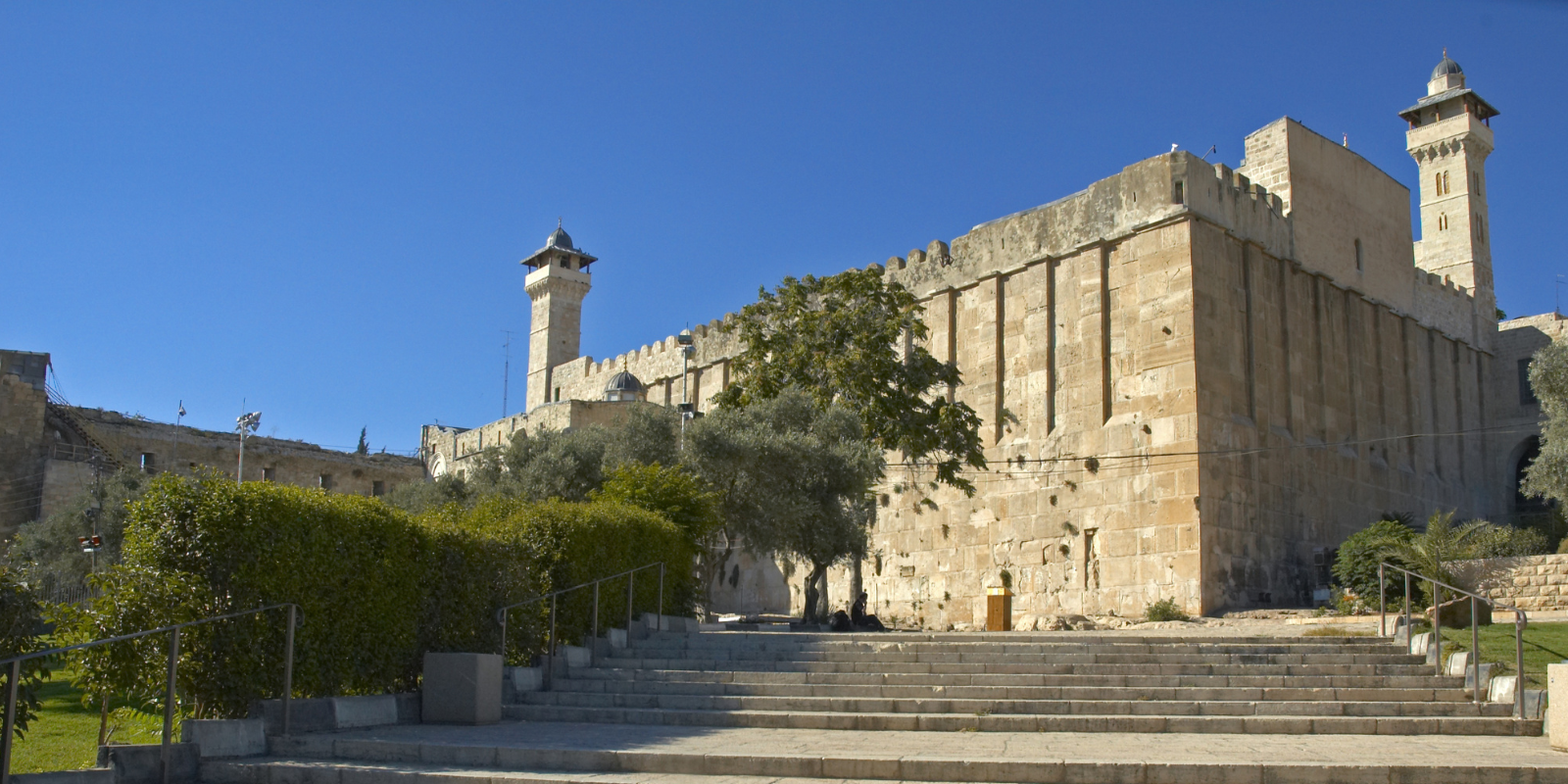
Rabbi Pinchas Polonsky grasps what Jacob understood in that moment. Jacob was not merely arranging his own burial. He was establishing an address—a permanent location that would anchor the Jewish people to the Land of Israel even as exile began. The Cave of Machpelah would become more than Jacob’s tomb. It would serve as the central meeting place, a focal point of national unity for all the tribes descended from him.
The timing matters. Jacob’s deathbed was not just the end of his life but the beginning of Jewish exile. His sons would stay in Egypt. Their children would multiply there. Generations would pass, and the journey from Canaan would fade from living memory into ancient family lore. Egypt would become familiar. Hebrew would start mixing with Egyptian. The old stories about a promised land would sound increasingly distant.
Jacob saw this coming. He knew that exile destroys nations not necessarily through violence but through comfort, through gradual assimilation, through the slow forgetting of who you are and where you came from. So he created a counterweight—an address in the Land of Israel that his descendants would have to acknowledge, would have to visit, would have to remember.
The Sages picked up on something subtle in the text of the Torah itself. Most Torah portions are separated from one another by considerable space on the parchment. But Parashat Vayechi, which contains Jacob’s death and burial, is minimally separated from the preceding portion. The usual white space is missing. Rabbi Meir Yechiel Halevi Halstock explained the symbolism. In the previous portion, Jacob is still in the Land of Israel. In the next book of the Torah, Exodus, the redemption has already begun. Vayechi is the only portion where Jacob and his sons are fully in Egyptian exile, even before the bondage starts.
If this portion were separated like every other portion, it would symbolize a complete disconnect of the Jewish people from their homeland. The gap would represent abandonment, a severed tie, an acknowledgment that Egypt was the new reality. But with the portions closely joined, the vital lifeline holds. The Jews remain tethered to their land. They will return from every exile.
That tether is Machpelah.
Abraham had purchased the cave and its surrounding field as the first and only piece of the Land of Israel that the patriarchs owned outright. No gift from a grateful king. No temporary dwelling arrangement. A real estate transaction with witnesses, with silver weighed out, with legal documents. Abraham paid full price specifically to establish indisputable ownership. When Jacob insisted on burial there, he was invoking that ownership, reaffirming it, and passing it down as a binding obligation to his children.
But ownership means responsibility. By burying their father in Machpelah, the brothers created a family plot that required maintenance, that demanded periodic visits, that could never be abandoned or forgotten. Desert graves can fade from memory, but a purchased burial site in a specific cave in a specific field carries legal and emotional weight across generations. The descendants never cease to feel their predecessors’ vital influence.
Jacob gave his sons something far more powerful than nostalgia or spiritual longing for an ancestral homeland. He gave them a deed. He gave them a plot of land with their father’s bones in it. He gave them an address they owned, an obligation they couldn’t ignore, a connection they couldn’t sever no matter how comfortable life in exile became.
The Cave of Machpelah binds the Jewish people to the patriarchs across centuries. Even when Jews couldn’t access the cave itself, they knew it existed. They knew where their fathers were buried. They knew the exact location: a specific cave in a specific field in Hebron that Abraham had purchased. That knowledge, that memory, kept the connection alive across millennia of exile.
Centuries later, Jerusalem would become the heart of Jewish longing for the land—the city of David, the site of the Temple, the place toward which Jews prayed three times daily. But Machpelah came first. It was the original address, the first plot of land the patriarchs owned, the anchor Jacob established before Jerusalem was ever conquered or the Temple built.
Jacob’s inconvenient demand to be buried in Machpelah wasn’t about his comfort in death. It was about his children’s identity in life. He understood that Jews in exile needed more than memories and traditions. They needed real estate. They needed a location. They needed an address that said: this is not your home, this is temporary, you have somewhere else you belong.
That truth has protected the Jewish people through every exile. While other ancient nations disappeared after displacement—the Jebusites, the Moabites, the Philistines all vanished into the populations that conquered them—the Jews remembered Machpelah. They remembered they had an address. They remembered they owned land in Israel, even when they owned nothing in the countries where they lived.
Jacob knew what he was doing when he made his burial in Canaan a requirement for his sons. He was forcing them to invest in the Land of Israel, literally and emotionally. He was making sure that even as they built lives in Egypt, they could never fully settle there. He was creating an anchor that would hold fast through four centuries of Egyptian bondage, through Babylonian exile, through Roman dispersion, through medieval persecution, through modern assimilation.
The anchor held. The Jews came home. Jacob’s bones still rest in Hebron, in the cave he insisted on, in the field his grandfather purchased. Jews live there today. They pray there. The address Jacob established still binds his children to the land.
To learn more of Rabbi Pinchas Polonsky’s insights on the Bible, order The Universal Torah: Growth & Struggle in the Five Books of Moses – Genesis Part 2 today!