








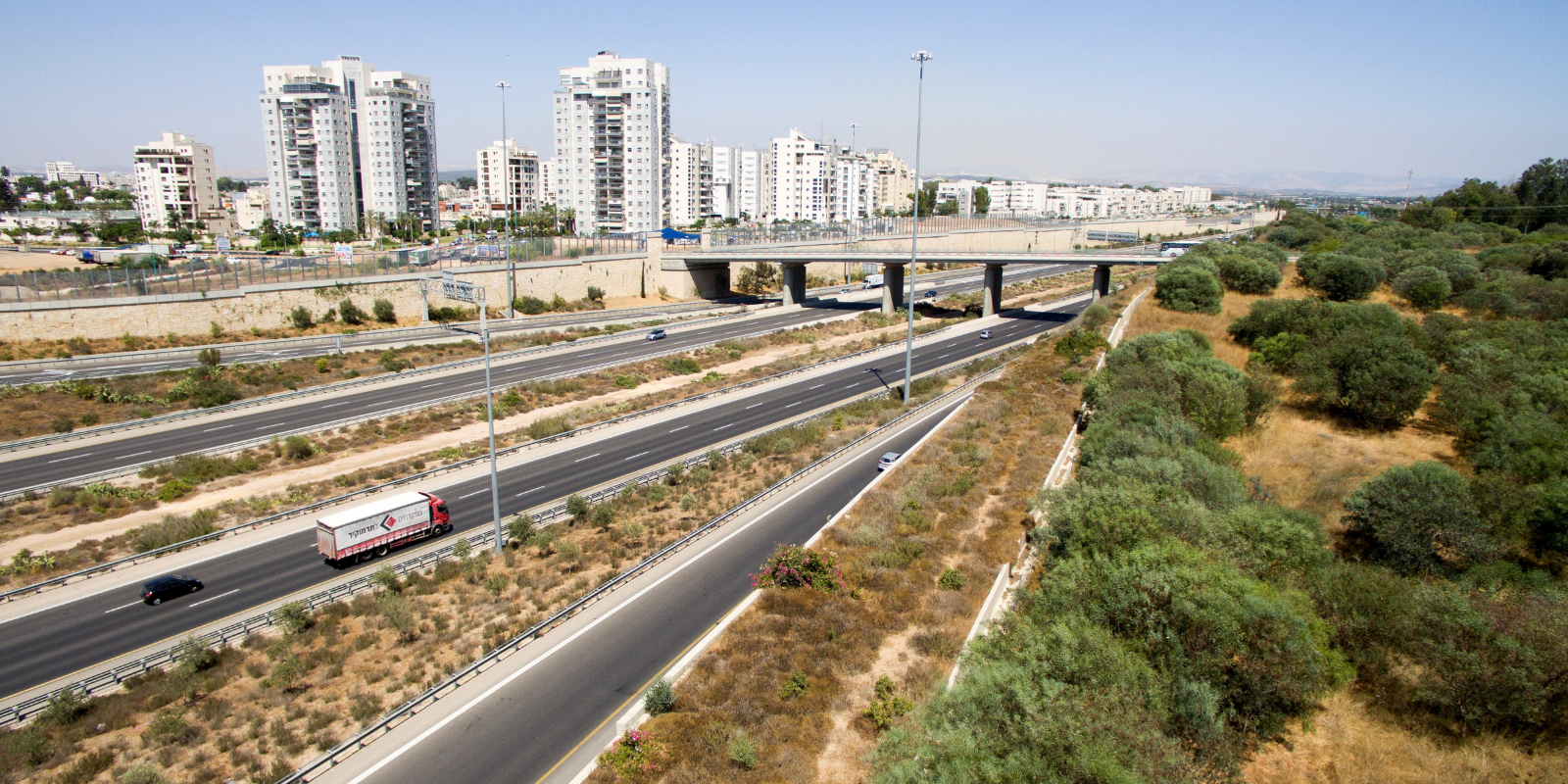
Every day, I drive home from work in Bet Shemesh along a highway in Israel called the 431—the route between Rishon LeZion and the city of Modiin (where I live). One of the most charming parts of the drive, aside from the pastures, the gorgeous sunset, and the rogue cow, is that during the winter months, when the clocks have changed, I will see at least one, if not more than one, driver pulled over on the side of the road, every day reciting the prayer of Mincha.
There’s something striking about this image: a car parked on the shoulder, a man standing beside it facing east toward Jerusalem, swaying slightly as he prays. Around him, traffic rushes past at 110 kilometers per hour. Deadlines loom. Phones buzz with unanswered messages. The workday hasn’t ended yet. And still, he stops.
Why this prayer? Why this time of day? What makes Mincha—the shortest of the three daily prayers—so significant that Jewish tradition considers it the most important?
The afternoon prayer originates with Isaac, the second patriarch. The Bible tells us:
The Hebrew word lasuach, translated here as “converse,” is understood by the Sages to mean prayer—a conversation with God. This wasn’t a synagogue. This wasn’t the protected space of home at dawn or the quiet of evening. This was the field. The place of work, exposure, and distraction.
Isaac established Mincha at the exact moment when stopping seems impossible.
The morning prayer, Shacharit, happens before the day begins. The evening prayer, Ma’ariv, happens after the day ends. But Mincha interrupts. It demands that we halt in the middle of everything—meetings, errands, obligations—and remember who we are and what matters. It’s inconvenient by design.
Rabbi Berel Wein writes that Mincha is “an oasis of spiritual time in a tough workday, a moment of contemplation, a calming of nerves and a focusing of priorities.” This ten-to-fifteen-minute pause doesn’t remove us from reality. It reorients us within it.
Isaac is the patriarch of continuity. Unlike Abraham, who broke with his father’s idolatry to forge a new path, and unlike Jacob, who wrestled and transformed, Isaac’s role was to sustain. He re-dug the wells his father had dug. He lived in the same places. He carried forward what had been started.
This is harder than it sounds. Isaac’s life was marked by trauma—the near-sacrifice at the Akeida, the binding of Isaac, years of infertility, and conflict between his sons. He could have abandoned his father’s legacy. Instead, he held steady. He didn’t innovate; he endured. He didn’t recreate; he continued.
Mincha embodies this same principle. It doesn’t ask for grand gestures or dramatic transformations. It asks for consistency. For showing up in the middle of the chaos and remembering that this moment—this ordinary, inconvenient afternoon—is also sacred.
The drivers pulled over on Highway 431 are doing exactly what Isaac did. They’re stopping, quite literally, in the field. They’re choosing continuity over convenience. They’re saying: My day doesn’t run me. I run my day according to something larger.
The Gift of the Afternoon
The word mincha also means “gift” or “offering.” Isaac prayed in the field while waiting for Rebecca, his life partner, and immediately after his prayer, she appeared. The afternoon prayer is both an offering we give to God and a gift we receive—a reset button in the middle of everything.
When I see those cars on the shoulder, I’m watching something Isaac established unfold right before me. A man standing in a field. A conversation with God. A moment of holy interruption. Isaac established this practice not despite the inconvenience, but because of it. The afternoon demands that we stop, that we remember, that we continue.