



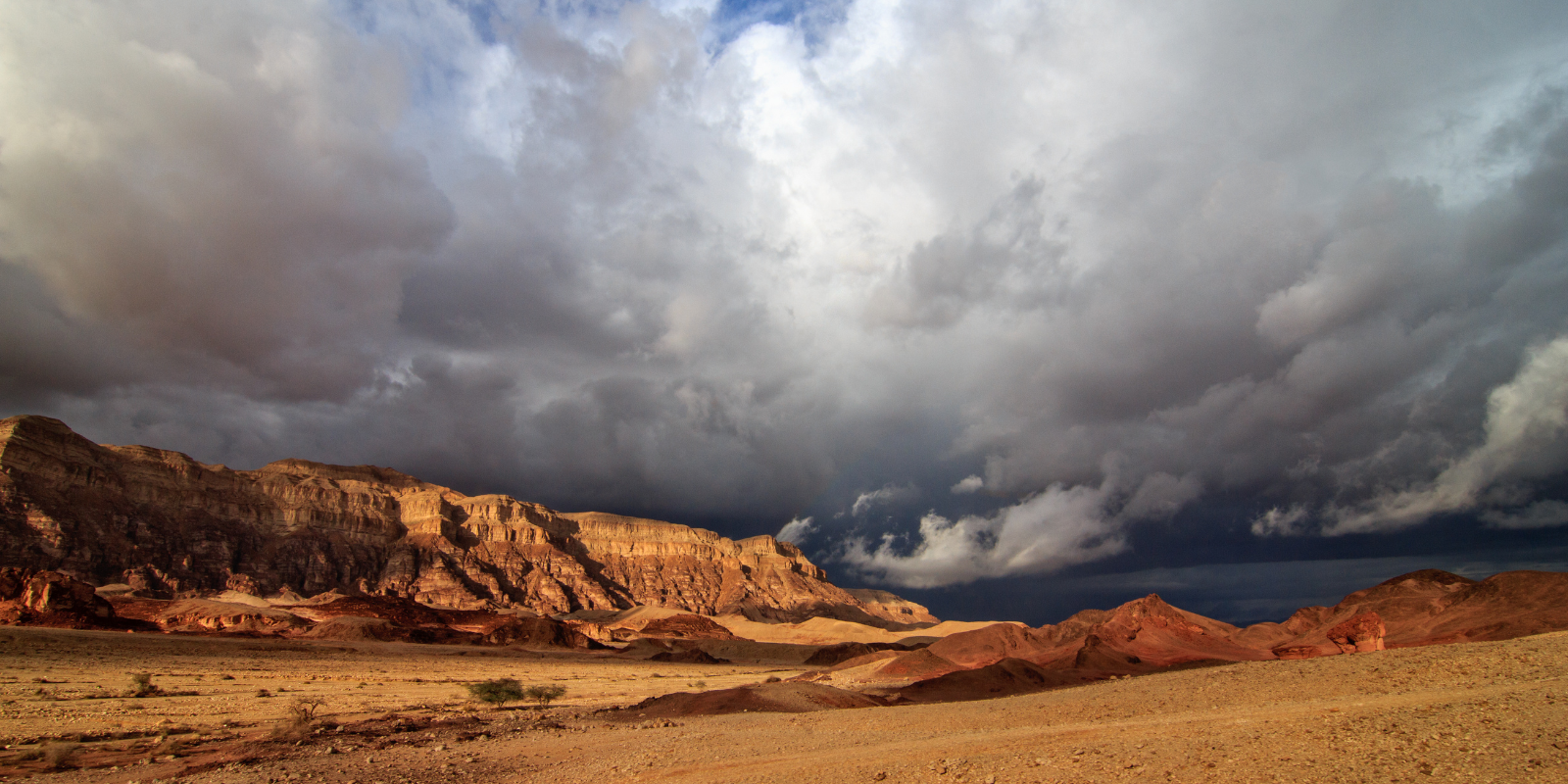
This past week, Israel experienced something incredibly dramatic. Potentially catastrophic. Lockdowns were imposed. Families considered keeping their children home from school. Emergency services went on high alert. No, no, not another war with Iran, God forbid. It wasn’t another global pandemic (please, God, no more of those). It was a winter rainstorm named Byron.
Now, whether you’ve visited Israel or simply studied its geography, you know that much of this land is desert. We have a rainy season, yes, but it’s short-lived, and the absence of rain causes devastating droughts. The running joke here has become: we send our kids to school under rocket fire, but we’re terrified of a little rain. The truth is, we’re just not used to it. Our streets weren’t built for 200 millimeters of rainfall in a single day. Schools close, highways flood, and everyone rushes to stock up on supplies like we’re preparing for a siege.
But here’s what struck me as I watched the downpour from my window, as I saw neighbors laughing and running through puddles, as I heard my children shriek with delight at the thunder: every single person in Israel, religious or secular, left or right, was genuinely, deeply happy. Because rain in this land is not an inconvenience. It is a blessing.
But why? Why does the Bible treat rain so differently than we might expect? And what does a winter storm in modern Israel reveal about our ancient covenant with God?
The Hebrew Bible mentions rain as a blessing no fewer than seventeen times across the Torah, Prophets, and Writings. This is not coincidental. In the ancient Near East, where empires rose along the Nile and Euphrates rivers, water was guaranteed. Egypt had its predictable floods. Mesopotamia had its irrigation canals. But Israel? Israel had only one source of water: the heavens. And the heavens answered to God alone.
This is why the book of Deuteronomy makes such a stunning declaration about the Land of Israel. Moses tells the people that they are about to enter a land unlike Egypt, where you could plant your seed and water it with your foot like a vegetable garden. No, this land “drinks water from the rain of heaven” And then comes the promise:
Notice the specificity: the early rain and the late rain. The early rain falls in autumn, softening the hard summer ground so farmers can plow and plant. The late rain comes in spring, filling the grain before harvest. Miss either one, and the crops fail. Miss both, and famine follows. In Israel, rain is not a meteorological event, it is a theological one.
This is why the story of Elijah and the drought is so dramatic. When King Ahab leads Israel into idol worship, God responds by shutting the heavens. For three and a half years, not a drop falls. The land withers. The people starve. And then, after Elijah’s confrontation with the prophets of Baal on Mount Carmel, after fire falls from heaven and the people cry out “The Lord, He is God!”, the text tells us: “And there was a great rain” (1 Kings 18:45). A great, drenching rain that signals God has turned His face back toward His people.
The prophet Ezekiel captures this beautifully when he describes the future restoration of Israel. God promises: “I will cause showers to come down in their season; they shall be showers of blessing” (Ezekiel 34:26). Not just water falling from clouds, but tangible evidence of divine favor poured out upon the land.
Standing in my kitchen this week, watching Storm Byron turn the streets of my neighborhood into rivers, I thought about my grandparents who dreamed of Israel but never made it here. I thought about the generations who prayed for rain in the Amidah, the standing prayer recited three times daily, adding the words “He causes the wind to blow and the rain to fall” during the winter months, even when they lived in Poland or Morocco or Brooklyn, where the prayer had no agricultural relevance whatsoever. They prayed for rain in a land they had never seen, because rain in Israel meant that God was keeping His covenant.
So yes, people seriously contemplated keeping their kids home from school. Yes, we worried about flooding. And yes, we made jokes about our inability to handle the weather that Londoners wouldn’t blink at. But underneath all of that was something ancient and powerful: gratitude. Every Israeli knows, whether consciously or not, that when the heavens open over this land, we are witnessing something sacred. The rain is not just water. It is a love letter from heaven, written in drops, reminding us that the God of Abraham, Isaac, and Jacob is still watching over this small, stubborn, beautiful nation. And He has not forgotten His promise.