



Israel recently experienced heavy thunderstorms—a blessing for a nation that desperately needs rain. But the downpour made life miserable for Gazan Arabs living in tent cities, their homes destroyed in the war that followed Hamas’s October 7 attack.
Yet even as they sit in cold, wet tents, surveys show that roughly two-thirds of Gazans continue to support Hamas’s decision to launch that attack. About 70% say it was justified, even after the massive destruction everyone knew would follow. In fact, support for Hamas actually rose after the war began. A majority of Gazans oppose any post-war plan that would sideline Hamas, preferring continued Hamas rule—with all its costs—because Hamas is seen as most committed to armed struggle against Israel.
How can Gazans support the very terrorists who brought destruction upon them?
The answer lies in understanding an ancient people who once inhabited this same Gaza region—the Philistines. Today’s Palestinians have no genetic connection to those ancient invaders. But spiritually, they are cut from the same cloth.
In Genesis, we encounter Philistines dwelling near Gerar—today’s Gaza region. These invaders from the Mediterranean island of Caphtor settled in southern coastal cities that weren’t theirs. The Talmud captures their essence in a single phrase: “The Philistines are cynics.” They were a culture without boundaries or restraints, driven not by vision but by spite.
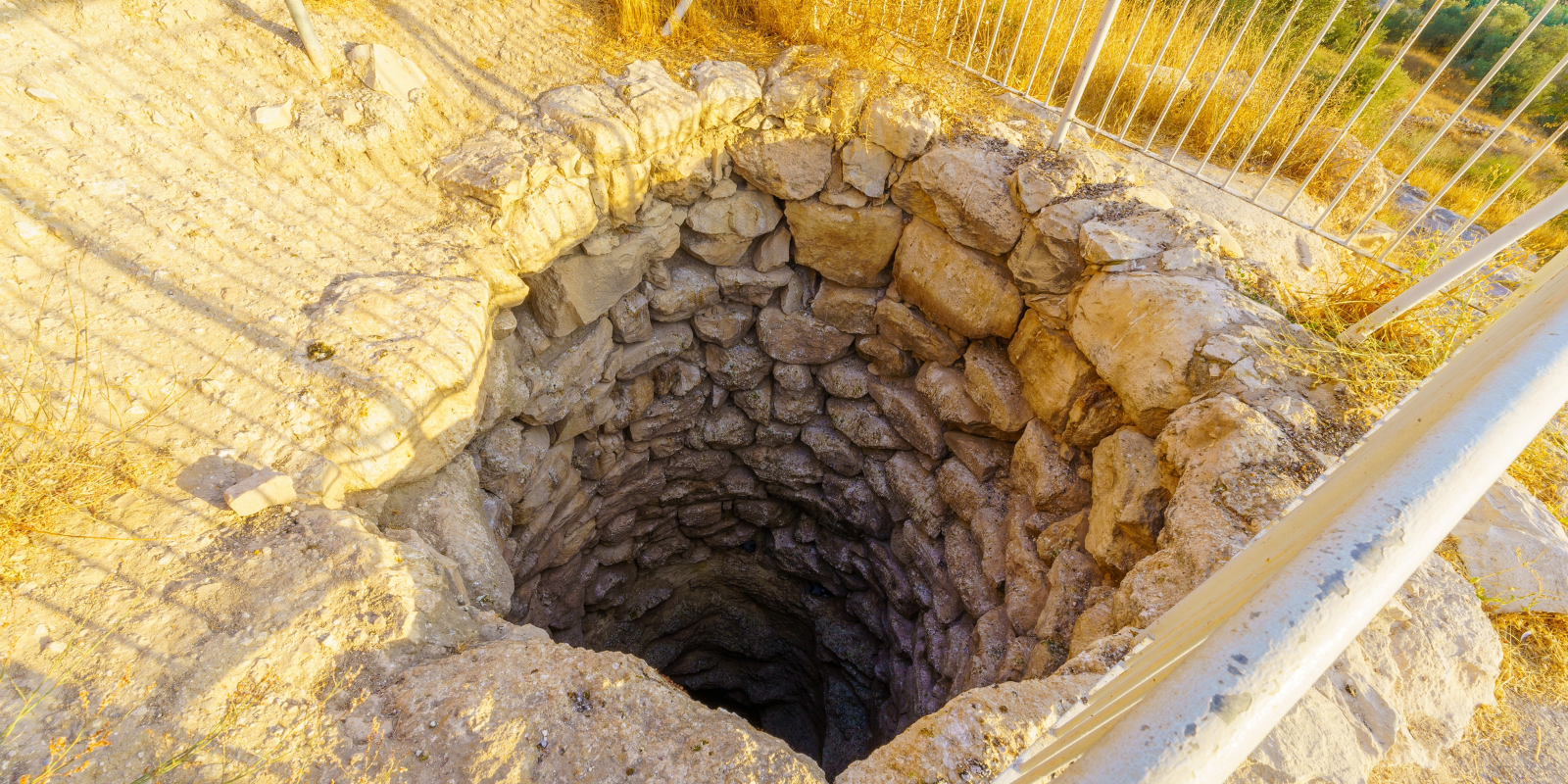
The Bible reveals the Philistine mission through their actions toward Isaac. When Isaac came to dwell among them, they didn’t build their own wells or develop their own resources. Instead, they dedicated themselves to destruction:
These weren’t military targets—they were water sources essential for life in an arid land, and the Philistines gained nothing by stopping them up. Abraham had dug those wells and they brought life to the region, but the Philistines destroyed them anyway simply because Isaac, the son of the covenant, had inherited them. When a nation’s life is meaningless and empty, they will cynically destroy what others have built, denying even themselves living water.
The Philistines saw Isaac’s success and burned with jealousy. As Rabbi David Kimchi explains, the Philistines essentially say: “Neither you nor us will have it.” Rabbi Samson Raphael Hirsch puts it more bluntly: “They stopped up the wells with joy at misfortune.”
This reveals another Philistine characteristic: they fight Jewish nationalism with particular fury. Philistines can tolerate Jews who are isolated, humiliated, and oppressed. But when Jews become a strong nation with weapons of defense, jealousy drives them mad.
They cannot bear to see Jews armed and self-sufficient.
The Palestinians of today also specialize in stopping up wells.
In 2005, when Israel withdrew from Gaza, donors raised $14 million to purchase sophisticated greenhouses from departing Jewish settlers and hand them to the Palestinians as an instant economic engine. These weren’t modest operations—they were export-quality facilities producing strawberries, cherry tomatoes, peppers, and flowers for European markets, capable of generating jobs and foreign currency the moment Israel left.
Within days of Israel’s departure, Palestinians looted and vandalized these greenhouses themselves. Glass was smashed, irrigation pipes stripped out, metal torn away. Palestinian police either couldn’t or wouldn’t stop the destruction. The images of ordinary Gazans tearing apart the very assets gifted to them became an instant symbol of wasted opportunity. They destroyed the Gerar region—Gush Katif—and turned flourishing agriculture into desolation.
Modern-day Palestinians look at Israel’s success and turn green with envy. They cynically call their war of terror a “struggle against occupation,” but ultimately, they are channeling the same ancient Philistine spirit: if we can’t have it, you can’t either.
Opposite the Philistines stands Isaac. When he arrived in Gerar with his wife Rebecca, the Philistines eyed her beauty and he feared for his life. Later, they stopped up the wells his father Abraham had dug—not for strategic gain, but out of pure spite. Isaac endured their provocations without retaliation. Then came a moment that reveals the full depth of Philistine cynicism: after years of harassment and well-stopping, Abimelech, king of the Philistines, and Phicol, his army commander, approach Isaac and say, “We saw certainly that the Lord was with you… we have done to you nothing but good” (Genesis 26:28-29).
Imagine the audacity. They’ve stolen his wells, threatened his family, and driven him from place to place. Now they claim they’ve “done nothing but good.” This is gaslighting at a biblical scale—the same cynicism that drives Gazans today to blame Israel for destruction that Hamas brought upon itself.
Isaac’s response? He doesn’t argue with them or catalogue their offenses. Instead, he digs the wells again.
But restoring what cynics have destroyed is hard work. The first well he digs leads to conflict, so he names it Esek—contention—”because they strove with him” (Genesis 26:20). He digs another; more strife erupts, and he names it Sitnah—enmity. Only the third well brings peace: “And he called the name of it Rehoboth; and he said, For now the Lord has made room for us, and we shall be fruitful in the land” (Genesis 26:22).
Today, Israel—the children of Isaac—are rebuilding the villages that modern Philistines brutally destroyed on October 7. Meanwhile, the people of Gaza support Hamas not despite the devastation but because of their commitment to destruction. They would rather sit in wet tents under Hamas than prosper under anyone who would make peace with the Jewish state.
This is the Philistine spirit: stopping up wells, tearing down greenhouses, choosing misery over prosperity if prosperity means Jews thriving nearby.
But we are Isaac’s children. They destroy, we build. We dig the wells again and again until we reach Rehoboth—until the Lord makes room for us and we are fruitful in the land He gave us. And we won’t stop digging until that land is ours for good.