“There is no place too low to rise from, and no place too high to reach. As long as you are alive, you are still in the game.”
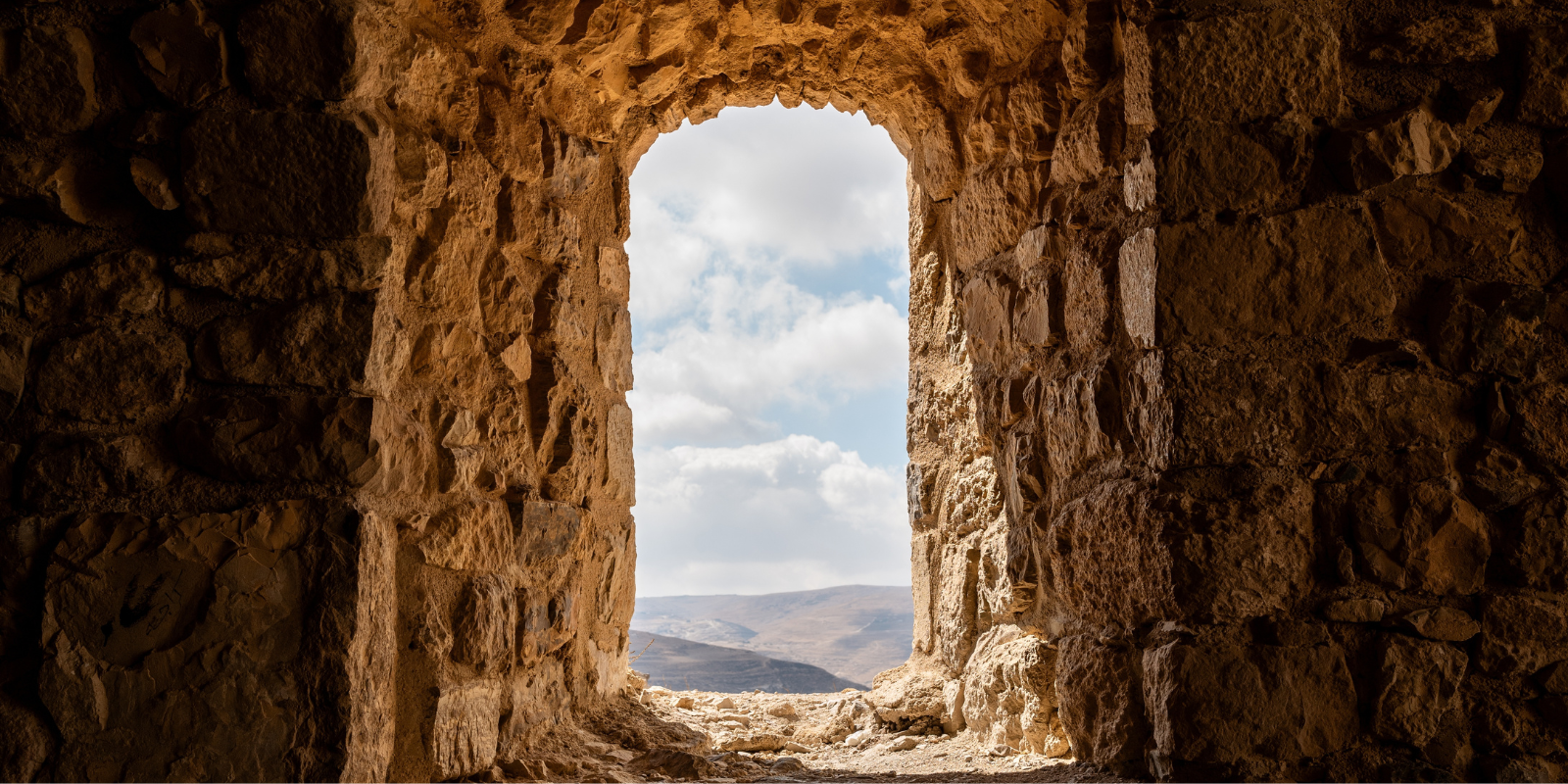
These are not the words of a motivational speaker or self-help guru. They come from Eliyah Cohen, a young Israeli who spent 505 days as a hostage in the tunnels of Gaza—buried alive in what he calls “the depths of humanity, deep in the heart of the earth.” He searched for light where there were no windows. And somehow, impossibly, he found it.
On October 7th, 2023, Eliyah and his fiancée Ziv Abud were at the Nova music festival in the desert near Gaza. They had come to dance, to celebrate life, to be young and free under the open sky. Instead, they found themselves running for their lives as Hamas terrorists descended on the festival grounds, turning a celebration into a massacre.
They ran to a bomb shelter—one of those small concrete structures that dot the Israeli landscape, built to protect from rockets. But on that day, the shelters became death traps. Grenades exploded inside. Gunfire echoed off the walls. Bodies fell around them. Ziv survived by hiding beneath the dead, playing corpse while terrorists walked over her, checking for signs of life.
Eliyah was dragged away, beginning a descent into darkness that would last nearly a year and a half.
Twenty-seven centuries ago, the prophet Micah spoke words that could have been written for Eliyah Cohen:
Micah prophesied in dark times—watching empires destroy kingdoms, witnessing Israel’s northern kingdom fall to Assyria, knowing Judah would face its own catastrophe. He spoke to people about to experience devastating defeat, who would watch their enemies rejoice over them, who would be dragged into exile and darkness.
But Micah understood something the enemies didn’t: falling is not the same as being finished.
“Though I have fallen, I shall rise.”
Not “if” I rise. Not “maybe” I will rise. “I shall rise.” It’s a declaration, a prophecy, a defiant certainty that darkness does not get the final word.
This is the spirit Eliyah Cohen carried into the tunnels.
When the terrorists dragged Eliyah from the shelter and threw him onto a truck headed for Gaza, they beat him. The crowd in Gaza surrounded the vehicle, throwing stones, spitting, trying to hurt the captives.
But Eliyah remembers feeling something else entirely: gratitude.
“I felt so grateful,” he recalls. “And I will tell you why. Because just less than an hour before, we were in the shelter. The terrorist arrived, threw grenades, they shot RPGs, and all I asked from God was just to stay alive. So I was on the truck, and the terrorist beat me, but I didn’t feel anything. The only thing that was in my mind was just to say God thank you, I love you, I’m alive.”
Five hundred and five days in captivity. Five hundred and five days in darkness. Five hundred and five days for his enemies to rejoice over him.
Every day, Eliyah went to the corner of his cell and prayed. He imagined himself putting on tefillin (phylacteries), as he used to do before October 7th. He recited Shema. He said the Amidah. And then he would be quiet for twenty seconds and tell himself: “Eliyah, trust in God. God is with you. Thank you for all that I have in my life. Thank you for all that I went through and for what I’m going to go through in the future.”
Thank you for what I went through. Thank you for what I’m going through. Thank you for what I will go through.
This is faith that doesn’t demand answers. Faith that doesn’t require comfort. Faith that says: even here, even now, even this—I will not disconnect from You.
“Though I sit in darkness, the Lord is a light to me.”
“I was in the depths of humanity,” Eliyah writes, “deep in the heart of the earth—I searched for the light even in a place that had no window.”
He didn’t theorize about light in darkness. He lived it. He searched for it. He found it.
And on the day of his release, that faith exploded into song.
Eliyah stood outside the tunnel for the last time with hostages Omer Shem Tov and Omer Wenkert, waiting for the vehicle that would take them to freedom. They were blindfolded, standing on Hamas-controlled ground, surrounded by their captors.
“It just got out of me,” he recalls. “I started to sing Shir LaMaalot“—Psalm 121, the song of ascents.
Omer and Omer joined him. Three Jewish hostages, blindfolded in Gaza, singing about their help coming from God.
The terrorists tried to tell them to be quiet.
They sang louder.
“We sang louder and louder and it was so powerful because we felt so Jewish in this terrible place and it gave us so much strength to continue. And see us now—we are here, alive and smiling.”
“Rejoice not over me, O my enemy; though I have fallen, I shall rise.”
The terrorists who took Eliyah wanted to break him, to extinguish his light, to bury him so deep he would never rise. They failed.
“Every boy and girl, every young man and woman—must know that they are a precious diamond that came into the world,” Eliyah writes in his new book. “There is no diamond like it, and no one can extinguish the spark within—even if they hide it, even if they bury it deep in the earth, even if they don’t want it. The spark’s destiny is to shine and be the most beautiful. Believe in yourselves. Believe in the diamond that you are.”
This is not naive optimism. This is theology forged in fire, tested in tunnels, proven in darkness.
Maybe you’re reading this from your own kind of tunnel. Depression. Grief. Loss. Failure. Circumstances that feel like being buried alive, where the darkness seems permanent and enemies—whether external or internal—appear to have won.
Micah’s prophecy speaks to you. Eliyah’s witness confirms it.
The fall is not final. The darkness is not permanent. The light within you—the image of God, the divine spark that makes you human—cannot be extinguished by anything external. Not by enemies. Not by circumstances. Not even by the deepest darkness.
As long as you’re breathing, you can still rise.
Eliyah didn’t just survive 505 days of captivity. He emerged still believing in diamonds, still searching for light, still singing even when they told him to be quiet. He took the first step out of literal darkness.
You can take the first step out of yours.
“There is no place too low to rise from, and no place too high to reach. As long as you are alive, you are still in the game.”
Though you have fallen, you shall rise.
Though you sit in darkness, God is your light.