







This week I spent a day in a packed hall in the Judean hills, learning Tanakh.
Not skimming it, not reviewing it for a lesson I had to give, but sitting with the plain text hour after hour while some of the finest Bible scholars in Israel opened it up in front of a few thousand people who had given up their vacation days to be there. Farmers and lawyers, teenagers and grandmothers, all of us bent over the same verses. I can only describe the feeling as flying. At one point I looked up from the page at the crowd around me and thought of the psalm we sing just before grace after meals on Shabbat: “When the LORD returned the captivity of Zion, we were like dreamers” (Psalm 126:1).
I have read the Bible my whole life. We read a portion of the Torah aloud in synagogue every single week, and have done so without a break for longer than any other book has been continuously read anywhere on earth. So why did it feel, in that hall, more alive than it has in centuries? Why does so much of Tanakh suddenly read like the morning news?
For most of our history, large parts of it felt irrelevant or distant from the world we were living in. Think about what a Jew in Vilna or Fez was actually reading when he opened the book of Joshua and followed the conquest of the Land, tribe by tribe, hill by hill. He was reading about a world he would never see. He read the border wars of Judges, the campaigns of David, the prophets who thundered about which foreign power to trust and which alliance would ruin the nation — and none of it described anything in his life. He had no land, no army, no borders, no neighbors, no foreign policy. He read those chapters the way you read a letter from a home you were taken from as a child and can no longer picture. The words were holy. The world they described was ancient history.
But now we have come home, and reading the Bible feels different. The pages that had been about someone else’s world are now describing ours.
Nowhere is this sharper than in Ezra and Nehemiah. Here is a battered remnant coming back from Babylon to a ruined Jerusalem, rebuilding first the Temple and then the walls stone by stone, while their enemies stand outside and jeer that the Jews have no right to this land and no strength to hold it. For nineteen centuries that was a sealed chapter, a story about the last time we came home, read by people who had been sent away again. Today it reads like a field report. A Jew who prays at the Western Wall after a day of study is standing inside the plot of Nehemiah. The jeering outside the walls has not even changed its script.
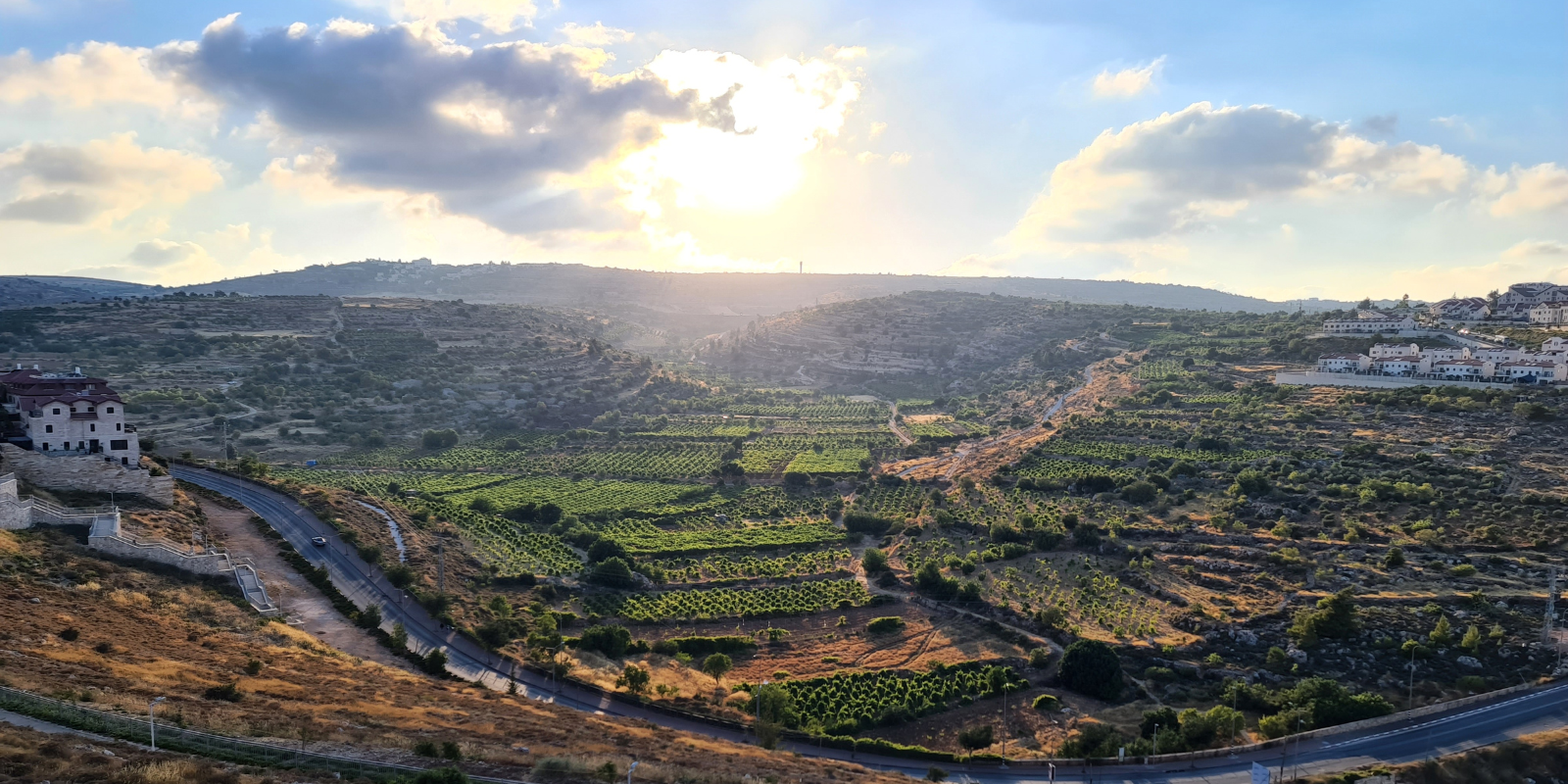
And here is the part that took me years to grasp. It is not only that these chapters can now be lived. It is that they can now be understood — read in their plain, simple sense — in a way they could not be before. The plain meaning of a border war is opaque to a people with no border. A prophet’s fury over a treaty with Egypt stays abstract until your own country is arguing about which powers to trust. You need a land to understand the plain sense of a book about a land. The great revival of plain-text Bible study in our generation — the teachers and schools who taught us to read Tanakh again on its own terms, with its own geography spread out in the hills past the window — grew up in the same soil, at the same hour, as the return to Jewish sovereignty. The Book became legible exactly when the Land came back. Of course it did. You cannot read the script until the stage is rebuilt.
When the exiles returned from Babylon and rebuilt the walls of Jerusalem, one of the first things the reborn nation did was gather as one crowd in the square before the Water Gate and ask Ezra the scribe to bring out the Torah and read it aloud.
The Levites moved through the assembly as he read, explaining as they went. And the people’s response was the exact thing I felt this week. First they wept. Then Ezra told them to stop, because this was a day of joy — “the joy of the LORD is your strength” (Nehemiah 8:10) — and they went out to celebrate. The text tells us plainly why: “because they had understood the words that had been made known to them” (Nehemiah 8:12). The joy came from the understanding.
The plain meaning is straightforward: they understood because the Levites moved among them and explained, word by word. But read the verse once more with everything we have said, and a second understanding opens beneath the first. The text does not say the people knew the words — yad’u. It says they understood them — hevinu, from binah, the kind of understanding that grasps how a thing bears on your life, that turns a verse into something you can act on. You can be taught a book about a land while you have no land, and know it cold. You cannot understand it — not in the way that makes a crowd weep and then dance in the street — until it describes the ground beneath your feet. Ezra’s people had just gotten that ground back. Perhaps that is why the reading finally landed: not only because it was explained to them, but because, for the first time in generations, it was theirs to live.
A mass public study of the plain text of Scripture, by a people newly returned from exile, in a Jerusalem they had just rebuilt, overcome with the sheer joy of finally understanding the book about themselves. It happened once, at the first return. And this week, in a hall in the hills of Judea, a few thousand of us did it again — the same book, the same people, the same joy. I did not read Nehemiah 8 that day. I was living inside it.
I do not want to overstate what that means, because Ezra’s generation did not either. They had walls and a Temple but no sovereignty. They had come home, but they were not yet redeemed. They stood somewhere in the middle of the story, and so do we — the ingathering unfinished, the Temple unbuilt, the greatest prophecies still ahead of us, unread because they have not yet happened.
The Book is not closed. It is coming back to life one chapter at a time, and we are living through the chapters as they reopen.