








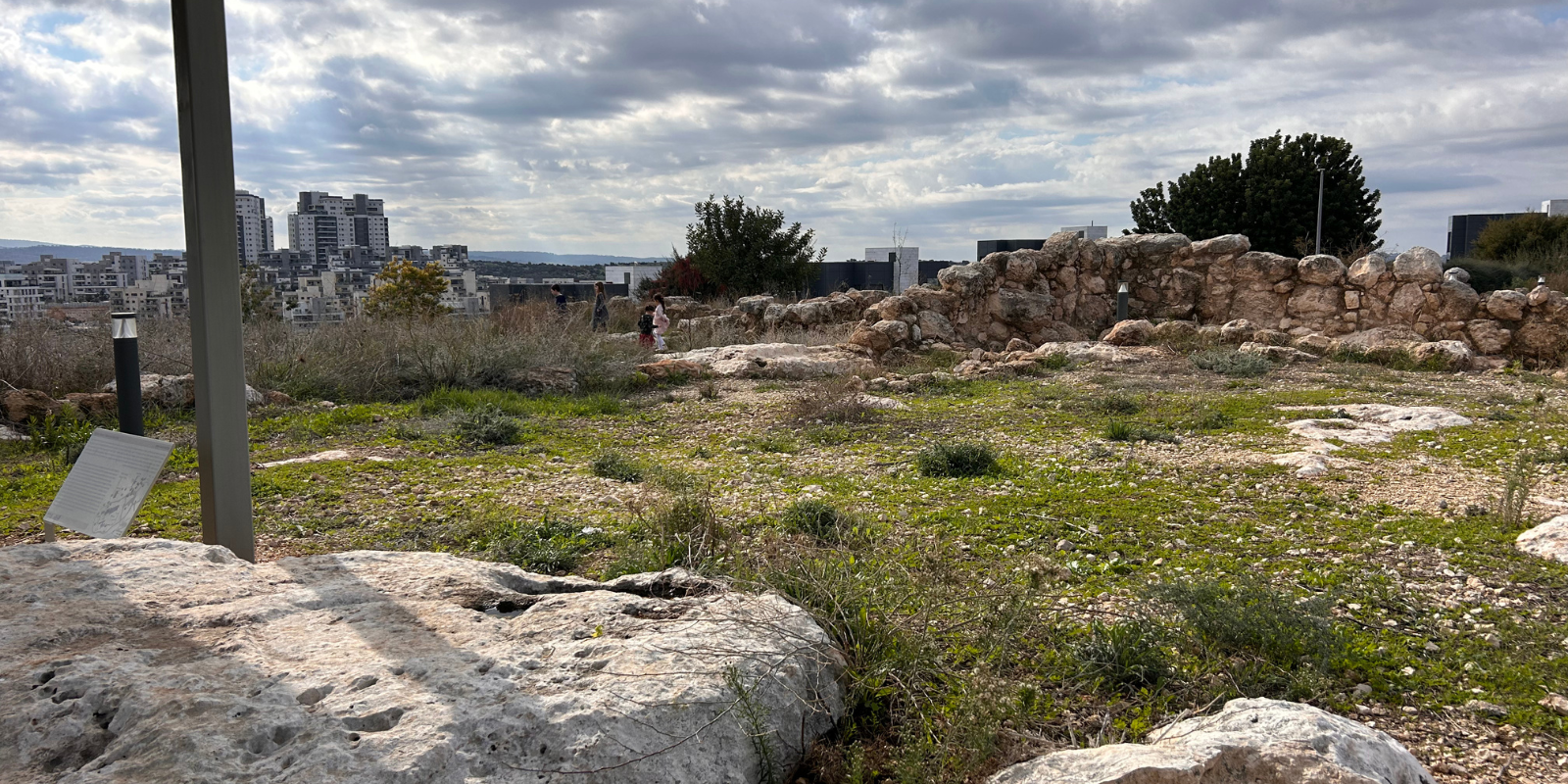
On the sixth day of Hanukkah, my sister-in-law invited us to a party in her backyard. She lives a fifteen-minute walk from where I live, and we visit her family often! My sister-in-law lives in an apartment building. So when she invited us to her “backyard,” what she really meant was a public park behind her apartment building that you can access through the back door.
Except this park has ancient ruins scattered throughout it. Not roped off. Not behind glass. Just there, woven into the playground and walking paths.
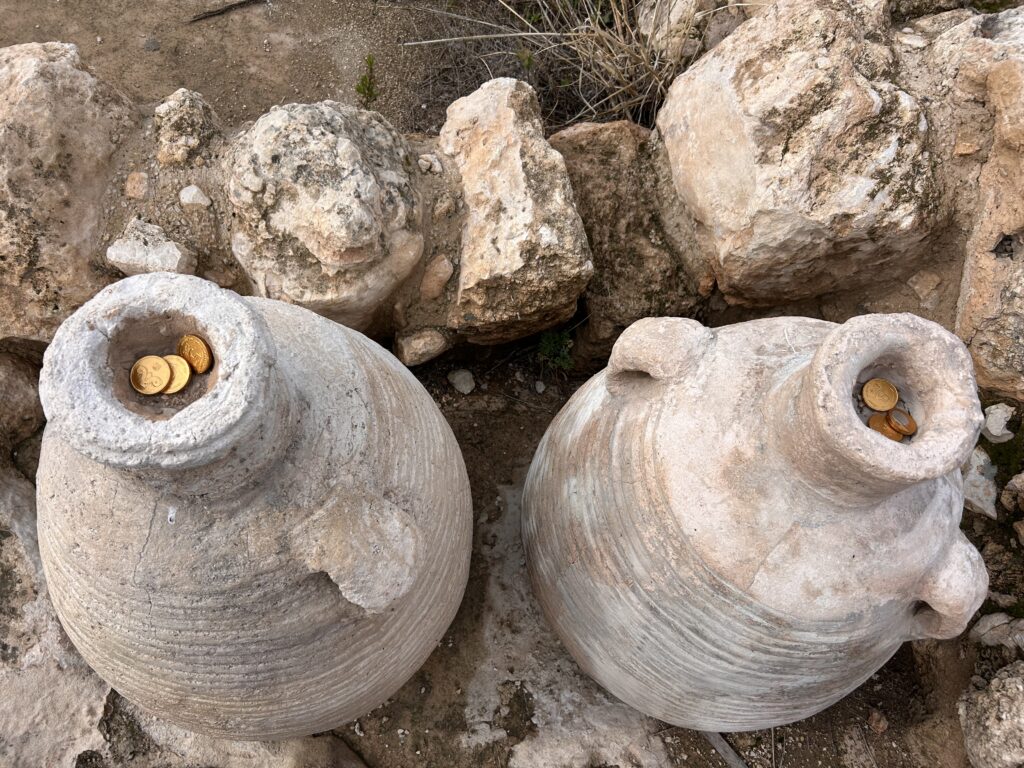
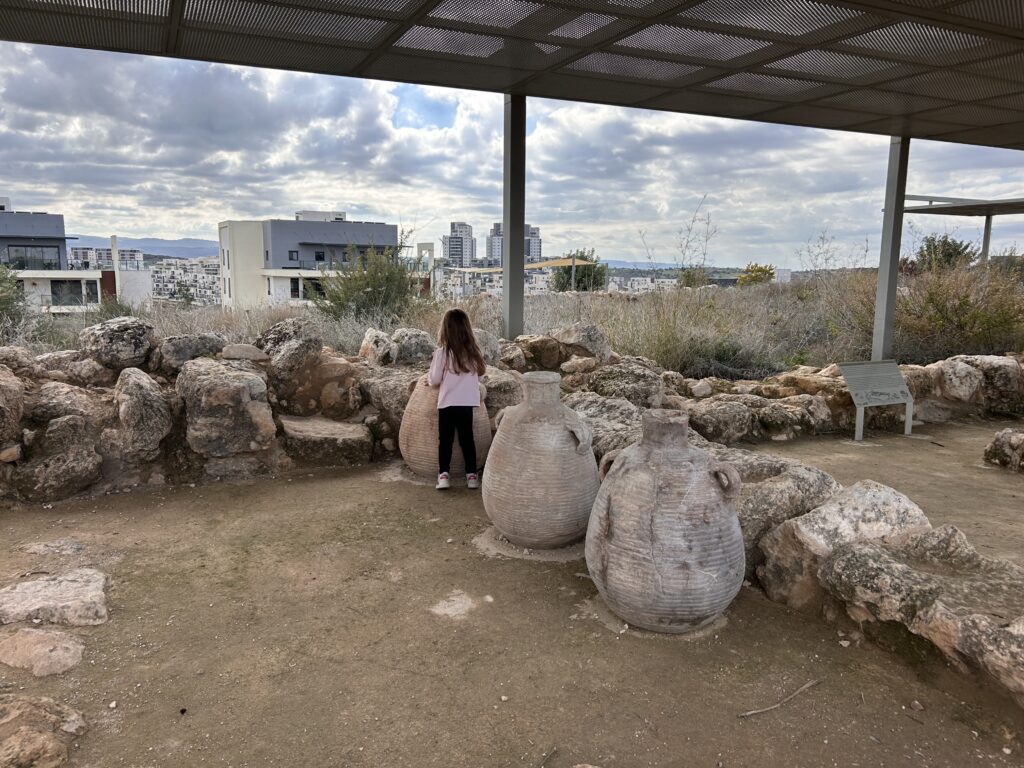
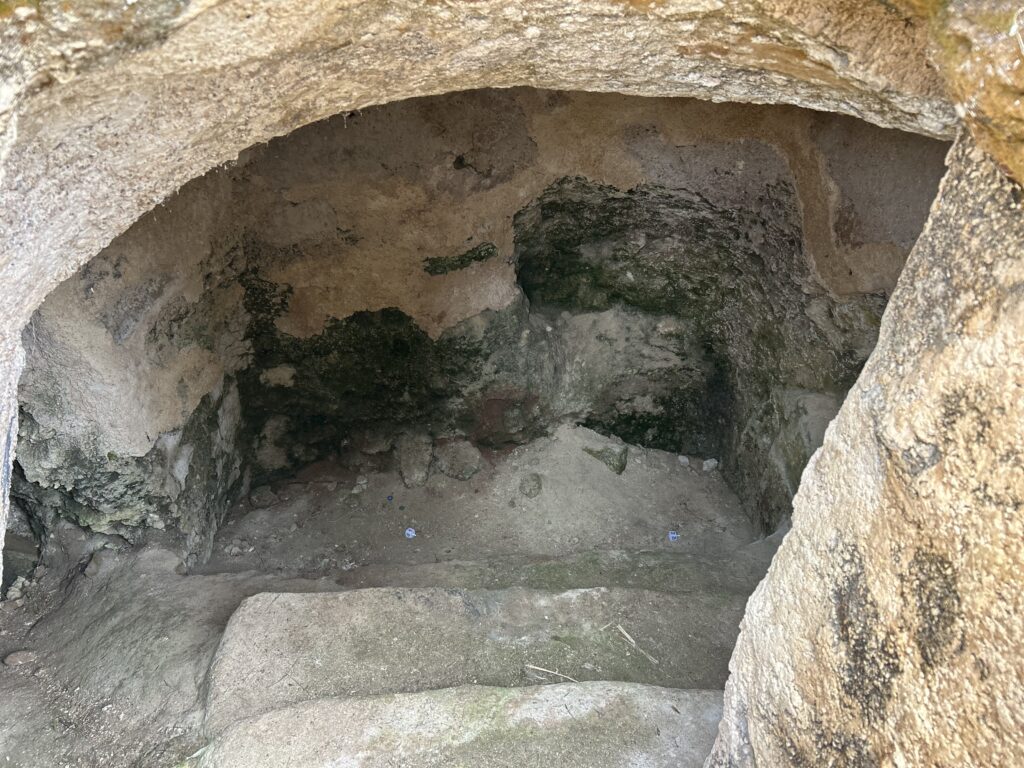
So we did what any normal family would do. We hid chocolate coins in two-thousand-year-old storage jugs and sent the kids on a scavenger hunt. My three-year-old found her way into an old farmstead and stood there staring out at the city. The older kids turned an ancient mikveh into their personal dreidel arena—the acoustics are excellent, apparently.
We’re celebrating Hanukkah in a Hasmonean archaeological site. A fifteen-minute walk from my house. Five minutes from a kosher McDonald’s.
This place is called Givat Ashun. And this is why Israel is the best place to live.
The ruins were discovered when they were developing the Moreshet neighborhood in Modiin. What came out of the ground: remains from the Hasmonean, Hellenistic, and Roman periods. Wine presses carved into stone. Olive presses still recognizable after millennia. Mikvaot with steps leading down into ritual baths. Storage facilities where families kept their grain and oil. Caves that sheltered Jewish fighters during the Bar Kochba revolt. Layers of Jewish life, built one on top of the other, on the same hills.
Which raises an obvious question: How did Jewish life return to the exact same physical places where it existed two thousand years ago?
Not metaphorically. Geographically.
The Hebrew Bible doesn’t treat the Land of Israel as a metaphor. It treats it as land. With borders, hills, valleys, and specific places where people lived and farmed. From the beginning, the promise of the land is tied to walking it.
God tells Abraham:
That’s practical instruction. Land is known by being traversed. It’s claimed by presence. Abraham isn’t told to imagine the land; he’s told to walk it. To know it with his feet, not just his mind.
Givat Ashun makes that verse click.
This wasn’t a palace or fortress. It was ordinary Jewish life. Agriculture. Industry. Ritual purity. Storage. Defense when needed. You can see it in the wine press—someone stood here crushing grapes. In the mikveh—families immersed here before Shabbat. In the storage caves—this is where they kept what they grew. Exactly what the Bible describes over and over: a people rooted in their land, working it, sanctifying daily routines, defending their right to live that way.
Hanukkah belongs to this story.
The Hasmoneans didn’t just fight for the Temple in Jerusalem. They fought for Jewish life in the Land of Israel. The right to observe Shabbat, circumcise their sons, immerse in mikveh, farm and produce wine and oil without foreign interference. When you stand at Givat Ashun, you’re standing in what they were defending. Not an idea. A place. These hills. These presses. This life.
Then that life was interrupted.
Jews were exiled. Empires came and went. The land changed hands—Roman, Byzantine, Arab, Crusader, Mamluk, Ottoman, British. But something unusual happened. Jewish life didn’t get fully replaced—it paused. The ruins remained, buried but not destroyed. And when Jews returned in modern times, they didn’t choose random locations. They returned to the same regions, the same hills, the same agricultural corridors where their ancestors had lived.
Modern Modiin didn’t overwrite ancient Modiin. It continued it.
This isn’t romantic. It’s visible. You can trace it on a map. Archaeology confirms what the Bible assumes: Jewish presence in the Land of Israel was real, and its return wasn’t arbitrary. It followed patterns that were already there. The wine-growing regions are still wine-growing regions. The agricultural valleys remain agricultural.
For Christians who take the Hebrew Bible seriously, this matters. Scripture speaks concretely about land, inheritance, return, and rebuilding. Those themes lose meaning when Israel is treated as a symbol instead of a place. Givat Ashun restores that grounding. You can walk it. You can see it. You can stand where people stood before. You can watch your children play in the same spaces where Jewish children played two thousand years ago.
This is why celebrating Hanukkah here feels different. Not more spiritual, more real. The holiday isn’t floating above history. It’s anchored in it. When Jewish families gather in a modern neighborhood built around ancient Jewish ruins from the Hasmonean era, when kids hunt for chocolate coins in the same storage jugs their ancestors used for grain, past and present sit next to each other without effort.
You don’t have to explain that or dress it up. It simply is.
Israel doesn’t need imagination to make the Bible relevant. It needs feet on the ground. Givat Ashun is a reminder that the biblical story was always meant to be lived somewhere specific. And that place still exists.
From Left to right:
Photo 1: Modern-day chocolate coins, hidden in ancient jugs for our children to “discover” as they enjoyed a fun scavenger hunt
Photo 2: My three-year-old daughter standing in an old farmstead, gazing out over the city
Photo 3: An ancient ritual bath (if you look closely, you’ll spot the dreidels that my children were playing with inside this “cave”)